




How to use trekking poles for crossing fast‑flowing rivers in Chapada Diamantina?
Chapada Diamantina National Park in Bahia, Brazil, is famous for its stunning waterfalls, crystal‑clear rivers, and rugged canyons. Many of its most rewarding hikes – such as the trek to Fumaça Waterfall, the Vale do Pati, or the Capivara River – involve crossing fast‑flowing rivers. These crossings can be dangerous due to slippery rocks, strong currents, and hidden depth. Used correctly, trekking poles are essential for stability, depth‑probing, and fall prevention. Here is a step‑by‑step guide to using your poles for safe river crossings in Chapada Diamantina.
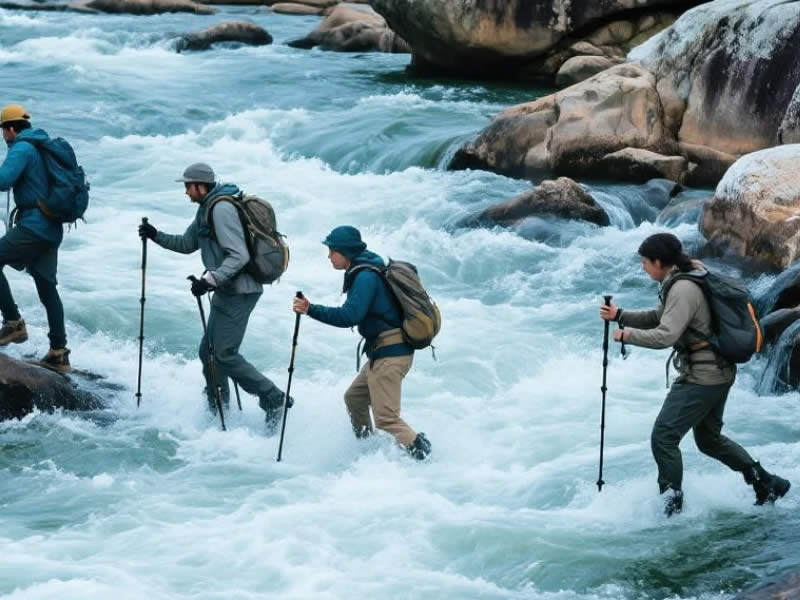
Recommended trekking pole purchase link: https://lightenup.aliexpress.com/store/1101521655
Before you step into the water: preparation
- Unbuckle your pack – Loosen or unbuckle your hip belt and chest strap. If you fall, you need to be able to free yourself from the pack quickly. A waterlogged pack can pin you down.
- Lengthen your poles – Extend your poles by 5–10 cm (2‑4 inches) longer than your normal flat‑ground length. A longer pole gives you better reach for probing ahead and increases stability.
- Remove rubber tips – Use bare tungsten carbide tips. Rubber tips will slide on wet rock. Carbide bites into the rock surface.
- Keep small baskets on – Small baskets help prevent the pole from sinking into soft gravel or sand on the riverbed. Large snow baskets are unnecessary and can catch on rocks.
- Check your wrist straps – Ensure they are adjusted correctly (hand up from below) but not so tight that you cannot release quickly. Some hikers prefer to remove the straps entirely for crossings – a personal choice. If you keep them, be prepared to let go of the poles if you fall.
The basic technique: downstream bracing
Face upstream or slightly angled across the current. Plant both poles firmly on the downstream side of your body – the side the water is flowing toward. The current will press against the poles, not your legs. Lean your weight into the poles, creating a stable tripod with your two feet.
Step‑by‑step crossing method
- Probe ahead – Before committing your weight, use one pole to feel for depth, rocks, or hidden holes. The water may be murky; the pole gives you critical information. If the pole sinks more than mid‑thigh, reconsider the crossing point.
- Plant both poles downstream – Place them about 30‑50 cm ahead of your forward foot, shoulder‑width apart. Push down firmly so the carbide tips bite into the rock or gravel.
- Shuffle sideways – Move sideways, facing slightly upstream or directly across. Keep your feet wide and flat. Do not lift your feet high; slide them to maintain contact with the streambed.
- Move one pole at a time – After you shift one foot, reposition the pole that is now free. Keep at least one pole planted at all times. Never lift both poles simultaneously.
- Lean into the poles – As you step, press your weight down on the poles. The current will push against the shafts, but your body weight should be supported by the poles, not your feet alone.
- Take short, controlled steps – Do not rush. Each step should be deliberate. If the current is very strong, wait for a lull between surges.
Additional tips for Chapada Diamantina’s specific conditions
- Watch for slippery algae – The quartzite rocks in Chapada are often covered with a thin, slippery algae. Carbide tips can penetrate it, but your boots may still slip. Use your poles to test each foothold before placing weight.
- Cross at the right place – Look for a wide, shallow, slower‑moving section. Avoid narrow channels where the current is concentrated. The best crossing is often where the river fans out into several braids.
- Wait after rain – After heavy rain, rivers rise quickly and become dangerous. If the water is above knee level and flowing fast, do not attempt to cross. Camp and wait for the water to recede (usually within a few hours).
- Use a walking stick as a third pole – If you have only one trekking pole, find a sturdy stick to use as a second “pole”. Two poles are far safer than one.
What to avoid
- Planting poles upstream – The current will push the poles back toward you, reducing stability and potentially pulling you off balance.
- Facing straight across – A sideways shuffle keeps your centre of gravity low and wide.
- Lifting both poles at once – You lose two points of contact, turning you into a vulnerable biped.
- Keeping your pack fully buckled – If you fall, you need to be able to shed your pack. Unbuckle the hip belt and chest strap.
- Using rubber tips – They have no grip on wet rock.
If you start to fall
Let go of your poles immediately. Your hands should be free to help you swim or brace against rocks. Do not try to save the poles. Your safety is paramount. If you have removed your pack straps, you can also push the pack away.
After the crossing
- Shake out your poles – Remove water from locking mechanisms.
- Dry the grips – Wet cork or foam can be slippery.
- Readjust length back to trail settings.
- Inspect for damage – If you jammed a pole between rocks, check for bends or cracks.
Choosing the right poles for Chapada Diamantina river crossings
- 7075 aluminium – Aluminium bends rather than snaps. Carbon poles are more likely to break if wedged.
- Lever locks – Twist locks are unreliable when wet. Lever locks (Leki SpeedLock, Black Diamond FlickLock) work perfectly in water.
- Cork grips – Provide a secure hold even when wet. Foam can become slippery.
- Replaceable carbide tips – Essential for the abrasive quartzite. Carry spares.
Final thoughts
Crossing fast‑flowing rivers in Chapada Diamantina is one of the most exhilarating – and potentially dangerous – aspects of trekking in this beautiful park. With two trekking poles, proper technique (downstream planting, side‑shuffle, three‑point contact), and good judgment, you can cross safely. Always respect the power of the water: if in doubt, don’t cross. The trail will still be there tomorrow. With the right skills and equipment, you’ll navigate these wild rivers and reach the breathtaking waterfalls and canyons beyond.




