




How to use trekking poles with a heavy backpack in the Brazilian Highlands?
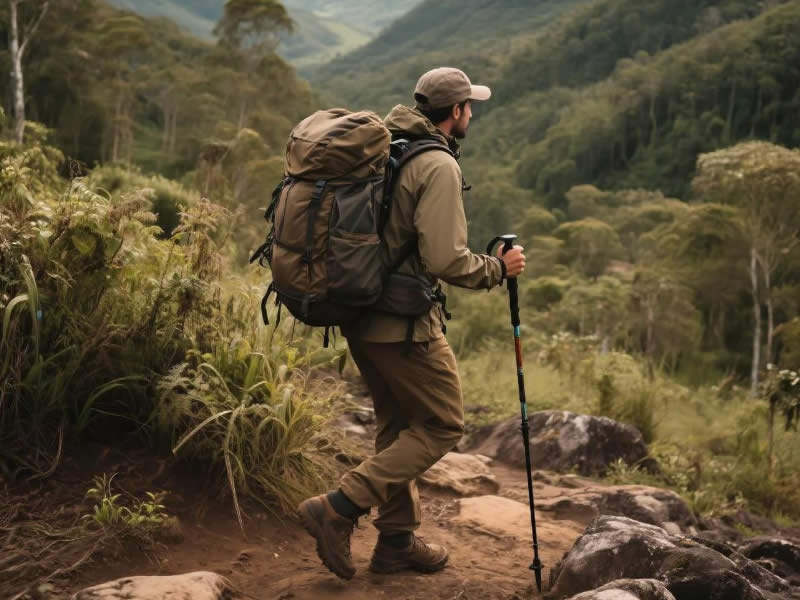
Carrying a heavy backpack (15 kg or more) through the Brazilian Highlands – whether on the rocky trails of Serra do Cipó, the quartzite fields of Chapada Diamantina, or the steep slopes of Serra da Mantiqueira – demands more from your trekking poles than a day hike. A heavy pack shifts your centre of gravity, increases the load on your knees, and makes balance more critical. Used correctly, trekking poles can transfer significant weight from your legs to your arms, reduce fatigue, and prevent falls. Here is a step‑by‑step guide to using poles effectively with a heavy pack in Brazil’s challenging highlands.
Recommended trekking pole purchase link: https://lightenup.aliexpress.com/store/1101521655
1. Choose the right poles for heavy loads
Before heading out, ensure your poles are up to the task. For heavy backpacking in the Brazilian Highlands, you need:
- 7075 aluminium shafts – Carbon poles are too brittle and can snap on quartzite or granite. Aluminium bends – you can often straighten it.
- Lever locks (e.g., Leki SpeedLock, Black Diamond FlickLock) – These external clamps hold securely under heavy loads and are easy to adjust with sweaty or gloved hands. Twist locks are unreliable when wet or under pressure.
- Cork grips – They absorb sweat and stay non‑slip in high humidity. Foam can become slippery.
- Replaceable carbide tips – Essential for the abrasive rock of the Brazilian highlands. Carry spares.
2. Set the correct length for each terrain
A heavy pack amplifies the consequences of incorrect pole length. Adjust your poles frequently:
- Flat or gentle rolling terrain: Set poles so your elbow is at 90° when the tip is on the ground. This is your baseline. Mark it.
- Steep uphill: Shorten poles by 5–10 cm. This keeps your arms low, allowing you to push down effectively without raising your shoulders. You’ll engage your triceps and lats, saving your quadriceps.
- Steep downhill: Lengthen poles by 5–10 cm. This lets you plant ahead of your body, creating a braking effect that transfers weight from your knees to your arms. Your elbows will be slightly straighter – that’s correct.
3. Master the wrist strap technique – hand up from below
With a heavy pack, your fingers alone cannot bear the load. The wrist strap is your most important feature.
- Insert your hand up through the strap from below.
- Bring your hand down onto the grip so the strap sits between your thumb and index finger, crossing the back of your hand.
- Tighten the strap until it is snug – you should be able to relax your fingers and have the pole stay attached.
- Now relax your fingers. The strap bears your weight. Your hand should feel almost open.
When you push down on the pole, the strap transfers force directly from your arm. This reduces hand fatigue and allows you to use your upper body to support the pack’s weight.
4. Use double planting on steep sections
On the steep climbs and descents of the Brazilian Highlands, double planting (both poles together) is far more effective than alternating.
- Uphill: Plant both poles about 30–50 cm ahead of your feet. Pull yourself up, using your arms to lift your body and pack. This takes immense pressure off your quads.
- Downhill: Plant both poles ahead and push down to brake. This transfers the eccentric load from your knees to your arms. Your knees will thank you after a 1,000 m descent.
On moderate slopes, you can return to alternating rhythm (opposite pole to forward foot), but always keep your poles adjusted for the slope.
5. Keep a relaxed grip and upright posture
A heavy pack naturally pulls you forward. Counteract this by keeping your chest open, shoulders back, and looking ahead, not at your feet. Lean slightly forward from your ankles – not your waist. Hunching strains your lower back and reduces the effectiveness of the poles. With a relaxed grip (aided by the straps), your upper body can move freely.
6. Plant firmly and test the ground
The Brazilian Highlands often have loose scree, slippery roots, and hidden holes. With a heavy pack, a misstep could be disastrous.
- Probe ahead: Before committing your weight, use one pole to test the ground. If the pole sinks easily or skids, adjust your foot placement.
- Plant vertically: An angled plant is more likely to skid. Push the pole straight down until the carbide tip bites.
- Apply firm pressure: A light tap won’t do. Push down with authority – you need the pole to be solid to offload weight.
7. Use two poles – always
With a heavy pack, a single pole is not enough. Two poles provide bilateral support, even weight distribution, and four points of contact. If you have only one pole, you will lean to one side, potentially causing back pain and instability. Invest in a pair.
8. Maintain your poles during the trek
A heavy pack will accelerate wear. Each evening:
- Rinse poles with fresh water to remove red mud (terra rossa) and grit. Pay special attention to the locking mechanisms.
- Dry them thoroughly – extend poles and leave them in a ventilated area. Never store collapsed and wet.
- Check lock tension – lever locks can loosen with heavy use. Tighten the dial (Leki) or hex screw (Black Diamond) as needed.
- Inspect tips – replace if the carbide is rounded or the steel ferrule is exposed.
9. Take micro‑breaks using pole support
On long climbs or descents, you can rest without taking off your pack. Plant both poles firmly, lean back slightly, and let the straps support your weight. This gives your legs a break for 30 seconds, then you can continue. This technique is especially useful in the high humidity of the Brazilian summer, where you need frequent short rests.
10. Practice before your big trek
Before loading up a heavy pack, practice the techniques – especially double planting and correct strap use – on day hikes with a lighter load. Build the muscle memory so that on the highlands, the movements are automatic.
Final thoughts
Using trekking poles with a heavy backpack in the Brazilian Highlands is not optional – it’s a necessity for safety and comfort. The combination of steep grades, abrasive rock, high humidity, and heavy loads demands proper technique. Shorten poles for climbs, lengthen for descents, use wrist straps correctly, plant firmly, and always employ double planting on steep sections. With these skills, you’ll protect your knees, conserve energy, and enjoy the spectacular landscapes of the Brazilian Highlands with confidence.




