




Can trekking poles be used as a monopod for nature photography in Pantanal?
Yes – and they can be a game‑changer for wildlife photographers visiting Brazil’s Pantanal, the world’s largest tropical wetland. The Pantanal is flat, open, and often wet. You walk long distances on muddy trails or in shallow water, and you need to be ready to raise your camera quickly for a capybara, caiman, or jaguar. A tripod is too bulky; a dedicated monopod adds extra weight. Your trekking poles, already in your hands, can double as a lightweight, versatile monopod – with the right setup and technique. Here’s how to use them effectively for nature photography in the Pantanal.
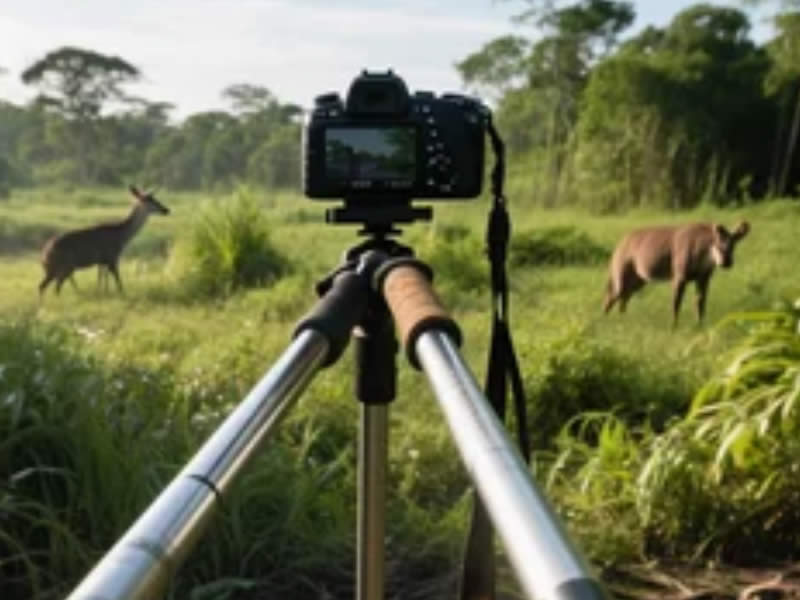
Recommended trekking pole purchase link: https://lightenup.aliexpress.com/store/1101521655
What you need
- A trekking pole with a removable grip – Many models (e.g., Leki, Black Diamond, Komperdell, Decathlon) have a screw‑off top cap revealing a standard ¼‑20 thread (the same as on a tripod). Check your poles before the trip.
- A small ball head – A lightweight ball head (e.g., Manfrotto 494, Ulanzi U‑60) screws onto the pole’s thread. This allows you to tilt and pan the camera independently of the pole.
- A quick‑release plate – Attach a plate to your camera for fast mounting.
- Rubber tip cover – For muddy or slippery ground, a rubber paw cover on the carbide tip prevents the pole from sinking and protects the tip.
How to set up
- Remove the grip – Unscrew the top cap of your trekking pole. Some poles require a hex key; others unscrew by hand.
- Screw on the ball head – Tighten firmly, but don’t overtighten – you may damage the threads.
- Attach your camera – Use the quick‑release plate. For heavy lenses (e.g., 200–600mm), ensure the ball head has sufficient load capacity (at least 5 kg).
- Extend the pole to a comfortable height (usually eye level for standing shots). Lock the sections securely.
- Plant the pole tip – On soft mud or sand, fit the rubber tip cover to prevent sinking. On firm ground, bare carbide tip works fine.
Why this works brilliantly in the Pantanal
- Weight saving – A dedicated monopod weighs 300–500 g. A trekking pole with a ball head adds only ~50 g to your already‑carried gear.
- Quick deployment – You don’t need to unpack a separate device. Unscrew the grip, attach the ball head (leave it on the pole during the hike?), better to keep the ball head in a pocket and screw it on when needed.
- Stability in wind – The Pantanal can be windy. A monopod reduces camera shake by 2–3 stops compared to handheld.
- Stability on uneven ground – A tripod requires a level surface; a monopod’s single point can be planted anywhere – in mud, on a log, even in shallow water.
- Two poles = two monopods – You can set one pole for your camera and keep the other for walking.
Technique for wildlife photography in Pantanal
- Use it as a shooting stick – When you spot a distant bird or capybara, plant the pole vertically, lean your camera against the ball head, and fire. This eliminates arm tremor.
- For video – A monopod provides smooth panning. Follow a jabiru stork in flight by pivoting the pole.
- For low‑angle shots – Shorten the pole and kneel. You can also invert the pole (grip down) for very low angles.
- Self‑portrait – Plant the pole, set the timer, and step back for a group photo.
Limitations to know
- Not a tripod – For long exposures (e.g., sunrise/sunset), a monopod still requires you to hold it. You can lean the pole against your body or a tree for extra stability, but a true tripod is better.
- Ball head needed – Without a ball head, you can only point the camera where the pole points – very limiting. Invest in a small, lightweight ball head.
- Load capacity – Most trekking poles and adapters are designed for mirrorless or small DSLR cameras with lenses under 2 kg. A heavy telephoto (e.g., 500mm f/4) may be too much. Check the pole’s and ball head’s weight ratings.
- Dust and water – The Pantanal is dusty and wet. Keep the ball head covered when not in use. Rinse your pole after walking in mud.
Recommended gear for Pantanal photographers
- Pole: Leki Makalu (removable grip, 7075 aluminium) or Black Diamond Trail Pro (FlickLock, foam grip). Decathlon Forclaz MT500 also works but the grip is not easily removable – check.
- Ball head: Ulanzi U‑60 (lightweight, 5 kg load), Sirui K‑20, or small Manfrotto.
- Quick‑release plate: Arca‑Swiss type is standard.
- Rubber tip cover: Essential for muddy or sandy ground.
- Pole sack – To protect the camera thread when not in use.
Tips for Pantanal‑specific conditions
- Mud: The Pantanal’s wet season (November–March) creates deep mud. Use rubber tip covers to prevent the pole from sinking.
- Water crossings: You may need to walk in shallow water. Extend the pole longer for depth probing. Keep the camera dry – the monopod can still be used while wading.
- Heat and sweat: Cork grips are best; they stay non‑slip.
- Dust: In the dry season (April–September), dust can get into the ball head. Carry a small brush.
Final verdict
Yes, trekking poles can be used as an excellent monopod for nature photography in the Pantanal. With a removable grip and a lightweight ball head, you gain a stable, portable camera support that weighs almost nothing and is always ready. It’s ideal for the flat, open landscapes and unpredictable wildlife encounters of the Pantanal. Just remember: a monopod reduces shake but does not substitute a tripod for long exposures. For the vast majority of daytime wildlife photography, your trekking pole monopod will serve you perfectly, leaving your hands free for spotting scopes or binoculars. Bring a small ball head, practice at home, and enjoy capturing the incredible biodiversity of Brazil’s Pantanal with gear that works as hard as you do.




