




Do trekking poles help with walking on loose gravel on Brazilian mountain roads?
Yes – and the difference can be dramatic. Loose gravel, common on Brazilian mountain roads (such as the access roads to trailheads in Chapada Diamantina, the steep gravel paths of Serra do Cipó, or the rocky tracks in the Mantiqueira Mountains), is one of the most challenging surfaces to walk on. The stones shift under your weight, your feet slide unpredictably, and the risk of an ankle twist or fall is high. Trekking poles, used correctly, transform this frustrating, slippery surface into a manageable, stable walk. Here’s how and why.
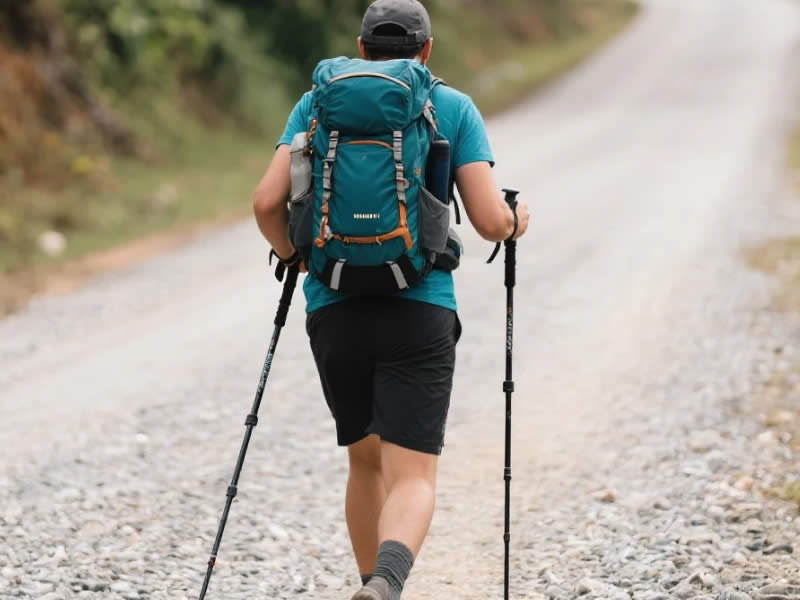
Recommended trekking pole purchase link: https://lightenup.aliexpress.com/store/1101521655
Why loose gravel is so difficult
Gravel consists of unconsolidated, often rounded stones of various sizes. When you step on them, they roll, slide, and tilt. Your foot’s contact with the ground is unstable, requiring constant micro‑adjustments from your ankles and knees. This tires you quickly and can lead to falls. On Brazilian mountain roads, the gravel is often mixed with sand or dust, making it even more slippery, especially when dry.
How trekking poles help
- Four points of contact – With two poles, you increase your base of support from two points (your feet) to four. This wider base dramatically improves balance. When a foot slips, the poles can support your weight instantly, preventing a fall.
- Probing ahead – Before you commit your full weight to a step, you can plant a pole on the gravel ahead. The pole’s tip will give you feedback: if it sinks deeply or skids, you know to choose a different foot placement or adjust your stride.
- Load transfer – By pushing down on the poles, you transfer some of your body weight from your legs to your arms. This reduces the force on your feet, making it less likely that the gravel will shift under your full weight. Your feet “float” more lightly over the surface.
- Catching slips – When your foot does slide, a quick plant of the pole can arrest the motion before you lose balance. The carbide tip bites into the gravel, giving you a split second to recover.
What the research says
Biomechanical studies have shown that using two poles on unstable surfaces (including gravel) reduces postural sway (side‑to‑side movement) by 30–40% compared to walking without poles. This translates directly into fewer near‑falls and greater walking confidence.
Technique for walking on loose gravel with poles
- Use two poles – One pole is not enough. Two provide symmetrical support and balance.
- Lengthen poles slightly – Add 2–3 cm (about 1 inch) to your normal flat‑ground length. A slightly longer pole allows you to plant ahead of your feet, giving you more warning and better braking.
- Plant vertically – An angled plant is more likely to skid on gravel. Push the tip straight down until it contacts a larger rock or compacts the gravel layer.
- Use carbide tips – Rubber tip covers will slide on gravel. Expose the tungsten carbide tip – its sharp point digs into the gaps between stones. If your gravel road is paved with very small, hard stones, carbide still works best.
- Take shorter steps – Keep your feet under your body, not ahead. Short, shuffling steps are more stable than long strides.
- Maintain a relaxed grip – Use wrist straps correctly (hand up from below, strap between thumb and index finger). Relax your fingers – the strap bears weight. This prevents hand fatigue and keeps your upper body responsive.
- Keep your weight centred – Avoid leaning forward or backward. Stay upright, with your knees slightly bent to absorb shocks.
Special considerations for Brazilian mountain roads
- Dry vs. wet gravel – Dry gravel is loose and slides easily. Carbide tips work well because they penetrate the gaps. Wet gravel can become hard‑packed and more stable – but also slippery on top. The same technique applies; test each plant.
- Gravel size – Large, loose rocks (e.g., on steep access roads) require a firmer plant. Shorten your poles slightly to increase leverage. Use double planting (both poles together) for maximum stability.
- Downhill gravel sections – Lengthen poles by 5–10 cm, plant both poles ahead, and push down to brake. This transfers weight from your knees to your arms and prevents you from sliding uncontrollably.
- Uphill gravel sections – Shorten poles by 5‑10 cm, use double planting, and pull yourself up. This saves your quadriceps.
What about small baskets?
Small summer baskets (4–5 cm) can help prevent the pole tip from sinking too deep into loose gravel, but they are not essential. Remove large snow baskets – they will catch on rocks and annoy you.
Common mistakes to avoid
- Using rubber tips – They slide on gravel. Remove them.
- Planting poles too far ahead – Over‑reaching pulls you off balance. Plant near your forward foot.
- Walking with a normal stride – Shorten your steps.
- Gripping tightly – Let the strap do the work.
- Using only one pole – One pole unbalances you on an already unstable surface.
Practice on a gravel car park
Before tackling a long mountain road, practice the technique on a small gravel area (e.g., a car park or a gravel path). Walk back and forth, focusing on the plant, the short steps, and the relaxed grip. You will quickly feel the increased stability.
Real‑world example from Brazil
On the steep gravel access road to the Vale do Pati (Chapada Diamantina), many hikers struggle without poles, slipping and sliding. Those with trekking poles plant them firmly, take short steps, and walk with confidence. The difference is striking.
Final verdict
Yes, trekking poles are immensely helpful for walking on loose gravel on Brazilian mountain roads. They provide four points of contact, allow you to probe ahead, transfer weight to your arms, and catch slips. Use two poles, carbide tips, a slightly longer length, short steps, and a relaxed grip. With proper technique, you will walk faster, safer, and with less fatigue – turning a frustrating gravel slog into a manageable, even enjoyable, part of your mountain adventure.




