




How to fix a stuck trekking pole locking mechanism due to tropical dirt?
Tropical environments – like Brazil’s Atlantic Forest, the Amazon, or Southeast Asian jungles – are notorious for their sticky, clay‑rich, acidic mud. This fine dirt can infiltrate your trekking pole locking mechanisms, causing them to jam, slip, or become impossible to adjust. A stuck lock is not just annoying; it can be dangerous on steep terrain. Fortunately, most jams can be fixed with simple cleaning techniques. Here is a step‑by‑step guide to freeing a stuck lock caused by tropical dirt, along with preventive measures.
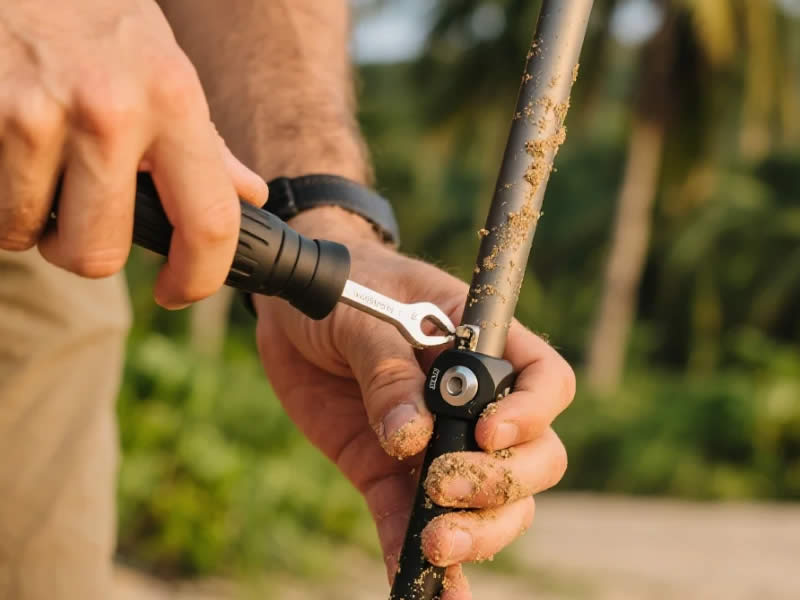
Recommended trekking pole purchase link: https://lightenup.aliexpress.com/store/1101521655
Why tropical dirt is so problematic
- High clay content – Tropical soils often contain smectite and kaolinite clays that expand when wet and harden like cement when dry.
- Fine particle size – The mud can seep into tiny gaps between telescopic sections and inside twist‑lock cams.
- Acidic and organic – Decomposing plant matter makes the mud acidic, which can corrode metal components and cause them to stick.
- Rapid drying – In hot, humid climates, mud on the outside of the pole dries quickly, locking sections in place.
Identify your lock type
Before attempting repair, know what mechanism you have:
- Lever locks (external clamps) – e.g., Leki SpeedLock, Black Diamond FlickLock. The lever opens a clamp around the inner shaft. Dirt typically gets between the clamp and the shaft or inside the lever pivot.
- Twist locks (internal cams) – e.g., many budget poles. You twist the sections to tighten an internal expanding cam. Dirt gets inside the overlapping tubes and into the cam mechanism.
General preparation
- Work outdoors or over a sink – mud will splash.
- Prepare warm water (not boiling) and a soft brush (toothbrush works).
- Have a cloth or paper towels handy.
- Use a mild soap (dish soap) if needed.
- Have silicone spray or dry lubricant for after cleaning.
Fixing a stuck lever lock
- Open the lever fully – If it’s jammed shut, use a gentle back‑and‑forth motion while pulling. Do not force it; you may break the plastic lever.
- Rinse with warm water – Direct a gentle stream of water into the clamp area and around the lever pivot. Use a brush to scrub away visible mud.
- Extend the pole section – Pull the inner shaft out as far as possible (but not past the STOP mark). This exposes the area where dirt is trapped.
- Scrub the inner shaft – Use the brush and soapy water to clean the shaft where the clamp engages. Rinse thoroughly.
- Dry completely – Use a cloth and then let the pole air dry extended for at least 30 minutes.
- Apply a drop of light oil to the lever pivot (not on the clamping surface). Work the lever several times.
- Test the lock – Close the lever; it should click shut with firm pressure. If it still sticks, repeat cleaning.
Fixing a stuck twist lock
Twist locks are more vulnerable to tropical dirt because the mechanism is internal.
- Unscrew the lock fully – Rotate the knob anticlockwise until it stops. If it won’t move, you may need to soak the joint.
- Soak the stuck section – Submerge the joint in warm soapy water for 10–15 minutes. The water will soften the dried mud.
- Twist and pull – After soaking, try to twist the sections while pulling apart. Use rubber gloves for grip. Do not use pliers – you may crush the tube.
- Once apart, clean the inner shaft and outer tube – Scrub the inside of the outer tube with a small brush (a bottle brush or a cotton swab). Clean the plastic cam and the threads.
- Rinse and dry thoroughly – Use compressed air or a hairdryer on cool to remove moisture from the threads and cam.
- Lubricate only the threads – Apply a tiny amount of silicone grease or dry lubricant to the threads. Do not lubricate the friction surface (the inner shaft or the cam face). That will cause slipping.
- Reassemble and test – Screw the knob back on and tighten. The lock should turn smoothly and hold when tightened.
What to do if the section is still stuck after soaking
If soaking doesn’t free the stuck section:
- Use a penetrating lubricant – Apply a few drops of a penetrating oil (e.g., Liquid Wrench, PB Blaster) to the seam. Let it sit for 30 minutes. This can dissolve dried clay. Avoid WD‑40 – it’s not a penetrating oil and leaves residue.
- Apply gentle heat – Use a hairdryer on high setting to warm the outer tube. Heat expands the metal, which may break the bond. Do not use a heat gun or flame – you could damage the pole or weaken the aluminium.
- Tap lightly – Place the pole on a flat surface and tap the stuck joint with a rubber mallet or a wooden block. The vibration may loosen the mud.
- As a last resort, use a vice – Wrap the pole in rubber or cloth to protect it, clamp the lower section in a vice, and twist the upper section by hand. This is risky – you may bend the pole.
After freeing the lock
- Clean all parts thoroughly – ensure no mud remains inside any cavity.
- Dry completely – leave poles extended for several hours.
- Lubricate moving parts – as described above.
- Test under load – Extend the pole to your desired length and apply body weight. It should not slip.
Preventing future jams in tropical conditions
- Rinse poles after every hike – Even if they look clean, tropical mud can be invisible. Rinse with fresh water, paying attention to locks.
- Dry poles fully extended – Never collapse and store wet poles.
- Use lever locks instead of twist locks – Lever locks are much easier to clean and less prone to jamming.
- Apply a dry lubricant to the inner shaft of twist locks (not the clamping area) to reduce friction and prevent mud adhesion – but this is controversial; some argue it attracts dirt. For twist locks, keeping them clean and dry is best.
- Carry a small brush – A toothbrush in your repair kit can dislodge surface mud before it dries.
- Store poles extended – This prevents moisture and dirt from being trapped between sections.
When to replace instead of repair
- If the plastic cam in a twist lock is cracked or worn, cleaning won’t help – replace the lock or the pole.
- If the lever lock’s plastic housing is cracked, replace the lever assembly (many brands sell spares).
- If the inner shaft is deeply scratched or dented, the lock may never hold smoothly – replace the section.
Conclusion
A stuck locking mechanism caused by tropical dirt is a common problem, but it is almost always fixable with thorough cleaning. Lever locks are easier to clean and more reliable in muddy conditions. Twist locks require more effort and are prone to recurring issues. The key is to act quickly – don’t let mud dry on your poles. Rinse, scrub, dry, and lubricate appropriately. With proper care, your poles will survive the toughest tropical trails and remain easy to adjust for years to come.




