




How to remove rust from aluminum trekking poles after coastal use?
First, a clarification: aluminium does not rust. Rust is iron oxide, which forms on steel. Aluminium corrodes in a different way: it forms a white or gray powdery substance called aluminium oxide (Al₂O₃). However, after coastal use – where salt spray, high humidity, and sweat are present – you may see white powdery deposits, pitting, or a dull, rough surface. This is corrosion, not rust. The steps to remove it are slightly different from dealing with steel rust. Here is a complete guide to cleaning and protecting your aluminium trekking poles after exposure to coastal environments, with tips specific to Brazilian beaches and saltwater areas.
Recommended trekking pole purchase link: https://lightenup.aliexpress.com/store/1101521655
Why coastal use is hard on aluminium poles
- Salt spray – Salt (sodium chloride) is hygroscopic, meaning it attracts moisture. It accelerates electrochemical corrosion of aluminium, especially if the protective anodised coating is scratched.
- High humidity – Combined with salt, it promotes pitting corrosion.
- Sweat – Your hands deposit salt on the grips and shafts.
- Sand – Abrasive sand wears away the anodised layer, exposing bare aluminium to corrosion.
Identifying aluminium corrosion
- White powder or chalky residue – This is aluminium oxide. It can be wiped off easily but will recur if not treated.
- Pitting (small black or grey pits) – More serious. The surface has small craters. This weakens the pole.
- Rough, dull surface – Loss of the original shiny anodised finish.
What you need
- Fresh water (a hose or a bucket)
- Mild dish soap
- Soft brush (toothbrush)
- White vinegar or lemon juice (for mild acid cleaning)
- Baking soda (for neutralising acid)
- Microfiber cloth or soft rag
- Silicone spray or light machine oil (e.g., sewing machine oil)
- Fine steel wool (grade 0000) – optional, for stubborn deposits
Step 1: Rinse thoroughly with fresh water
Immediately after a coastal hike, rinse your poles with fresh water. Use a gentle spray to remove salt, sand, and sweat. Pay attention to:
- Locking mechanisms – open lever locks and flush inside
- Tip ferrules and baskets
- The inside of telescopic sections – extend poles fully and rinse the overlapping areas
Step 2: Wash with mild soap
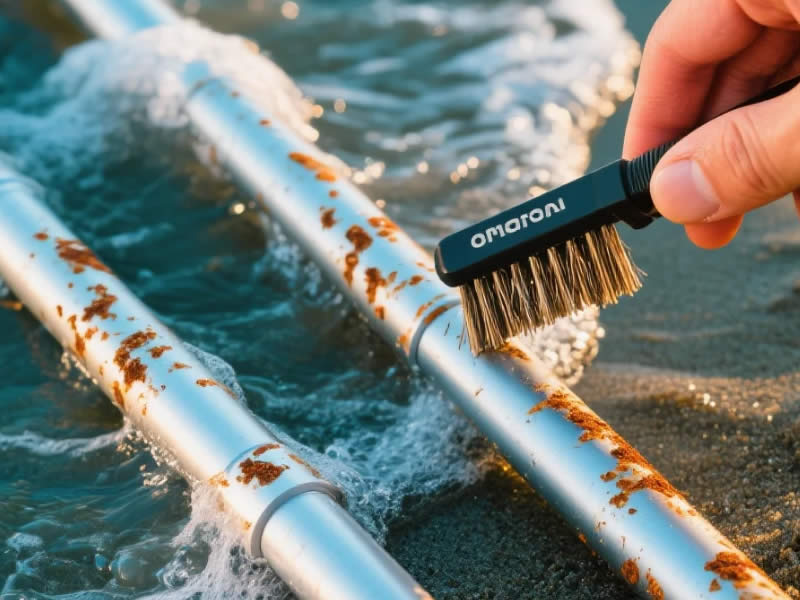
If you see white powdery deposits, wash the poles with a solution of warm water and a few drops of dish soap. Use a soft brush to scrub the affected areas. This removes loose corrosion and any remaining salt.
Step 3: Remove stubborn white oxidation with a mild acid
Aluminium oxide is resistant to soap, but a weak acid will dissolve it.
- White vinegar (acetic acid 5%) or lemon juice (citric acid). Apply the acid to a cloth and wipe the corroded areas. Let it sit for 5–10 minutes, then scrub gently with a soft brush. The white powder should come off.
- For heavy deposits, soak a cloth in vinegar and wrap it around the corroded area for 15–20 minutes. Re‑wet as needed.
Warning: Do not use strong acids (hydrochloric, sulphuric) – they will attack the aluminium itself.
Step 4: Neutralise the acid
After using vinegar or lemon juice, wipe the poles with a cloth dampened with a mixture of baking soda and water (1 tablespoon baking soda to 1 cup water). This neutralises any remaining acid and prevents further reaction.
Step 5: Rinse and dry thoroughly
Rinse with fresh water again, then dry with a cloth. Extend the poles fully and leave them in a well‑ventilated area for at least an hour to ensure all moisture evaporates from inside the locks and between sections.
Step 6: Apply a protective coating
Once dry, protect the aluminium shafts:
- Silicone spray – Spray a small amount onto a cloth and wipe down the shafts. This leaves a hydrophobic layer that repels moisture and salt. Do not spray directly into locks.
- Light machine oil – A thin film of oil (e.g., sewing machine oil) can also protect. Wipe off excess; it should not be oily to the touch.
- Avoid WD‑40 – It leaves a sticky residue that attracts dirt and sand.
Step 7: Lubricate moving parts
- Lever lock pivots – One drop of light machine oil on the hinge.
- Twist‑lock threads – A tiny amount of silicone grease (not on the friction surfaces).
What about pitting (small pits)?
If the white powder has been present for a long time, it may have caused pitting. After cleaning, you may see small black or grey craters. These cannot be removed; they are permanent damage. Light pitting is usually cosmetic. Deep pits can weaken the pole – if you feel a deep crater or the pole seems compromised, replace the section.
Removing actual rust (from steel components)
Your aluminium poles may have steel parts: tip ferrules, screws, springs in anti‑shock models, and some lock hardware. These can rust. To remove rust:
- Scrub with steel wool (grade 0000) and a little oil.
- Soak in white vinegar for 10–30 minutes, then scrub.
- Rinse and dry, then apply a thin layer of oil.
Preventing coastal corrosion in the future
- Rinse after every coastal hike – This is the single most effective habit.
- Dry poles fully extended – Never store collapsed and wet.
- Apply silicone spray regularly – Once a month if you hike near the coast often.
- Inspect for scratches – If the anodised coating is scratched, consider applying a clear lacquer or nail polish to protect the bare aluminium.
- Store poles indoors – Not in a garage or shed where salt spray can linger.
What about carbon poles?
Carbon fibre does not corrode, but its metal components (tips, locks) do. The same cleaning and protection steps apply to the metal parts. Carbon shafts can be washed with soapy water and a soft brush.
After cleaning, test your poles
- Extend and lock them. Apply body weight – they should not slip.
- Shake the poles – listen for rattling (may indicate internal corrosion in twist locks).
- Inspect for cracks or bends.
Conclusion
Aluminium trekking poles can suffer from white oxide corrosion after coastal use, but it is easily removed with a mild acid (vinegar) and a soft brush. Rinsing with fresh water immediately after each beach hike is the best prevention. With regular care, your poles will survive the salt, sand, and humidity of Brazil’s beautiful coastline. Enjoy the beach trails without worrying about corroded gear!




