




How to fix a trekking pole that keeps collapsing under heavy load?
A trekking pole that collapses under your body weight is not just annoying – it’s dangerous. Whether you’re carrying a heavy backpack on a steep descent or simply leaning on the pole for balance, a sudden collapse can cause a fall, injury, or damage to your gear. Fortunately, most collapsing issues can be fixed with simple cleaning, adjustment, or part replacement. This guide will help you diagnose the problem and get your pole back to reliable service.
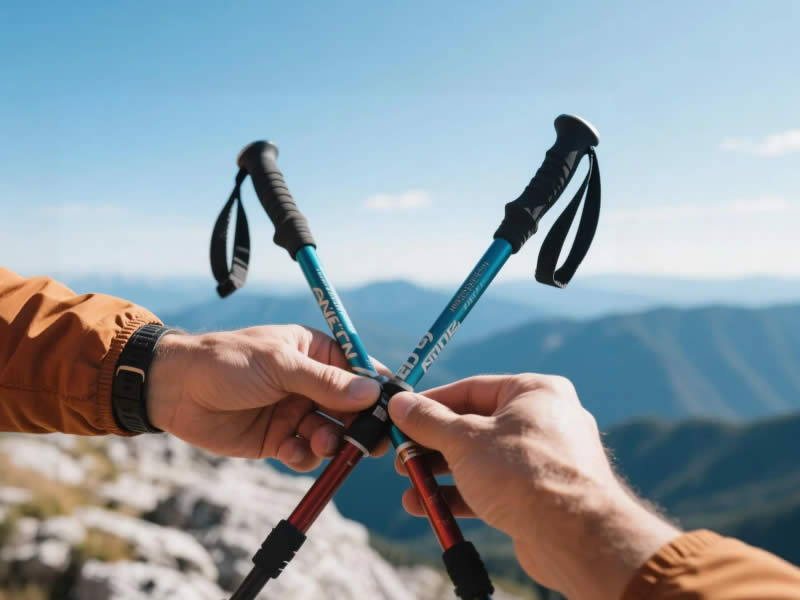
Recommended trekking pole purchase link: https://lightenup.aliexpress.com/store/1101521655
Why do trekking poles collapse under load?
- Dirt or moisture on the locking surfaces (most common cause)
- Insufficient clamping force – lever lock too loose or twist lock not tightened enough
- Worn or damaged locking mechanism – cracked plastic cam, stripped threads, or deformed lever
- Bent or dented shaft – prevents proper contact between inner and outer tubes
- Oil or lubricant on the friction surfaces (causes slipping)
Step 1: Identify your lock type
- Lever lock (external clamp) – e.g., Leki SpeedLock, Black Diamond FlickLock, Decathlon lever lock
- Twist lock (internal expanding cam) – common on budget poles
Step 2: Quick fixes for lever locks
- Clean the lock and shaft – Open the lever fully. Use a brush and warm soapy water to remove mud and grit from the clamp area and the inner shaft. Rinse and dry thoroughly. Even a tiny grain of sand can prevent full clamping.
- Adjust the tension – Most lever locks have a tension dial or screw.Leki SpeedLock: Turn the dial clockwise (using your finger or a coin) to increase clamping force. Close the lever – it should require firm pressure. If it closes too easily, tighten more.Black Diamond FlickLock: Use a 2.5 mm or 3 mm hex key to tighten the screw on the side of the lever. Turn clockwise to increase tension. The lever should snap closed with a definitive click.Decathlon lever lock: Similar dial; tighten as needed.
- Test – Extend the pole to your desired length, close the lever, and push down with your body weight. The pole should not slip.
Step 3: Quick fixes for twist locks
- Clean the lock – Unscrew the twist lock fully (rotate anticlockwise). Remove the inner shaft. Clean the plastic cam, the threads, and the inside of the outer tube with a brush and soapy water. Dry completely.
- Tighten firmly – Reassemble the pole. Hold the lower section and twist the upper section clockwise as hard as you can by hand. Do not use pliers – you may crack the plastic cam.
- Test – Apply body weight. If it still slips, the cam may be worn or the shaft oily. Clean again with isopropyl alcohol to remove any grease. If still slipping, the cam likely needs replacement.
Step 4: Check for worn or damaged parts
- Cracked lever housing – If the plastic lever or dial is cracked, replace the lever assembly (spare parts available from Leki, Black Diamond, etc.).
- Worn twist‑lock cam – The ridges on the plastic cam may be flattened. Replace the cam or the entire lock mechanism (many brands sell repair kits).
- Bent inner shaft – Roll the pole on a flat surface. If you see a bend, straighten it gently by hand or with a rubber mallet (for aluminium). Carbon poles cannot be straightened – replace the section.
- Dented outer tube – A dent near the lock area can prevent proper clamping. Replace the section.
Step 5: Remove any oil or grease from friction surfaces
If you or someone else has lubricated the inner shaft or the inside of the outer tube, that lubrication will cause slipping. Clean the friction surfaces with isopropyl alcohol or a mild degreaser. Wipe until completely dry.
Step 6: If all else fails – replace the locking mechanism or the pole
- Lever locks: Spare lever assemblies are available for Leki (SpeedLock repair kit) and Black Diamond (FlickLock replacement). Decathlon may sell replacement locks for Forclaz poles.
- Twist locks: For many budget poles, spare parts are not available – you may need to buy new poles.
- Consider upgrading: If your poles have failed repeatedly, invest in quality lever‑lock poles (e.g., Leki Makalu, Black Diamond Trail Pro) that are more reliable under heavy loads.
Preventing future collapses
- Keep poles clean – After every muddy or wet hike, rinse and dry the locks and shafts.
- Do not over‑tighten lever locks – excessive force can deform the shaft. Tighten just enough that the lever closes with firm pressure.
- Check tension before each hike – Lever locks can loosen over time. Give the lever a test close before starting.
- Store poles extended – Never store them collapsed and wet. Moisture inside can cause corrosion and slipping.
- Use the correct technique – When pushing down, use the wrist strap to transfer load. Do not rely solely on the clamp.
When to replace rather than fix
- The shaft is cracked or severely bent.
- The lock mechanism is broken and no spare parts are available.
- The pole has collapsed on you more than once despite repairs – trust your safety to new gear.
Conclusion
A collapsing trekking pole is usually fixable with a thorough cleaning and tension adjustment. Lever locks are easier to maintain and more reliable under heavy loads than twist locks. Always clean and dry your poles after use, and check the lock tension regularly. If the problem persists, inspect for worn or damaged parts and replace them. With proper care, your poles will hold securely even under heavy backpack loads, keeping you safe on the steepest trails.




