




Can I use WD‑40 on trekking pole locks for maintenance?
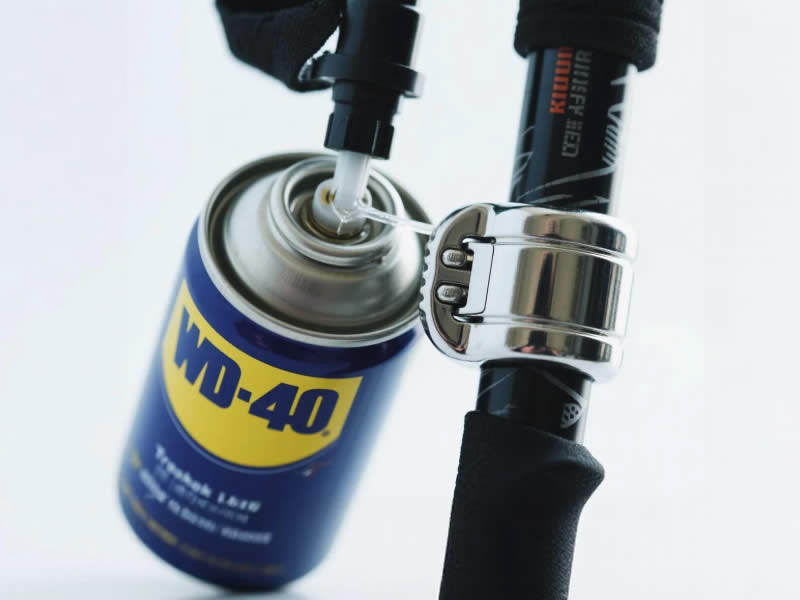
The short answer is no – you should not use standard WD‑40 on trekking pole locks. While WD‑40 is a popular household product, it is a water displacer and light solvent, not a long‑term lubricant. Using it on your trekking pole locks can lead to dirt accumulation, slipping, and even permanent damage. This article explains why WD‑40 is a bad choice and provides the correct maintenance methods for both lever locks and twist locks.
Recommended trekking pole purchase link: https://lightenup.aliexpress.com/store/1101521655
Why WD‑40 is problematic for trekking pole locks
- It leaves a sticky, oily residue – WD‑40 evaporates partially, but the remaining film becomes tacky. This residue attracts dust, sand, and grit from the trail. Over time, the lock becomes a magnet for abrasive particles, causing grinding, sticking, and accelerated wear.
- It can migrate to clamping surfaces – If any WD‑40 seeps onto the inner shaft or the inside of the outer tube where the lock grips, it reduces friction. The result: your pole will slip under load, even if the lock feels tight. This is dangerous on steep descents.
- It may damage plastic components – Many twist‑lock cams and lever housings are made of plastic. Some solvents in WD‑40 can cause certain plastics to swell, crack, or become brittle over time.
- It is not a long‑term lubricant – WD‑40 is designed for short‑term water displacement and light rust inhibition. It evaporates within hours or days, leaving behind a gummy residue that can actually increase friction. A dedicated lubricant will last much longer.
- It does not fix dirt – it spreads it – Spraying WD‑40 into a dirty lock will not clean it; it will only push the dirt deeper and turn it into an abrasive paste.
What happens when you spray WD‑40 into a lever lock?
You might think you’re helping, but the solvent will wash away any existing grease, and the residue will attract more dirt. Within a few hikes, the lever may become stiff, gritty, or start squeaking. Worse, if the residue gets on the clamping surfaces, the lock will slip.
What about using WD‑40 as a cleaner (before applying proper lubricant)?
You can use WD‑40 as a cleaning solvent on a cloth to remove old sticky residue or corrosion from metal parts – but only if you then clean the part thoroughly with isopropyl alcohol to remove all WD‑40 residue, and then apply a proper lubricant. However, for most cleaning tasks, warm soapy water and a brush are safer and more effective.
The right lubricants for trekking pole locks
For reliable, long‑lasting performance in all conditions, use dry lubricants or light oils specifically designed for outdoor gear.
For lever locks (external clamps):
- Dry silicone spray (e.g., WD‑40 Specialist Silicone) or PTFE (Teflon) spray. These leave a non‑stick film that repels dirt and moisture.
- A single drop of light machine oil (e.g., sewing machine oil, Tri‑Flow) applied directly to the hinge pin. Wipe away any excess.
For twist locks (internal cams):
- Silicone grease (a thick gel) applied only to the threads of the screw mechanism. Do not get grease on the friction surfaces (the cam or the inner shaft).
- Powdered graphite – a dry lubricant that can be applied to threads. However, silicone grease is easier to use.
What to avoid in all locks:
- Standard WD‑40 (blue and yellow can)
- Cooking oils, vegetable oils (go rancid)
- Heavy automotive grease (attracts dirt)
- Any lubricant that is “wet” or “penetrating” on clamping surfaces
Step‑by‑step correct maintenance for lever locks
- Open the lever fully.
- Clean the lock – use a soft brush (toothbrush) and warm soapy water to remove mud and grit. Rinse with fresh water, then dry with a cloth.
- Apply one drop of light oil to the hinge pin (where the lever rotates). Work the lever several times.
- Wipe away any excess – the clamping surfaces must be completely dry. Do not oil the inside of the clamp.
- Adjust tension if needed (Leki SpeedLock has a dial; Black Diamond FlickLock has a hex screw).
Step‑by‑step correct maintenance for twist locks
- Unscrew the lock completely – remove the inner shaft.
- Clean the threads and the plastic cam with a brush and soapy water. Rinse and dry thoroughly.
- Clean the friction surfaces – the inner shaft and the inside of the outer tube – with isopropyl alcohol to remove any oil. They must be bone‑dry.
- Apply a tiny amount of silicone grease to the threads of the screw. Use a toothpick.
- Reassemble – screw the lock back on. Do not grease the cam or the inner shaft.
What about using WD‑40 on other parts of the pole?
- On the shaft: WD‑40 can be used to remove sticker residue or light rust, but wipe it off completely. Silicone spray is better for protecting the shaft.
- On the carbide tip: No need.
- On the grips: Never – WD‑40 will ruin cork or foam.
Preventive maintenance for long life
- Rinse poles with fresh water after every muddy or salty hike.
- Dry poles fully extended – never store them collapsed and wet.
- Lubricate lever pivots once a season with light oil.
- Keep twist‑lock threads clean – a small brush is all you need.
Conclusion
Do not use standard WD‑40 on trekking pole locks. It leaves a sticky residue that attracts dirt, can cause slipping, and may damage plastic parts. Instead, clean locks with soap and water, then use a dry silicone spray or a single drop of light machine oil on lever pivots, and silicone grease on twist‑lock threads. With proper maintenance, your locks will remain smooth, secure, and reliable for many years – no WD‑40 required.




