




Do trekking poles reduce knee pain for Brazilian hikers over 50?
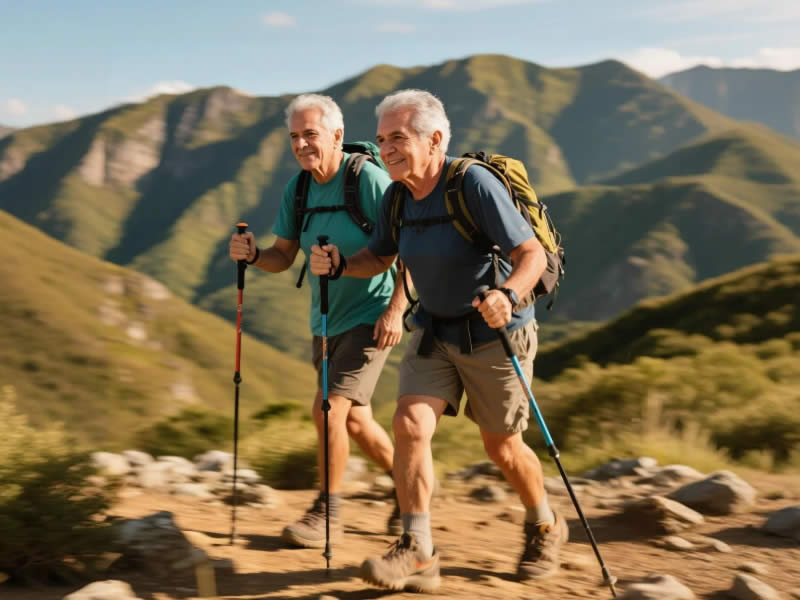
Yes – and the evidence is strong. For Brazilian hikers over 50, trekking poles can be a game‑changer in reducing knee pain, especially on the steep, rocky descents common in trails like the Serra dos Órgãos, Chapada Diamantina, or Pico da Bandeira. Biomechanical studies show that using two poles properly can lower the load on your knees by 20–25% during downhill walking. For older hikers, whose cartilage may already show wear, that reduction can mean the difference between a pain‑free hike and weeks of knee stiffness. Here’s why poles are so effective and how to use them correctly.
Recommended trekking pole purchase link: https://lightenup.aliexpress.com/store/1101521655
Why knees hurt more on descents
When you walk downhill, each step produces a force of 3‑5 times your body weight through the knee joint. Your quadriceps act as brakes, and the patellofemoral joint (behind the kneecap) takes the brunt. As we age, the meniscus (shock‑absorbing cartilage) thins, and osteoarthritis becomes more common. Without support, every step hammers the knee. Trekking poles transfer some of that load to your arms, reducing the cumulative force.
What the science says
A 2012 study in the Journal of Biomechanics measured knee joint forces in hikers descending a 15° slope. With two poles, peak knee compression force dropped by approximately 20‑25% compared to walking without poles. For a 75‑kg hiker, that’s saving about 15‑18 kg of load per step. Over a 500‑meter descent with 1,000 steps, poles spare your knees nearly 15 tonnes of cumulative force. For older hikers with existing knee pain, this can be transformative.
Brazilian terrain makes poles especially valuable
Brazil’s mountains are often steep, with loose quartzite, granite slabs, and muddy sections. The Atlantic Forest and Serra da Mantiqueira have constant ups and downs. A 50‑year‑old hiker in good shape can still feel knee strain after a long descent. Poles provide four points of contact, improve balance (reducing falls), and allow you to engage your arms and back, spreading the workload. Many Brazilian hikers over 50 report that poles have extended their hiking life by years.
How to use poles to maximise knee protection
- Lengthen poles for every descent – Add 5‑10 cm to your flat‑ground length. This lets you plant the pole ahead of your foot, creating a braking angle.
- Use wrist straps correctly – Insert your hand up through the strap from below, so the strap sits between thumb and index finger. Relax your grip – the strap transfers weight to your arms.
- Push down actively – Don’t just tap; push firmly as you step. You’ll feel your triceps and lats working – that’s load being taken off your knees.
- Choose the right poles – 7075 aluminium with lever locks (e.g., Leki Makalu, Decathlon Forclaz MT500) are durable and reliable. Avoid heavy or twist‑lock poles.
- Adjust length for uphill too – Shorten poles by 5‑10 cm. This keeps your arms low and saves your quads, which indirectly helps your knees by reducing overall fatigue.
Additional benefits for hikers over 50
- Better balance – Two poles give you four points of contact, reducing fall risk – crucial because a fall can be more serious for older bones.
- Reduced back strain – Poles encourage an upright posture, taking pressure off the lumbar spine.
- Upper‑body engagement – Poles turn hiking into a full‑body exercise, improving cardiovascular health and muscle strength.
Real‑world feedback from Brazilian hikers
In hiking forums and interviews, many over‑50 Brazilians credit poles with allowing them to continue hiking into their 60s and 70s. One hiker from Belo Horizonte said: “After I turned 55, my knees ached after every descent. I bought a pair of Leki Makalu, learned to use the straps, and now I can do the Travessia Petrópolis–Teresópolis without knee pain. I wish I had started years earlier.”
What about shock‑absorbing poles? – Not necessary. Springs cushion wrists, not knees. Rigid poles with correct technique are just as effective and more reliable.
Final verdict
Yes, trekking poles significantly reduce knee pain for Brazilian hikers over 50 – provided you use them correctly. The key is to lengthen poles for descents, use the wrist straps to transfer weight, and push down actively. Combine poles with good footwear, hiking poles, and proper pacing. For anyone over 50 looking to enjoy Brazil’s stunning mountain trails for another decade, a good pair of trekking poles is one of the best investments you can make. Your knees will thank you.




