




Can trekking poles prevent falls on uneven Brazilian cobblestone streets?
Yes – and they can be remarkably effective. Brazilian cobblestone streets (known as calçada portuguesa or paralelepípedo) are beautiful but notoriously uneven. From the historic centres of Salvador, Recife, and Ouro Preto to the winding streets of Paraty and the sidewalks of Rio’s Santa Teresa neighbourhood, these stones can be slick, irregular, and treacherous – especially after rain. A single misstep can lead to a twisted ankle, a bruised knee, or a more serious fall. Trekking poles, used in pairs, significantly reduce that risk. Here’s why and how to use them effectively.
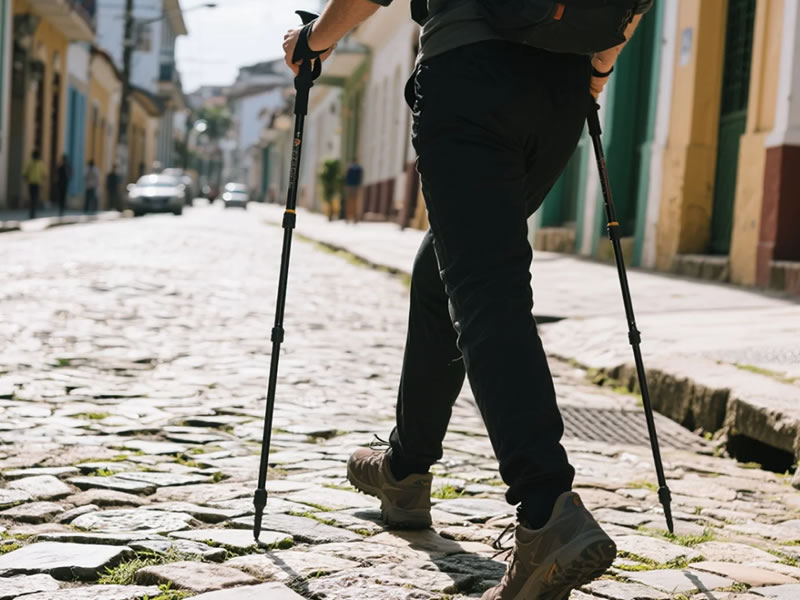
Recommended trekking pole purchase link: https://lightenup.aliexpress.com/store/1101521655
Why cobblestones are a fall hazard
- Uneven surfaces: Stones are set at different heights, creating edges that can catch your foot.
- Slippery when wet: Moss, algae, and rain turn polished cobblestones into a skating rink.
- Hidden gaps: Loose stones or missing chunks can cause a sudden shift in footing.
- Trips and stumbles: A raised stone edge is a classic tripping hazard.
How trekking poles prevent falls
- Four points of contact – the biggest advantageWith two feet and two poles, you have four points of contact with the ground. This widens your base of support dramatically. When one foot slips, the poles can support your weight instantly, preventing a fall. With a single walking stick, you have only three points – far less stable.
- Probing aheadBefore you step onto a suspect stone, you can plant a pole on it to test its stability. If the pole wobbles or the stone shifts, you can adjust your footing. This tactile feedback is invaluable on unfamiliar streets.
- Recovering from a slipIf your foot does start to slide, a quick plant of the pole can arrest the motion. The carbide tip (with a rubber cover for cobblestones) provides grip, giving you time to regain balance.
- Reduced knee and ankle strainBy transferring some of your weight to your arms, poles reduce the load on your lower body joints. This is especially helpful for older adults or those with existing joint issues, as it allows you to walk more cautiously without fatigue.
The right setup for cobblestones
- Always use rubber tips (paw covers) – Do not use bare carbide tips on cobblestones. Carbide will skid, damage the stones, and wear out quickly. Rubber tips provide excellent traction on wet or dry stone. They also reduce noise and protect your poles.
- Shorten poles slightly – On uneven surfaces, a slightly shorter pole (2‑3 cm less than your flat‑ground length) gives you more control and reduces the chance of over‑reaching.
- Use both poles – Never one. Two poles provide balanced, bilateral support.
- Adjust wrist straps correctly – Hand up from below, strap between thumb and index finger. Relax your grip – the strap bears your weight.
Technique for walking on cobblestones
- Look ahead, not down – Scan the path for obvious hazards, but let your peripheral vision and pole feedback guide you.
- Plant the pole near your forward foot – Do not over‑reach. A short, vertical plant is most stable.
- Use an alternating rhythm – Right foot forward, left pole down; left foot forward, right pole down. This natural gait is most efficient.
- Take shorter steps – A shorter stride reduces the chance of catching a stone edge.
- On wet cobblestones, plant more firmly – The rubber tip needs a bit of pressure to grip.
- If you feel a stone shift, pause – Use your poles to stabilise while you find a secure foothold.
What about using a single walking stick?
A single cane or walking stick is far less effective. It creates an asymmetrical gait, may cause you to lean, and provides only three points of contact. For cobblestones, two trekking poles are vastly superior.
Additional tips for Brazilian cobblestone streets
- Wear appropriate footwear – Poles help, but shoes with grippy rubber soles (e.g., approach shoes or walking shoes) also matter. Avoid smooth‑soled dress shoes.
- Be extra cautious after rain – Wet stones are extremely slippery. Plant each pole deliberately.
- Avoid polished or shiny stones – These are often the most slippery. Step on the rougher, darker stones.
- Take your time – Rushing is the enemy of balance. Let the poles set the pace.
Who benefits most?
- Seniors – Those with age‑related balance decline can walk historic streets with confidence.
- People with mobility issues – Arthritis, knee or hip replacements, or neurological conditions.
- Tourists – Unfamiliar with the terrain, they can use poles to explore without fear.
- Anyone with weak ankles or a history of falls – The extra stability is invaluable.
Where to buy or rent poles in Brazil
- Decathlon – Affordable trekking poles (Forclaz MT500) with rubber tips included. Available in many cities.
- Adventure Sport – Premium Leki poles, also with rubber tips.
- Pharmacies (for walking sticks) – But these are single‑point canes, not as good. Invest in a pair of trekking poles.
Conclusion
Yes, trekking poles are highly effective at preventing falls on uneven Brazilian cobblestone streets. Used in pairs, with rubber tips and proper technique, they give you four points of contact, help you probe ahead, and allow you to recover from slips. Whether you are a senior exploring the historic centre of Salvador, a tourist enjoying the charm of Paraty, or a resident navigating your daily walk, a pair of trekking poles can turn a treacherous stroll into a confident, safe experience. Don’t let cobblestones trip you up – take two poles and enjoy the beauty of Brazil’s streets without fear.




