




Can trekking poles be used indoors for physical therapy exercises?
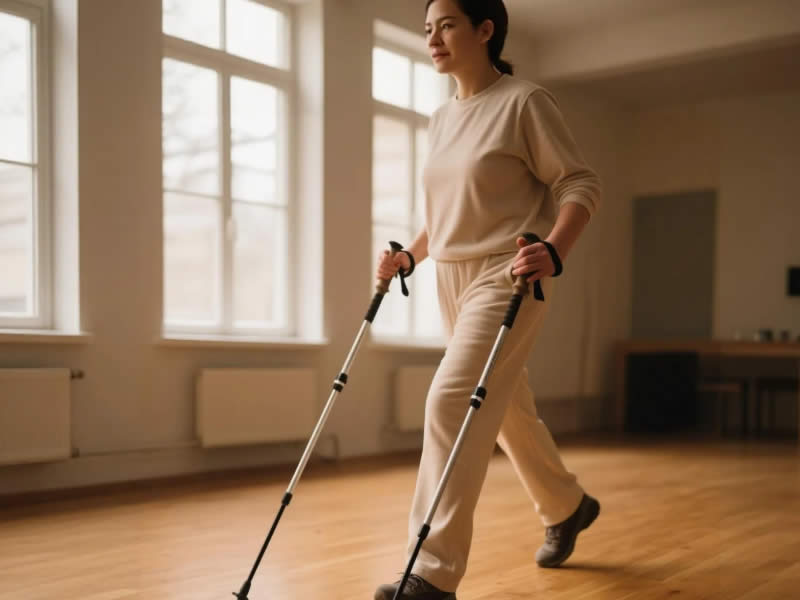
Yes – and they can be highly effective. Trekking poles are not just for trails; they are versatile tools that can be used indoors for a variety of physical therapy exercises, under the guidance of a physiotherapist. When fitted with rubber tips to protect floors and provide grip, they offer stable, adjustable support for balance training, gait retraining, strengthening, and proprioceptive exercises. This article explores how trekking poles can be integrated into home‑based rehabilitation, along with safety considerations and specific exercises.
Recommended trekking pole purchase link: https://lightenup.aliexpress.com/store/1101521655
Why trekking poles are suitable for indoor PT
- Bilateral support – Two poles provide four points of contact, creating a wide, stable base. This is especially helpful for patients recovering from stroke, hip or knee replacement, or those with generalised weakness.
- Adjustable height – Unlike fixed‑height walking sticks, trekking poles can be set to the exact length needed for different exercises (e.g., shorter for seated work, longer for standing balance).
- Lightweight – Aluminium or carbon poles are easy to lift and reposition, reducing arm fatigue.
- Ergonomic grips – Cork or foam handles with padded straps allow for relaxed grip, reducing strain on arthritic hands.
- Interchangeable tips – Rubber paw covers provide excellent grip on tile, wood, or linoleum without scratching.
Essential safety modifications for indoor use
- Always use rubber tips – Remove the carbide tips and fit rubber paw covers. Carbide tips will slide on hard floors and can cause falls or damage the floor.
- Check floor condition – Avoid very smooth, polished floors that can be slippery even with rubber tips. Use non‑slip mats if needed.
- Clear the area – Remove rugs, cords, or obstacles to prevent tripping.
- Ensure adequate space – You need room to swing the poles without hitting furniture.
Specific physical therapy exercises with trekking poles
Always consult your physiotherapist before starting any new exercise programme. They can tailor the exercises to your condition.
1. Standing balance training
- Stand with feet hip‑width apart, poles planted vertically at your sides, rubber tips on the floor.
- Slowly shift weight to one leg while lightly holding the poles for support.
- Progress to lifting one foot off the ground, using poles to maintain balance.
- To challenge proprioception, stand on a cushion or folded towel while holding poles.
2. Gait retraining (walking practice)
- Walk in a straight line, using an opposite arm‑leg rhythm (right foot forward, left pole forward). This helps re‑learn a natural gait pattern after stroke or surgery.
- Use a mirror to check posture – poles encourage an upright torso.
- Progress from slow walking to faster walking, then to walking around obstacles.
3. Sit‑to‑stand strengthening
- Place poles vertically in front of a sturdy chair (non‑slip feet).
- Grip the poles with hands, lean slightly forward, and push up to standing using your legs and arms.
- This reduces load on knees and hips while building quadriceps strength. To increase difficulty, use only one pole or no poles.
4. Upper body strengthening
- Seated row: Hold both poles horizontally, pull towards your chest to work back muscles.
- Overhead press (with caution): Use one pole as a lightweight bar for shoulder flexion.
- Triceps extension: Hold one pole behind your head (like a dumbbell) and extend your arms.
5. Proprioception and coordination
- Pole tapping: Stand on one leg (hold a pole for balance). Tap the other pole on the floor in different patterns (front, side, back). This challenges coordination and weight shift.
- Figure‑of‑eight walking: Walk in a figure‑of‑eight pattern around two chairs, using poles to maintain stability.
6. Stretching with poles
- Chest stretch: Hold both poles horizontally behind your back, then gently pull to open your chest.
- Hamstring stretch: Place one pole on the floor, heel on the pole, and lean forward (with support from the other pole).
Comparison with standard walking sticks
| Feature | Trekking poles (pair) | Single walking stick |
|---|---|---|
| Balance support | Excellent (4 points) | Fair (3 points) |
| Gait symmetry | Encourages natural rhythm | Can cause limp |
| Upper body engagement | High | Low |
| Adjustability | Fine length control | Fixed or limited |
| Indoor grip (rubber tips) | Good | Moderate |
For balance training and gait retraining, two poles are almost always superior to one stick.
Precautions and when to avoid
- Do not use trekking poles as a substitute for a walker or rollator if you need wide‑base support. They do not provide the same stability as a four‑wheeled walker.
- If you have severe balance impairment (e.g., vestibular disorders, Parkinson’s with freezing), practice with a physiotherapist present first.
- Follow your rehab programme – poles are a tool, not a replacement for prescribed exercises.
- Consult your physiotherapist before starting any new exercise equipment. They can advise on pole length, technique, and progression.
Setting up the poles for indoor PT
- Length: For standing balance, set poles so that with arms relaxed, your elbow is at 90° when the rubber tip is on the floor. Mark this length.
- Wrist straps: Use them correctly – hand up from below, strap between thumb and index finger. The strap bears weight, not your grip.
- Rubber tips: Ensure they are clean and have adequate tread. Replace worn tips.
Example home programme for a patient with knee replacement (week 8)
- Sit‑to‑stand: 2 sets of 10 reps with poles.
- Standing balance (double leg): 30 seconds, 3 times.
- Gait training: Walk 10 metres using opposite arm‑leg rhythm, rest, repeat 5 times.
- Seated row: 2 sets of 12 reps.
- Hamstring stretch: 30 seconds each leg.
Final thoughts
Trekking poles are an excellent, low‑cost addition to indoor physical therapy. They offer adjustable, bilateral support for a range of exercises, from balance training to strengthening. With rubber tips fitted and under professional guidance, they can help you regain mobility, confidence, and independence. Always consult your physiotherapist before beginning, and use proper technique to maximise benefits and minimise risk. Whether you are recovering from surgery, managing a neurological condition, or simply improving balance, trekking poles can be a valuable tool in your home rehab kit.




