




Can trekking poles improve walking posture and prevent back pain in Brazil?
Yes – and for many Brazilians, the improvement can be dramatic. Whether you are walking on the uneven cobblestones of Paraty, the cracked sidewalks of São Paulo, or the gentle paths of Ibirapuera Park, trekking poles can transform your posture, relieve back strain, and make walking a pleasure rather than a pain. The key lies in how the poles encourage an upright spine, offload the lower back, and promote a natural, symmetric gait. This article explains the biomechanics, offers practical tips for Brazilian conditions, and reviews the evidence.
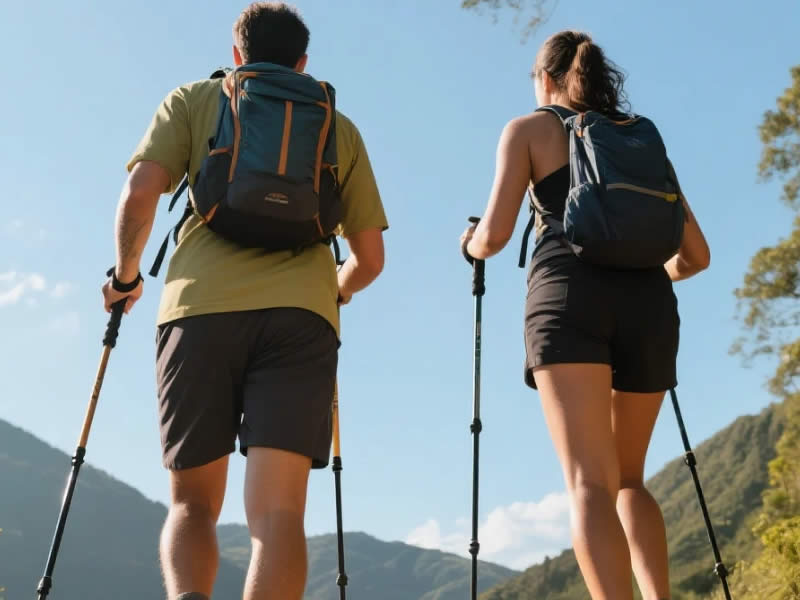
Recommended trekking pole purchase link: https://lightenup.aliexpress.com/store/1101521655
The link between posture and back pain
Poor walking posture – rounded shoulders, a forward head, and a slouched lower back – is common, especially as we age. This “hiking slouch” compresses the lumbar discs, overworks the erector spinae muscles, and can lead to chronic lower back pain. In Brazil, where many paths are uneven and require constant micro‑adjustments, people often hunch forward to watch their feet, exacerbating the problem. Trekking poles counteract this by providing tactile feedback and encouraging a more upright stance.
How trekking poles improve posture
- Arm position naturally opens your chest – When you hold the poles correctly (elbows at 90°, hands forward), your shoulders roll back, your sternum lifts, and your head aligns over your spine. This is the opposite of the slouched position. Even without pushing down, the act of holding the poles reminds you to stand tall.
- Wrist straps transfer weight to your arms – The correct use of wrist straps (hand up from below, strap between thumb and index finger) allows you to relax your grip and let the strap bear weight. When you push down on the poles, the force travels through your arms and shoulders, offloading your spine. This reduces the compressive load on your lumbar discs and the tension in your paraspinal muscles.
- Opposite arm‑leg rhythm stabilises the torso – Walking with an alternating pattern (right foot, left pole) engages your core and stabilising muscles, preventing the excessive rotation and side‑bending that can irritate the lower back.
- Tactile feedback prevents slouching – As you walk, the poles provide constant feedback. If you start to hunch, your hands will feel too low relative to the poles, prompting you to stand up straight.
What the research says
A 2018 study in Gait & Posture measured the effect of trekking poles on posture in older adults. Participants who used two poles showed significantly reduced thoracic kyphosis (upper back rounding) and increased lumbar lordosis (lower back curve) towards a neutral, healthy position. Another study found that using poles for six weeks reduced self‑reported back pain by 30% in people with chronic lower back pain, compared to walking without poles.
Why this matters in Brazil
Brazil’s walking environments are diverse and often challenging:
- Cobblestone streets (calçada portuguesa) – Very uneven, requiring constant attention. Poles allow you to look ahead instead of down, keeping your spine aligned.
- Sloping pavements – Many sidewalks are tilted towards the road. Two poles help you keep your torso vertical.
- Park paths – Even in well‑maintained parks, tree roots and cracks can cause trips. Poles give you four points of contact, reducing the need to brace with your back.
Additionally, the Brazilian climate (heat, humidity) can make walking uncomfortable. Sweat causes many people to slouch. Cork‑grip poles absorb sweat and stay non‑slip, making it easier to maintain good posture.
Practical tips for back‑friendly walking with poles in Brazil
- Set the correct length – On flat ground, your elbow should be at 90° when the rubber tip is on the ground. Mark this length. Incorrect length is the #1 cause of back strain.
- Use rubber tips on pavement – Carbide tips are for dirt; on hard surfaces, they transmit more shock and can slip. Rubber paw covers provide grip and reduce impact.
- Master the wrist strap – This is the most overlooked technique. Insert your hand up from below, then grip lightly. When you push down, the strap bears weight. Relax your fingers – your back will thank you.
- Look ahead, not down – Use peripheral vision and the tactile feedback of the poles to monitor footing. Your head should be level, chin tucked.
- Engage your core – Lightly brace your abdominal muscles. This stabilises your spine and enhances the postural benefits.
- Take short, quick steps – On uneven ground, a shorter stride reduces the torsional stress on your back.
- Use two poles – One pole may cause you to lean, aggravating back pain. Two poles provide symmetrical support.
Choosing the right poles for back pain
- Lightweight aluminium (e.g., Decathlon Forclaz MT500, Leki Makalu) – Provides good vibration damping. Carbon is fine but transmits more high‑frequency vibration.
- Lever locks – Easier to adjust than twist locks, and they hold securely.
- Cork grips – Best for humid Brazil; they absorb sweat and stay non‑slip.
- Padded wrist straps – Wide, soft straps reduce pressure points.
What to avoid
- Walking with one pole – This creates asymmetry and can cause back pain.
- Using poles that are too short – Forces you to hunch forward.
- Using poles that are too long – Makes you shrug your shoulders, straining your neck and upper back.
- Gripping too tightly – Creates tension that radiates to your shoulders and upper back.
Testimonial from a Brazilian user
“I’m 62 and have had lower back pain for years. Walking in my neighbourhood in Rio was painful. A friend recommended trekking poles. At first, I was sceptical, but after learning to use the wrist straps correctly, my posture improved dramatically. Now I walk 5 km every morning with almost no back pain. I wish I had discovered them earlier.” – Carlos, Rio de Janeiro
Conclusion
Yes, trekking poles can significantly improve walking posture and prevent back pain in Brazil. By encouraging an upright torso, transferring weight to your arms, and providing four points of contact, they reduce the compressive load on your spine and the strain on your back muscles. The key is correct technique: proper length, wrist strap use, and two poles. With rubber tips for pavement and cork grips for humidity, you can walk the streets and parks of Brazil with a straight back, a lighter step, and far less pain. Always consult your doctor before starting any new exercise, but for most people, trekking poles are a simple, effective tool for back‑friendly walking.




