




Are there trekking pole exercise routines for Brazilian seniors in city parks?
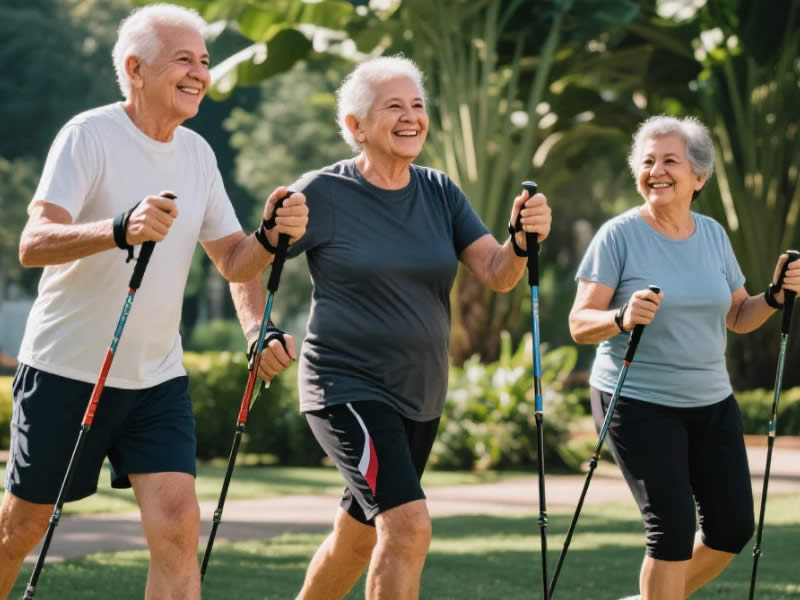
Yes – and they are becoming increasingly common across Brazil. Many city parks – such as Ibirapuera in São Paulo, Parque da Cidade in Rio de Janeiro, and Parque do Ingá in Maringá – now offer organised Nordic walking or trekking pole groups specifically designed for older adults. Additionally, a wealth of free online routines (in Portuguese) can guide seniors through balance, strength, and cardiovascular exercises using trekking poles. This article explores where to find these programmes, provides sample exercises, and offers safety tips for Brazilian seniors.
Recommended trekking pole purchase link: https://lightenup.aliexpress.com/store/1101521655
Where to find trekking pole exercise groups in Brazilian city parks
- Community Nordic walking groups – Several cities have “Caminhada Nórdica” or “Nordic Walking” groups led by physical educators or physiotherapists. These groups usually meet in large parks early in the morning. To find one, search on Facebook (“Caminhada Nórdica [city name]”) or ask at the park’s administration office. Some are free; others charge a small fee.
- Park fitness programmes (Programa Academia da Cidade) – In São Paulo, the “Academia da Cidade” programme offers free supervised exercise classes in many parks. Some locations now include walking poles as part of their senior‑fitness curriculum. Check the local municipal website for schedules.
- Physiotherapy clinics – Some clinics organise outdoor walking pole groups for their patients. Inquire with your physiotherapist.
- Online resources (YouTube) – Search for “exercícios com bastões de trilha para idosos” or “treino com bastões nordic walking”. Channels like “Atividade Física para Idosos” and “Viver Melhor” offer free routines that can be followed in any park.
Sample trekking pole exercise routine for a city park (30‑40 minutes)
Always warm up with 5 minutes of easy walking without poles.
1. Balance circuit (10 minutes)
- Single‑leg stand (with poles): Hold both poles vertically in front of you, tips on the ground. Lift one foot off the ground, holding for 10‑15 seconds. Switch legs. Repeat 3 times each side. The poles provide extra stability.
- Tandem walking (heel‑to‑toe): Walk along a straight line (e.g., a painted path), placing the heel of one foot directly in front of the toes of the other. Use poles to maintain balance. This trains coordination and dynamic balance.
- Side steps: Step sideways, moving one pole at a time. Keep your torso upright. This strengthens hip abductors and improves lateral stability.
2. Strengthening (10 minutes)
- Sit‑to‑stand on a bench: Place poles vertically in front of a park bench. Grip the poles, lean forward, and push up to standing using your legs and arms. Slowly lower back down. Repeat 10 times.
- Calf raises: Stand with poles lightly planted. Rise onto your toes, hold for 2 seconds, then lower. 2 sets of 12 reps.
- Seated row (on a bench): Sit on a bench, hold both poles horizontally in front of your chest. Pull the poles towards your chest, squeezing your shoulder blades. Repeat 12 times.
3. Aerobic walking (15 minutes)
- Use the opposite arm‑leg rhythm (right foot forward, left pole down). Walk at a brisk but comfortable pace. For variety, include:Fast intervals: 2 minutes faster, 1 minute slower.High knees: Lift knees higher with each step, using poles for support.Backwards walking: Short distances (10‑15 metres) – excellent for knee health.
4. Cool‑down and stretching (5 minutes)
- Chest stretch: Hold both poles horizontally behind your back, gently pull to open your chest.
- Hamstring stretch: Place one pole on the ground, heel on the pole, lean forward (support with the other pole).
- Shoulder stretch: Hold one pole vertically behind your back, one hand at the top, the other at the bottom. Pull gently.
Tips for Brazilian seniors using poles in parks
- Always use rubber tips – Carbide tips are for dirt; on pavement or grass, rubber paw covers provide grip and protect the pole.
- Check the ground – Avoid very wet grass or slippery cobblestones. Start on dry, flat paths.
- Use two poles – One pole does not provide the bilateral support needed for balance and symmetry.
- Adjust pole height – On flat ground, your elbow should be at 90°. Mark the shaft with tape.
- Listen to your body – If you feel pain (not just effort), stop and rest.
- Stay hydrated – Brazilian heat can be intense. Bring a water bottle.
Benefits of park‑based pole exercise for seniors
- Social interaction – Group classes combat isolation.
- Improved balance – Reduces fall risk on uneven park paths.
- Upper body conditioning – Strengthens arms, shoulders, and back.
- Low‑impact cardiovascular training – Gentle on joints.
- Enjoyment of nature – Fresh air and green spaces boost mood.
If you cannot find a group, start your own!
Invite two or three friends to meet at the park. Download a routine from YouTube. Practice together. Many seniors report that having a buddy makes exercising with poles more fun and sustainable.
Conclusion
Yes, there are many trekking pole exercise routines available for Brazilian seniors in city parks – through organised groups, municipal programmes, and free online videos. A simple 30‑minute circuit of balance, strengthening, and walking can dramatically improve your stability, reduce fall risk, and make park visits more enjoyable. Remember to use rubber tips, two poles, and correct height. Whether you join a class or follow a YouTube video, grab your poles and head to your local park. Your body – and your confidence – will thank you.




