




Do I really need trekking poles for hiking in Brazil?
If you’ve browsed gear forums or watched YouTube hikers, you’ve seen the debate. Some swear by poles; others call them unnecessary weight. So, for Brazil’s famously diverse trails—from the sticky red mud of the Atlantic Forest to the quartz‑scrambled peaks of the Chapada Diamantina—do you really need trekking poles?
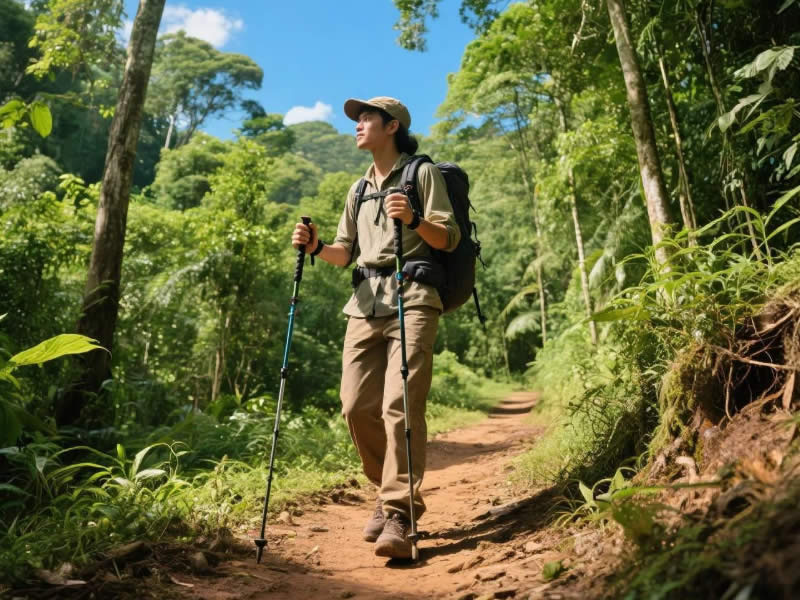
Recommended trekking pole purchase link: https://lightenup.aliexpress.com/store/1101521655
The short answer: it depends on the hike, but for most Brazilian terrain, poles offer real benefits. Let’s break it down.
When you can skip poles
Short, flat, well‑maintained trails—like the easy loops in Parque Nacional de Brasília or the coastal boardwalks of Rio’s Morro da Urca—don’t require poles. If you’re ultralight and confident in your balance, leave them behind. Also, if you’re hiking mostly sandy paths (Lençóis Maranhenses), poles sink and drag; you’re better with just your feet.
When poles become essential
Brazil’s signature hiking challenges make poles shine:
- Steep descents on wet clay – The Serra do Mar (e.g., Pico da Tijuca) has notoriously slippery slopes after rain. Poles act as brakes, saving your knees and preventing nasty falls.
- Rocky and uneven terrain – In the Chapada dos Veadeiros or Serra da Canastra, trails are littered with loose stones. Two poles quadruple your points of contact, improving stability when crossing boulder fields.
- Mud and deep leaf litter – The Amazon’s edge trails and parts of the Mata Atlântica have sections where your foot sinks unpredictably. Poles help you probe depth and maintain rhythm.
- River crossings – Many Brazilian treks involve wading shallow rivers. Poles give you a third and fourth leg against slippery rocks and current.
- Multi‑day treks with a heavy pack – If you’re hiking the Vale do Pati (Chapada Diamantina) for 4 days with food and tent, poles reduce cumulative load on your knees by up to 25%.
Hidden benefits for Brazil
- Wildlife deterrent – A quick pole tap on a rock can warn off snakes (jararacas) or scare curious monkeys.
- Spider web removal – Early morning trails in the Atlantic Forest are full of webs; a raised pole clears the path.
- Tent support – In a pinch, two poles replace a broken tent pole.
What to buy if you decide yes
For Brazilian conditions, choose aluminum poles with flick locks (mud clogs twist locks). Cork grips handle humidity well. Avoid ultralight carbon if you plan to stress them between rocks.
Final verdict
No, you don’t need trekking poles for every walk in Brazil. But for the country’s most rewarding hikes—steep, slippery, rocky, or muddy—they transform safety and comfort. Rent a pair first, then decide. After one long descent in Serra Fina, you’ll likely become a believer.




