




Can trekking poles damage fragile Brazilian trail ecosystems?
Brazil is home to some of the world’s most biodiverse yet vulnerable ecosystems: the Atlantic Forest (Mata Atlântica), the Cerrado savanna, the Amazon rainforest, and the high‑altitude campos rupestres. As trekking grows in popularity, more hikers are using trekking poles. But a simple metal tip repeatedly striking the ground raises a critical question: can trekking poles actually harm these delicate environments?
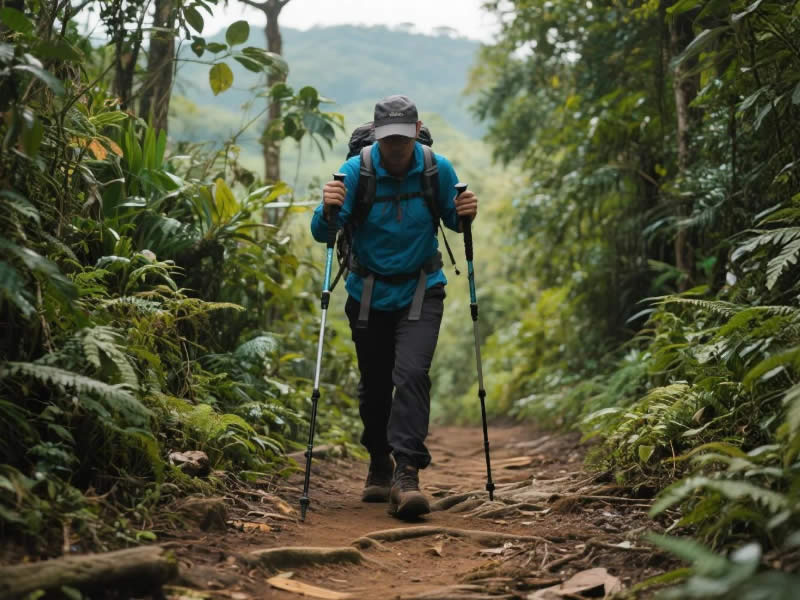
Recommended trekking pole purchase link: https://lightenup.aliexpress.com/store/1101521655
The short answer is yes, they can. But with awareness and simple adaptations, you can minimize or eliminate the damage. Let’s explore the science, the risks, and the solutions.
How trekking poles cause ecological damage
- Soil compaction – Each pole strike compresses the soil, reducing pore space. Compacted soil holds less water, limits root growth, and makes it harder for plants to establish. In fragile habitats like the campos rupestres (rocky fields) of the Chapada Diamantina or Serra do Cipó, the soil is already thin and poor. Repeated pole impacts can turn a viable micro‑habitat into degraded ground.
- Root and rhizome damage – Many Brazilian trailside plants have shallow root systems or underground stems (rhizomes). A carbide tip can pierce and kill these structures. In the Atlantic Forest, where endemic bromeliads and orchids grow near trails, a single misplaced pole strike can destroy a plant that took years to mature.
- Erosion acceleration – Poles create small puncture holes. On steep, rain‑prone slopes (common in the Serra do Mar), these holes become starting points for water channeling, leading to rill erosion. Over time, trails widen and deepen, scarring the landscape.
- Moss and lichen destruction – In high‑humidity environments like the Amazon’s edge or the Atlantic Forest’s cloud forests, mosses and lichens cover rocks and logs. They are extremely slow‑growing. A carbide tip scrapes them off, leaving bare rock that may never fully recover.
- Disturbance of small fauna – Pole tips can puncture ant nests, spider burrows, or the hiding spots of small lizards and frogs. While seemingly minor, cumulative disturbance affects local food webs.
Brazilian ecosystems at highest risk
- Campos rupestres (rocky fields) – Thin soil, endemic and slow‑growing plants (e.g., Vellozia species). One pole strike can kill a plant that took decades to reach maturity.
- Mata Atlântica (Atlantic Forest) – High biodiversity, many rare epiphytes near ground level. Wet conditions mean soil is easily compacted.
- Restinga (coastal sandy scrub) – Extremely fragile sandy soils with specialized plants. Pole holes accelerate wind erosion.
- High‑altitude grasslands (e.g., Serra da Mantiqueira) – Short growing season, plants adapted to cold. Tip damage may not heal within the plant’s life cycle.
The good news: you can prevent damage
- Use rubber tip covers – This is the single most effective solution. Rubber tips (often included with poles) distribute force over a wider area, preventing puncture. They also reduce noise and slipping on rock. Keep them on unless you’re on ice or hard, non‑fragile surfaces.
- Stay on marked trails – Never use poles to hack at vegetation or to “test” off‑trail ground. Off‑trail hiking is already harmful; poles only compound it.
- Adopt a “soft strike” technique – Place poles gently rather than stabbing. On flat or gentle slopes, consider carrying poles in one hand or strapping them to your pack if not needed.
- Choose the right trail for pole use – On sandy or already degraded trails, poles aren’t necessary. Save them for steep, slippery, or rocky sections where safety outweighs impact.
- Clean poles between trips – Soil and seeds stuck to tips can introduce invasive species to new areas. Wipe or rinse poles before moving between different Brazilian parks.
What trail organizations say
Brazilian park authorities (ICMBio, state parks like Serra do Cipó) do not explicitly ban trekking poles, but many recommend rubber tips. In extremely sensitive areas (e.g., moss‑covered sections of Parque Nacional do Itatiaia), some guides ask hikers to stow poles entirely.
Bottom line
Yes, trekking poles can damage fragile Brazilian trail ecosystems—but only if used carelessly. By fitting rubber covers, staying on trails, and striking gently, you protect your knees and the environment. Responsible gear use is part of Leave No Trace. Trek smart, and Brazil’s incredible nature will remain intact for generations.




