




Do professional Brazilian mountain guides use trekking poles?
If you’ve ever watched a Brazilian mountain guide navigate a steep, muddy descent in the Serra do Mar or scramble across quartzite boulders in the Chapada Diamantina, you might wonder: do these experts rely on trekking poles, or do they trust their feet alone? The short answer is yes, most professional Brazilian guides do use trekking poles—but with selectivity and technique that comes from years of experience.
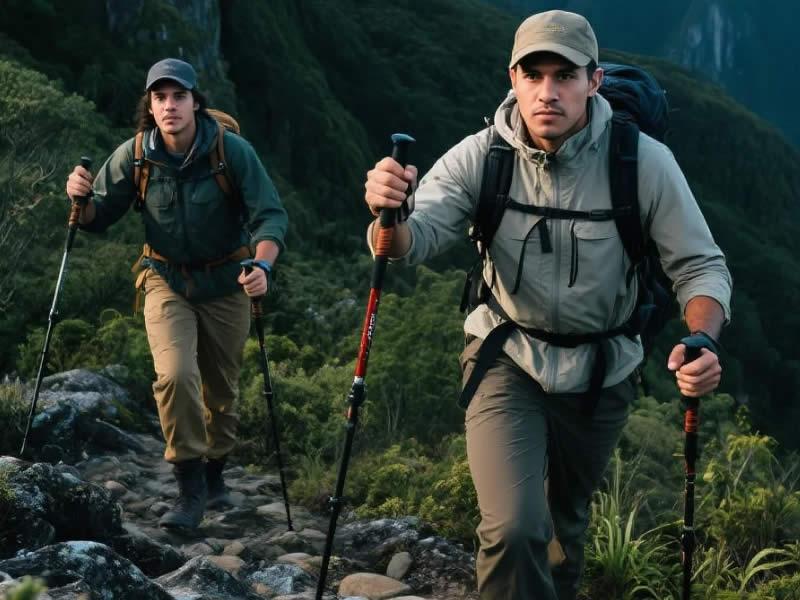
Recommended trekking pole purchase link: https://lightenup.aliexpress.com/store/1101521655
Let’s dive into when, why, and how Brazilian guides incorporate poles into their work.
The short answer: often, but not always
Unlike casual hikers who might carry poles “just in case,” professional guides treat poles as situational tools. On technical, steep, or slippery terrain, you’ll see almost every guide using them. On gentle, well‑maintained trails or sandy paths, many guides leave poles behind or strap them to their packs.
Why Brazilian guides use poles
- Knee preservation – Guides lead multiple treks per week, often descending hundreds of meters in a day. The cumulative load on knees is enormous. Poles reduce impact by 20–30%, allowing guides to work into their 50s and 60s without debilitating joint pain.
- Stability on Brazil’s signature slippery surfaces – The Atlantic Forest’s red clay becomes an ice rink after rain. Guides in Rio’s Tijuca Forest or the Serra do Mar almost universally use poles to prevent falls while carrying first‑aid kits or group gear.
- River crossing safety – Many Brazilian treks (e.g., in the Chapada dos Veadeiros or Vale do Pati) require wading. Guides use two poles as outriggers to maintain balance against current and slippery rocks.
- Wildlife and web management – Early morning hikes in humid forests mean spider webs across the trail. Guides raise a pole to clear the path without stopping. A quick pole tap on a rock also warns off snakes like the jararaca.
- Load distribution – Guides often carry heavy packs (10–15 kg) with emergency equipment, water, and client snacks. Poles transfer some weight from legs and lower back, reducing fatigue over multi‑day treks.
When they skip poles
Professional guides are also minimalists. They avoid poles when:
- Trail is flat and soft (e.g., sandy sections of Lençóis Maranhenses) – poles sink and create drag.
- Scrambling over large boulders – poles become a hindrance; guides use hands for balance.
- Short or easy day hikes – unnecessary weight and hassle.
Regional differences among Brazilian guides
- Serra do Mar (RJ/SP) – Very high pole usage (90%+). Mud and steep grades make poles almost mandatory.
- Chapada Diamantina (BA) – Moderate usage (~70%). Rocky sections and long ascents favor poles, but some guides prefer hands‑free scrambling.
- Pantanal – Almost never. Flat, wet, or boat‑based hiking makes poles impractical.
- Serra da Canastra (MG) – Moderate to high. Rolling hills with loose stones.
What guides recommend for clients
Professional guides in Brazil consistently advise their clients to use trekking poles on any multi‑day trek or any hike with over 300 m of elevation gain. They often carry a spare pair for clients who show up without them. Guides emphasize two poles (not one) for balance and knee protection, and they insist on rubber tip covers to reduce trail erosion—a sign of their environmental awareness.
Favorite poles among Brazilian guides
Based on interviews with guides from Rio to Bahia, the most trusted models are:
- Black Diamond Trail Ergo Cork – Durable aluminum, reliable flick locks.
- LEKI Makalu Lite – Classic, easy to repair in the field.
- Cascade Mountain Tech Carbon – Budget choice for lighter duties.
Most avoid twist‑locks (mud and humidity cause failure) and ultra‑light carbon (too brittle for rocky trails).
The bottom line
Yes, professional Brazilian mountain guides widely use trekking poles—but with intelligence. They deploy them where safety and efficiency demand, and stow them where they’re unnecessary. Their approach is a great lesson for any hiker: poles are a tool, not a crutch. Use them when they help; carry them when they don’t. If you want to hike like a Brazilian pro, invest in quality poles, learn proper technique, and always protect the trail with rubber tips.




