




Can children safely use trekking poles on family hikes in Brazil?
Taking your family on a hike through Brazil’s stunning landscapes—whether it’s the forested trails of Parque Nacional da Tijuca in Rio, the gentle waterfalls of Chapada dos Veadeiros, or the coastal paths of Ilha Grande—is a wonderful way to connect with nature. If your child has seen you using trekking poles, they may want their own. The question is: can children safely use trekking poles on family hikes in Brazil? The answer is yes, with proper precautions, supervision, and the right equipment.
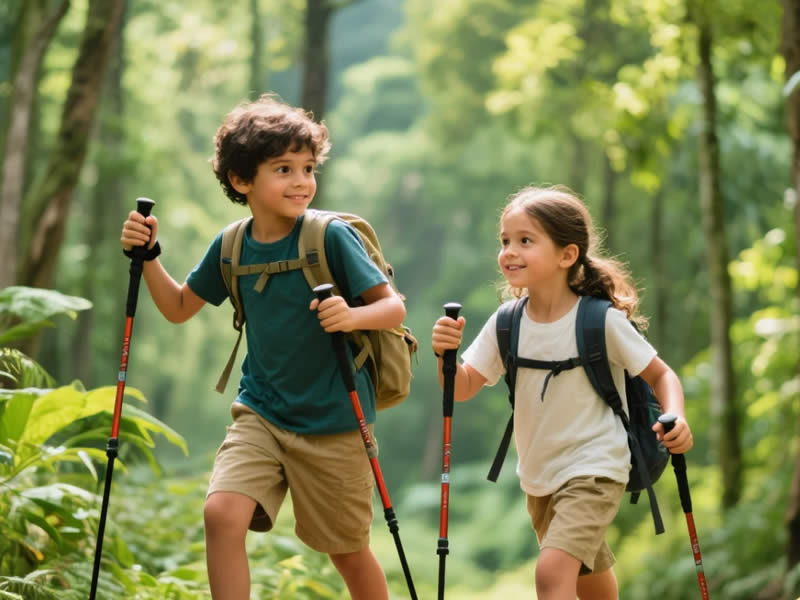
Recommended trekking pole purchase link: https://lightenup.aliexpress.com/store/1101521655
At what age can children start using poles?
Most experts recommend introducing trekking poles around age 6 or 7, when a child has sufficient coordination and upper‑body strength. However, some children as young as 4 can use lightweight poles on very flat, short trails under close supervision. For Brazilian family hikes, ages 6–12 are ideal for learning proper technique. Teenagers can generally use adult poles adjusted to their height.
Benefits of poles for child hikers in Brazil
- Improved balance – Brazilian trails often have slippery roots, loose stones, or wet clay. Poles give children two extra points of contact, reducing falls.
- Reduced fatigue – Poles help share the workload between legs and arms, allowing smaller hikers to go farther without tiring.
- Confidence building – A child with poles is more likely to tackle uneven terrain or small stream crossings, turning fear into fun.
- Wildlife awareness – A gentle pole tap can alert snakes or spiders ahead, keeping curious little hands safe.
Safety precautions you must take
- Choose child‑specific or adjustable lightweight polesAdult poles are too heavy (250–300 g per pole) and too long even at minimum setting. Look for:Youth trekking poles – Often weigh under 150 g per pole.Adjustable aluminum poles – Must collapse to at least 70–80 cm and extend to no more than 110 cm.Brands like Black Diamond Distance Youth or LEKI Kids’ Range are excellent; cheaper generic poles work if lightweight.
- Always use rubber tip coversRemove the sharp carbide tips and install rubber walking tips. This prevents accidental injury if a child swings the pole toward their face or another person. It also reduces trail erosion.
- Teach proper carrying and plantingNever carry poles pointed forward – Show children to hold poles vertically or strapped to their pack when not in use.Plant to the side, not in front of feet – Avoid tripping.Two poles, not one – One pole often leads to imbalance; two encourage symmetrical movement.
- Supervise closely on descentsSteep downhill sections are the most dangerous for young pole users. Walk behind your child, and remind them to lengthen poles slightly (but not beyond their strength) for better braking.
- Check for fatigueChildren’s arms tire faster than adults’. If your child starts dragging poles or complaining of sore shoulders, take a break or stow the poles in your pack.
Best Brazilian family trails for introducing poles
- Parque Nacional da Tijuca (Rio) – Paved and dirt trails to cascatinha; easy grades.
- Parque do Ibirapuera (São Paulo) – Flat, wide paths for practicing technique with rubber tips.
- Cachoeira do Véu da Noiva (Chapada dos Veadeiros) – Short, well‑maintained trail with some roots.
- Morro da Urca (Rio) – Paved path with gentle climb; spectacular views.
What to avoid
- Carbon poles – Too brittle; a child’s mis‑plant can snap them.
- Twist locks – Children lack grip strength to tighten them; poles will collapse mid‑stride.
- Shared adult poles – Even at minimum length, adult poles are too long for children under 1.40 m tall, forcing poor posture.
Final verdict
Children can safely use trekking poles on family hikes in Brazil if you invest in lightweight, child‑sized poles, fit rubber tip covers, teach basic safety rules, and provide active supervision. Start on easy, flat trails to build confidence, then gradually introduce gentle slopes. Done right, poles turn a whiny hike into an exciting adventure. Your child will feel like a “real explorer,” and you’ll enjoy fewer falls and longer, happier family treks across Brazil’s beautiful landscapes.




