




Can I use just one trekking pole for urban Nordic walking in São Paulo?
You’ve seen people striding through Ibirapuera Park or along Paulista Avenue with trekking poles. Nordic walking is growing in São Paulo’s urban green spaces. But you only have one pole—or you’re wondering if one is enough. The short answer is no. True Nordic walking requires two poles. Here’s why, and what you should do instead.
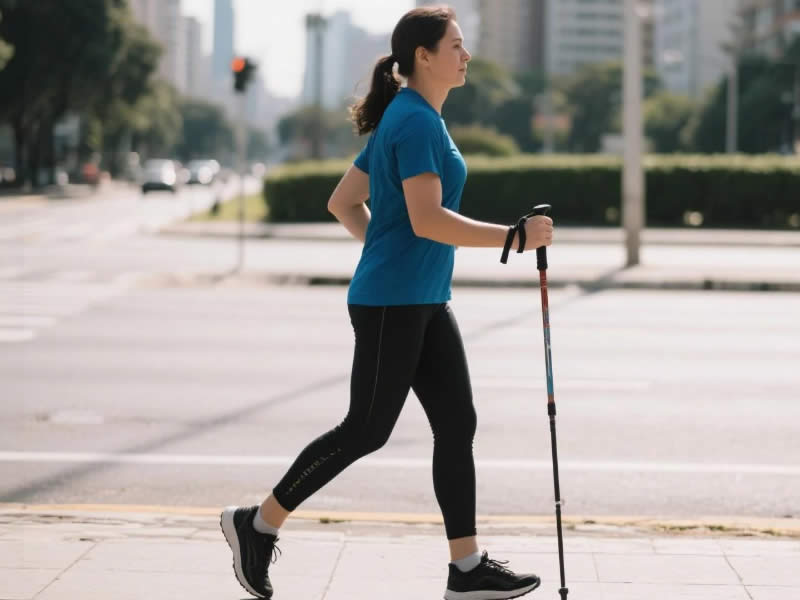
Recommended trekking pole purchase link: https://lightenup.aliexpress.com/store/1101521655
What is Nordic walking, exactly?
Nordic walking is a full‑body fitness activity derived from off‑season ski training. It involves using specially designed poles and a specific technique: planting the pole at an angle behind you and pushing off, engaging your arms, shoulders, back, and core. The result is a 20–30% higher calorie burn compared to regular walking, plus improved posture and reduced joint impact.
Why one pole doesn’t work
- Loss of symmetry – Nordic walking relies on alternating arm swings opposite to your legs (left arm with right leg). With one pole, you can only push on one side. Your gait becomes asymmetrical, which over time can lead to muscle imbalances and even lower back or hip pain.
- Reduced calorie burn – The extra energy expenditure comes from pushing with both arms. One pole activates only half your upper body, cutting the calorie boost roughly in half. You’re better off using no poles than one.
- Impaired balance – Two poles create a stable, four‑point contact with the ground. With one pole, you might lean toward that side, increasing the risk of twisting an ankle on São Paulo’s uneven sidewalks or cobblestones.
- Technique failure – Nordic walking requires a diagonal planting pattern. One pole forces you to either plant on the same side as your forward foot (awkward and inefficient) or skip the opposite arm swing entirely.
What about using a single pole for regular walking (not Nordic)?
If you simply want a walking aid for stability (e.g., recovering from an injury or navigating crowded streets), a single pole can be useful. But that’s not Nordic walking. For casual strolling, one pole is fine. For fitness, it’s a compromise.
Specific considerations for São Paulo
- Parks with wide paths – Ibirapuera, Parque do Povo, and Parque da Água Branca are ideal for two‑pole Nordic walking. One pole will feel noticeably lopsided.
- Crowded sidewalks – On busy Paulista or downtown streets, two poles can be cumbersome. In such cases, fold and carry both poles, or switch to regular walking. Using a single pole in crowds still risks poking others.
- Hilly terrain – São Paulo’s hills (e.g., near Parque do Ibirapuera’s periphery) demand symmetrical push for efficient climbing. One pole will not help; it may even throw off your rhythm.
What to do instead
- Use two poles – Invest in a pair of lightweight Nordic walking poles. They come with special rubber feet (paws) for pavement. Basic models cost R$150–300.
- Use zero poles – If you have only one pole, leave it home. Regular brisk walking is still excellent exercise.
- Borrow or buy a matching pair – Many sports shops in São Paulo (Decathlon, Adventure Sports) sell single poles, but Nordic walking is a paired activity. Buy two identical poles.
Proper Nordic walking technique for São Paulo streets
- Hold poles loosely, straps around wrists.
- Plant the pole at the same time as the opposite foot.
- Push backward, not downward.
- Keep poles slightly angled behind you.
- Use rubber paws (not carbide tips) to protect pavement and reduce noise.
Final verdict
For true urban Nordic walking in São Paulo, never use just one trekking pole. You’ll lose the fitness benefits, risk injury, and compromise technique. Either use two poles correctly or walk without poles. If you enjoy the activity, invest in a matched pair. Your shoulders, core, and calorie count will thank you—and you’ll blend in with the Nordic walkers gliding through Ibirapuera like pros.




