




What trekking poles are best for the 7‑day Mount Roraima expedition?
Mount Roraima, the legendary tepui on the border of Brazil, Venezuela, and Guyana, is a bucket‑list trek. The 7‑day expedition involves crossing rocky savannas, wading through streams, scrambling over boulders, and enduring constant moisture—often rain, fog, and wet sandstone. The terrain is unlike any other Brazilian trek. Choosing the right trekking poles is critical for safety, comfort, and gear longevity. Here’s what you need.
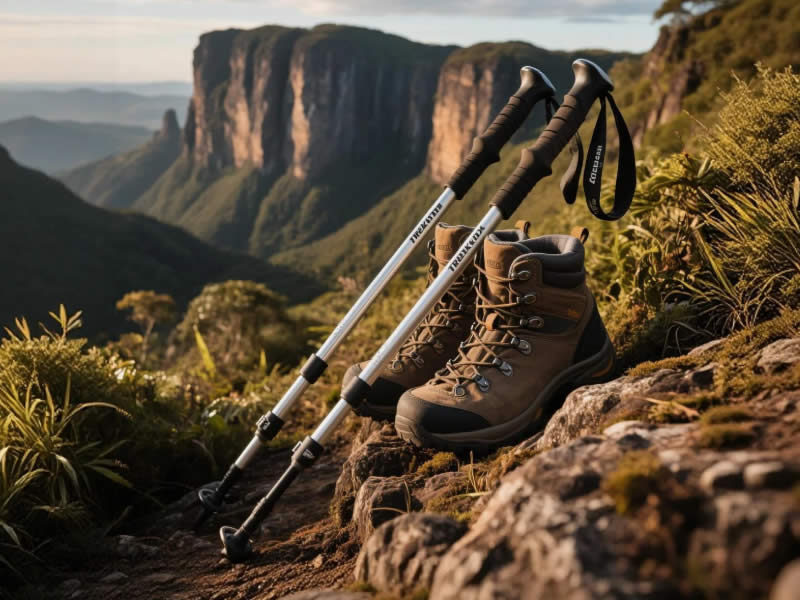
Recommended trekking pole purchase link: https://lightenup.aliexpress.com/store/1101521655
The unique challenges of Mount Roraima
- Relentless humidity and rain – It rains almost daily on the tepui. Poles must resist corrosion and mud.
- Slick, polished rock – The quartzite sandstone becomes extremely slippery when wet. Carbide tips alone may slide.
- Sharp, abrasive surfaces – Rocks can scratch and wear down pole shafts and tips quickly.
- Variable terrain – From flat sandy paths to steep, stair‑like rock formations and muddy campsites.
- Heavy pack loads – You’ll carry 5–7 days of food and gear (12–15 kg). Poles must handle extra stress.
Best pole features for Mount Roraima
- Material: Aluminum (7075 alloy) – Carbon poles are lighter but brittle. On Roraima’s sharp rocks, a carbon pole can snap when wedged between boulders. Aluminum bends but doesn’t shatter. Choose aluminum with a matte finish (reduces scratches). Weight penalty is minimal for this trek.
- Locking system: External flick locks – Twist locks fail in wet, gritty conditions. Flick locks are easy to clean and tighten with one hand (your other hand may be holding a camera or water bottle). LEKI’s SpeedLock or Black Diamond’s FlickLock are ideal.
- Grips: Cork or EVA foam – Humidity makes rubber grips slippery. Cork absorbs sweat and retains grip even when wet. Foam is also good but less durable. Avoid bare rubber.
- Tips: Carbide with replaceable tips – Roraima’s rock wears down tips faster than most trails. Bring spare tips. Also pack rubber tip covers for the flat sections (protects the rock and quietens walking).
- Baskets: Small but sturdy – You won’t encounter deep mud or snow, so small baskets (30–40 mm) suffice. However, bring “rock baskets” (low‑profile) to prevent the pole from wedging in crevices.
Top recommended models
| Model | Why it’s good for Roraima |
|---|---|
| Black Diamond Trail Ergo Cork | Aluminum, flick locks, cork grip, durable. Replaceable tip. |
| LEKI Makalu Lite | Classic aluminum, excellent locking mechanism. Easy to repair in the field. |
| Komperdell C3 Contour | Aluminum with anti‑corrosion coating. Foam grip extended section for side‑hilling. |
| Cascade Mountain Tech Aluminum | Budget option. Works well if you seal the lock screws with silicone (prevents rust). |
What to avoid
- Carbon poles – Too brittle for the sharp, angular rocks.
- Twist locks – Mud and moisture will cause them to slip or seize.
- Cheap steel poles – Heavy and rust quickly.
- Fixed‑length poles – Cannot adjust for steep climbs and descents.
Maintenance during the expedition
- Rinse daily – At camp, use water to clean mud and grit from locks and baskets.
- Dry overnight – If possible, keep poles outside the tent but under a rainfly to dry.
- Lubricate before the trip – Apply silicone spray to flick lock cams and threads.
- Spare parts – Bring an extra tip and a small multi‑tool (lock screws can loosen).
Final verdict
For the 7‑day Mount Roraima expedition, the best trekking poles are durable aluminum poles with external flick locks, cork grips, and replaceable carbide tips. Avoid carbon and twist locks. Black Diamond Trail Ergo Cork or LEKI Makalu Lite are top choices. Invest in quality, and they’ll survive the wet, rocky, magical landscape of Roraima—and keep you upright on the slippery descent from the tepui.




