




What are the best poles for the Serra Fina crossing (Brazil’s hardest trek)?
Serra Fina, spanning the border of São Paulo, Minas Gerais, and Rio de Janeiro, is widely considered Brazil’s most challenging trek. Over 4–5 days, hikers tackle knife‑edge ridges, loose boulders, steep granite slabs, and relentless elevation changes (up to 2,800 m). The terrain eats gear. Choosing the wrong trekking poles can ruin the expedition. Here’s what you need.
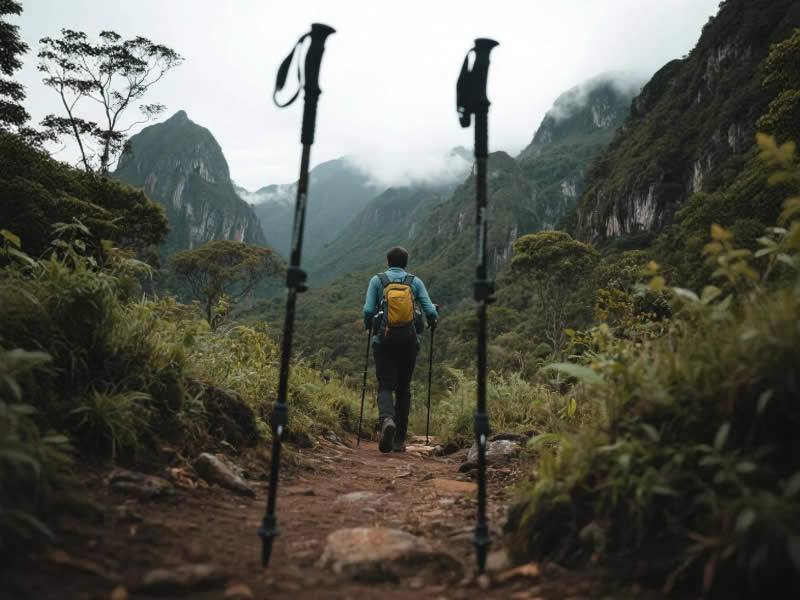
Recommended trekking pole purchase link: https://lightenup.aliexpress.com/store/1101521655
Why standard poles fail on Serra Fina
The crossing features:
- Sharp, abrasive rocks – Carbon poles snap when wedged between boulders.
- Steep, slippery granite – Twist locks slip under load; rubber grips become slick.
- Mud and water – Constant moisture on lower sections rusts cheap components.
- Heavy packs (10–14 kg) – Poles must handle repeated impact.
Best pole features for Serra Fina
- Material: Aluminum (7075 alloy) – Carbon is too brittle. Aluminum bends but doesn’t shatter. Choose thick‑walled shafts (e.g., Black Diamond Trail, LEKI Makalu). Expect scratches – that’s fine.
- Locking system: Flick locks only – Twist locks fail in wet, gritty conditions. External levers (flick locks) are field‑adjustable and easy to clean. LEKI’s SpeedLock or Black Diamond’s FlickLock are ideal.
- Grips: Cork or high‑quality EVA foam – Rubber becomes slippery when sweaty or wet. Cork absorbs moisture and stays grippy. Extended foam sections under the grip help on side‑hills.
- Tips: Tungsten carbide, replaceable – Serra Fina’s rock wears down tips in one crossing. Bring at least two spare pairs (e.g., Black Diamond Flex Tips or LEKI Flextips). Consider “rock tips” (blunter profile) for better purchase on slabs.
- Baskets: Small, low‑profile “rock baskets” – Avoid mud/snow baskets; they break on boulders. Low‑profile baskets (25–30 mm) prevent the pole from jamming in crevices.
- Shock absorption? Optional but not necessary – Internal springs add weight and can fail. Many veteran Serra Fina hikers prefer rigid poles for direct feedback.
Top recommended models
| Model | Why it’s best for Serra Fina |
|---|---|
| Black Diamond Trail Ergo Cork | Aluminum, flick locks, cork grips, replaceable carbide tips. Proven durability. |
| LEKI Makalu Lite | Classic aluminum; excellent lever locks; easy tip replacement. |
| Komperdell C3 Contour | Aluminum with anti‑corrosion coating; extended foam grip; sturdy baskets. |
| Cascade Mountain Tech Aluminum (budget) | Affordable flick‑lock poles. Upgrade tips to carbide; seal screws against rust. |
What to avoid at all costs
- Carbon poles (one mis‑plant = snap)
- Twist locks (slip on descents)
- Fixed‑length poles (can’t adjust for steep terrain)
- Rubber grips (slick when wet)
Maintenance during the crossing
- Rinse locks daily in streams (grit destroys them).
- Dry poles overnight under rainfly.
- Carry a small multi‑tool (flick lock screws can loosen).
- Spare tips + tip‑removal tool (a small vice grip works).
Final verdict
For the Serra Fina crossing, the best trekking poles are aluminum with external flick locks, cork grips, and replaceable carbide tips. Spend the extra money on Black Diamond or LEKI – your knees and safety are worth it. Don’t bring carbon; don’t bring twist locks. With the right poles, Brazil’s hardest trek becomes a triumphant ridge‑walk instead of a painful, fall‑prone ordeal.




