




Do I need trekking poles for Chapada Diamantina’s Cachoeira da Fumaça trail?
Cachoeira da Fumaça (Smoke Waterfall) is one of Brazil’s most spectacular sights—a 340‑meter waterfall that creates a misty illusion. The classic trail starts from the village of Vale do Capão or from Lençóis. It’s a demanding day hike or an overnight trek. The question many hikers ask: do I really need trekking poles? The short answer is not essential, but strongly recommended for most people. Let’s explore why.
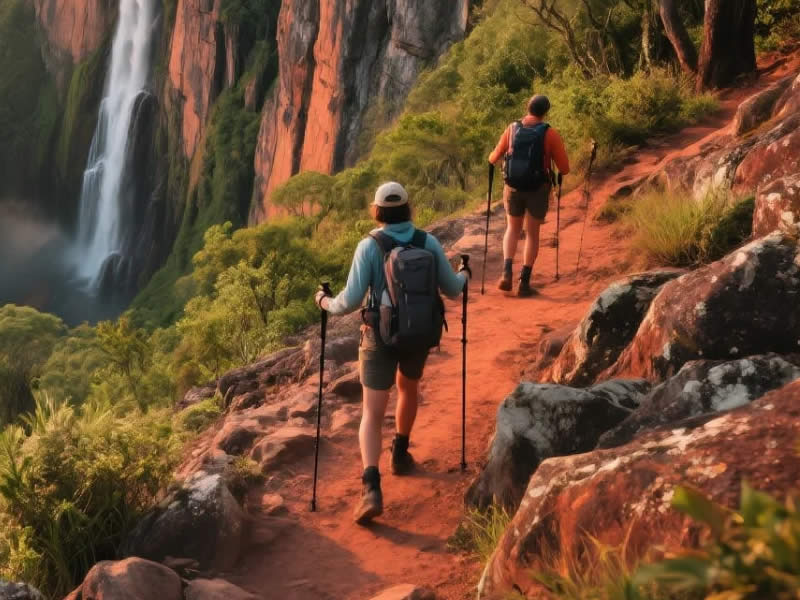
Recommended trekking pole purchase link: https://lightenup.aliexpress.com/store/1101521655
Understanding the trail
The most common route is from Vale do Capão to the top of the waterfall and back. Round trip is about 12–14 km with approximately 800–1,000 meters of elevation gain (depending on the exact path). The trail features:
- Steep, rocky ascents and descents – The initial climb out of Capão is relentless, with loose stones and hard-packed dirt.
- Exposed sections – After the first hour, the trail crosses open campo rupestre (rocky fields) with little shade.
- The final scramble – Nearing the waterfall, you’ll navigate large boulders and narrow ledges.
- Slippery conditions after rain – Sudden showers are common; rocks become treacherous.
Why poles are beneficial
- Knee protection on the descent – The steep return to Capão is tough on knees. Poles absorb shock and reduce impact by 20–30%.
- Balance on loose rocks – Many sections have ankle‑rolling stones. Two poles provide four points of contact, preventing falls.
- Confidence on steep grades – When the trail tilts sharply, planting a pole ahead gives you a secure brace.
- River crossing assistance – Near the start, you may cross small streams (dry season) or larger flows (wet season). Poles stabilize you.
When you might skip poles
- Very fit, experienced hikers with strong knees – Some people prefer hands‑free for scrambling.
- Ultralight day‑hikers – If you carry only a small water bottle, poles add unnecessary weight.
- Those renting or borrowing – If you don’t own poles, you can manage without, but you’ll feel the descent.
The caveat: the boulder section near the waterfall
Within the last 500 meters to the top of Cachoeira da Fumaça, you’ll encounter large granite boulders. Poles can be a hindrance here. Solution: Collapse your poles and stow them on your pack for this short section. Adjustable poles make this easy.
What type of poles to bring
- Aluminum flick‑locks – Durable, adjustable, easy to clean after red dust.
- Cork grips – Sweat‑absorbent in the hot Chapada sun.
- Carbide tips with rubber covers – Use rubber tips for the first half (quieter, less erosion), switch to carbide for the rocky descent.
- Mud baskets? – Not necessary unless rainy season; small baskets are fine.
Alternatives if you don’t have poles
- Rent in Vale do Capão – Several pousadas and outdoor shops rent poles for R$15–30 per day.
- Use a wooden staff – Some locals sell carved sticks; less effective than two poles, but better than nothing.
- Join a guided tour – Guides often carry spare poles.
Final verdict
For the Cachoeira da Fumaça trail, trekking poles are not mandatory, but they will significantly improve your comfort and safety, especially on the long descent back to Capão. If you already own poles, bring them without question. If not, consider renting a pair for the day – the small cost is worth saving your knees. Without poles, the hike is still doable, but expect sore quads the next day. With poles, you’ll enjoy the breathtaking waterfall and the journey back with less fatigue. Don’t let the boulder section scare you – just stow them for five minutes. Happy trekking in the Chapada!




