




What trekking poles work best on Pico da Pedra Maior’s rocky slopes?
Pico da Pedra Maior, located in the Serra Fina range on the border of São Paulo, Minas Gerais, and Rio de Janeiro, is Brazil’s highest peak at approximately 2,797 m. Its slopes are legendary for being unforgiving: endless fields of sharp, loose quartzite boulders, steep scrambles, and unpredictable weather. Choosing the wrong trekking poles here can lead to snapped shafts, slipped locks, and dangerous falls. Here’s what works best on Pedra Maior’s rocky terrain.
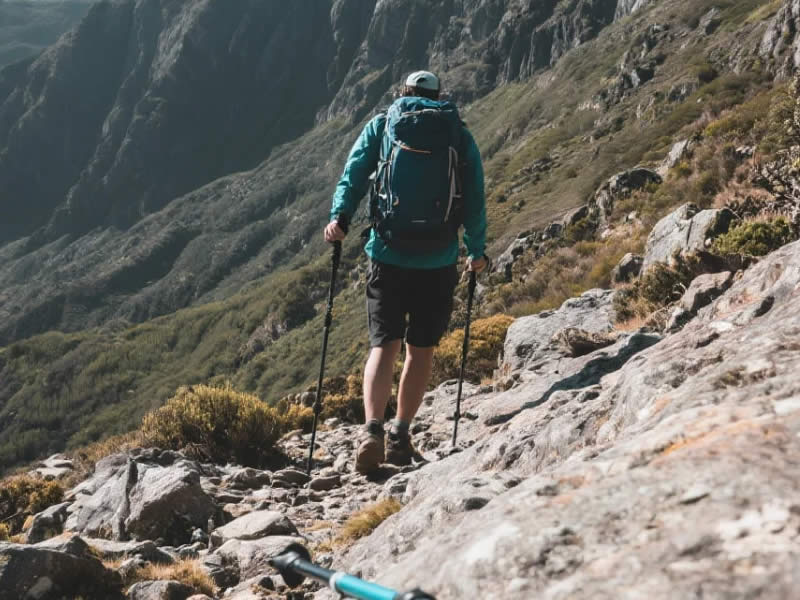
Recommended trekking pole purchase link: https://lightenup.aliexpress.com/store/1101521655
Why ordinary poles fail on Pedra Maior
The mountain’s geology is the main challenge. Quartzite is hard, abrasive, and often unstable. Standard features that work on forest trails become liabilities:
- Carbon fiber shafts – They shatter when wedged between rocks.
- Twist locks – Grit and moisture cause them to slip or seize.
- Hard rubber grips – Sweaty hands slip on steep traverses.
- Narrow tips – Sink into gaps, making extraction difficult.
Best pole features for Pedra Maior
- Material: Aircraft‑grade aluminum (7075 alloy) – Aluminum bends but doesn’t break. It can be (carefully) straightened in the field. Look for thick‑walled shafts (e.g., Black Diamond Trail series). Weight is a secondary concern; durability is king.
- Locking system: External flick locks – Flick locks (lever‑type) are essential. They can be cleaned with a twig and tightened with a finger. LEKI’s SpeedLock or Black Diamond’s FlickLock are the gold standard. Avoid twist locks at all costs.
- Grips: Cork or EVA foam with extended grip – Cork absorbs sweat and stays grippy even in rain. Extended foam under the grip allows you to choke down on the pole for side‑hilling (common on Pedra Maior’s traverses).
- Tips: Tungsten carbide, replaceable, with a blunt profile – Needle‑sharp tips get stuck in rock gaps. Choose a “rock tip” that is slightly blunter. Bring at least two spare pairs per pole – the quartzite wears tips down in a single ascent.
- Baskets: Low‑profile “rock baskets” (25–30 mm) – Standard mud or snow baskets will crack against boulders. Small, sturdy baskets prevent the pole from sliding too deep into cracks. Some hikers remove baskets entirely, but then the pole can wedge dangerously.
- Adjustable length range – You’ll need poles that collapse short (for stowing while scrambling) and extend long (for downclimbs). A range of 100–140 cm is ideal.
Top specific models for Pedra Maior
| Model | Why it works |
|---|---|
| Black Diamond Trail Ergo Cork | 7075 aluminum, flick locks, cork grip, replaceable carbide tips. Proven on Serra Fina. |
| LEKI Makalu Lite | Classic aluminum, excellent lever locks, easy tip change. Extended foam grip. |
| Komperdell C3 Contour | Aluminum with anti‑corrosion, foam grip, robust rock baskets. |
| Cascade Mountain Tech Aluminum (budget) | Affordable flick‑lock poles. Upgrade to aftermarket carbide tips and seal screws. |
What to avoid entirely
- Carbon poles – One mis‑plant between rocks = instant snap.
- Twist locks – Will slip on steep, wet descents.
- Fixed‑length poles – Cannot adapt to the varying steepness.
- Cheap rubber tips – They tear on sharp rocks.
Maintenance on the mountain
- Before the climb: Apply silicone spray to lock cams. Tighten all screws.
- During the climb: After each boulder field, check that locks haven’t loosened. Rinse grit out of mechanisms with a few drops of water.
- After the climb: Disassemble, dry completely, and lubricate. Pedra Maior’s environment is corrosive.
Final verdict
For Pico da Pedra Maior’s rocky slopes, the best trekking poles are aluminum with external flick locks, cork grips, and replaceable carbide rock tips. Do not bring carbon; do not bring twist locks. Black Diamond Trail Ergo Cork or LEKI Makalu Lite are ideal choices. With the right poles, you’ll move confidently across the quartzite fields, save your knees on the descent, and avoid a broken pole halfway up Brazil’s highest peak.




