




Do trekking poles help on the historical Gold Trail (Caminho do Ouro)?
The Caminho do Ouro (Gold Trail) is a historic route in Brazil that once connected the gold mines of Minas Gerais to the ports of Paraty and Rio de Janeiro. Today, sections of this trail are preserved as hiking destinations, notably the stretch between Paraty and Cunha, as well as parts within the Serra do Mar. If you’re planning to hike this centuries‑old path, you’re likely wondering: do trekking poles actually help? The short answer is yes, they help significantly for most hikers. Here’s why.
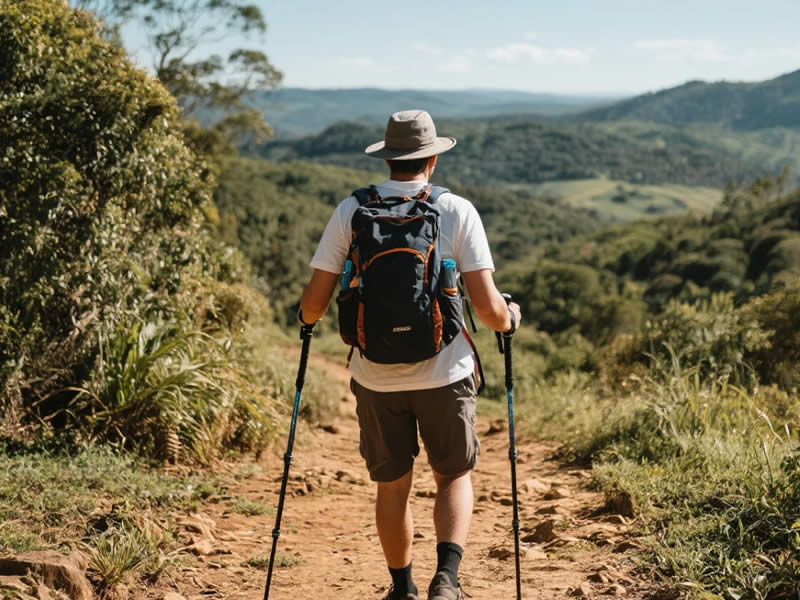
Recommended trekking pole purchase link: https://lightenup.aliexpress.com/store/1101521655
What makes the Gold Trail challenging
The Caminho do Ouro is not a groomed park path. It features:
- Original cobblestone sections – Many stretches still have the colonial‑era stones, which are uneven, slick, and ankle‑twisting.
- Steep ascents and descents – The trail crosses the Serra do Mar escarpment, with grades often exceeding 20%.
- Mud and roots – Where cobblestones have deteriorated, the Atlantic Forest has reclaimed the trail with slippery red clay and tangled roots.
- Stream crossings – Several small rivers and streams have no bridges.
- Humidity and rain – The region receives frequent rainfall, making everything more slippery.
How trekking poles help
- Balance on cobblestones – The irregular stones are the biggest hazard. Two poles give you four points of contact, allowing you to test each stone before committing your full weight. This drastically reduces twisted ankles.
- Knee protection on descents – The descent from the Serra do Mar towards Paraty is long and steep. Poles absorb 20–30% of the impact, saving your knees from days of soreness.
- Confidence on steep sections – When the trail tilts sharply, planting a pole ahead gives you a brace to pull or push against, making the climb less exhausting.
- Stability on wet, slick surfaces – After rain, cobblestones and roots become ice‑like. Poles provide extra grip and can prevent a fall.
- Help with stream crossings – Using two poles as outriggers keeps you steady on slippery rocks and against the current.
Are there any downsides?
Only minor ones. On a few sections, the trail narrows between stone walls or dense vegetation, where poles can feel cumbersome. However, most poles are adjustable and can be collapsed and stowed on your pack in seconds. Also, if you’re an experienced, agile hiker with strong knees, you might find poles unnecessary – but even then, they reduce fatigue over a full day.
What type of poles work best
- Aluminum flick‑lock poles – Durable, easy to adjust, and handle mud well.
- Cork or foam grips – Sweat‑absorbent in humid conditions.
- Carbide tips with rubber covers – Use carbide on cobblestones and muddy sections; rubber tips on any paved or historical stone sections you want to protect.
- Mud baskets – Helpful if you hike after heavy rain.
Alternatives if you don’t own poles
- Rent in Paraty or Cunha – Several outdoor shops and pousadas rent poles for R$15–30 per day.
- Use a wooden staff – Local artisans sell carved walking sticks; less effective than two poles, but better than nothing.
- Join a guided trek – Guides almost always carry spare poles for clients.
Final verdict
Yes, trekking poles are extremely helpful on the historical Gold Trail. They improve balance on uneven cobblestones, protect your knees on long descents, and provide stability on wet, slippery surfaces. While not strictly mandatory, they turn a potentially painful, ankle‑threatening hike into a much safer and more enjoyable experience. If you’re hiking the Caminho do Ouro, especially the full Paraty–Cunha crossing, bring a quality pair of adjustable poles. Your knees and your confidence will thank you.




