




What is the best trekking pole under 150 BRL for Brazilian trails?
If you’re on a tight budget but want to start hiking in Brazil, you might think that R$150 (about $30 USD) isn’t enough for a decent pair of trekking poles. And you’d be mostly right – good poles with flick locks and cork grips start around R$200–250. However, there is one product that stands out as the best option for casual, light‑duty hiking under R$150: Decathlon’s Forclaz MH100. Here’s why, and what you need to know before buying.
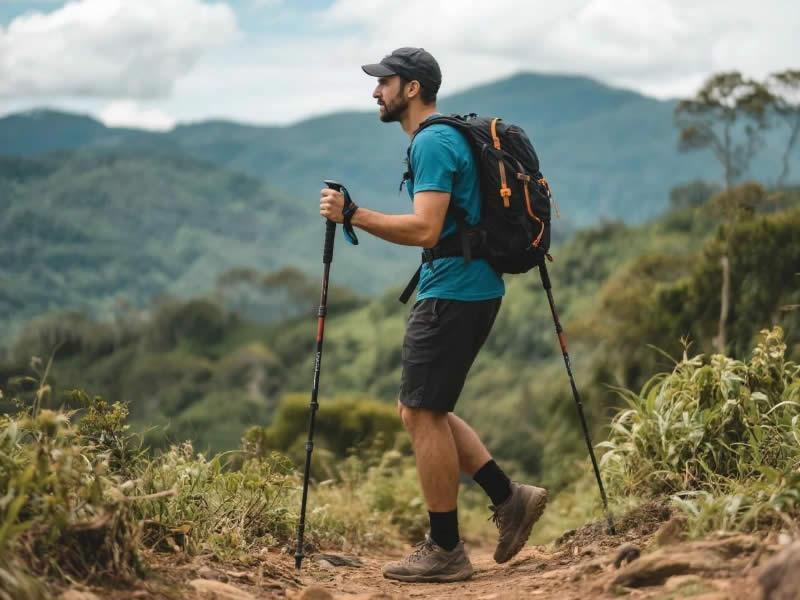
Recommended trekking pole purchase link: https://lightenup.aliexpress.com/store/1101521655
The winner: Decathlon Forclaz MH100 (around R$89–99)
Decathlon is a trusted brand in Brazil, and their entry‑level Forclaz MH100 is the only pole under R$150 that I can recommend without major safety concerns. Let’s look at its features:
- Material: Basic aluminum shaft (heat‑treated). Weighs approximately 280 g per pole.
- Locking system: Twist locks (screw‑to‑tighten). Not as secure as flick locks, but Decathlon’s version is more reliable than no‑name competitors.
- Tip: Carbide tip, replaceable – this is crucial. Spare tips cost R$15–20 at Decathlon.
- Baskets: Small fixed mud baskets – enough for light mud.
- Grip: Foam grip – comfortable enough for short hikes.
- Wrist strap: Adjustable nylon strap.
- Adjustable length: From 65 cm to 135 cm.
What the Forclaz MH100 can handle (and what it cannot)
✅ Suitable for:
- Flat or gently rolling trails (e.g., Parque Ibirapuera, Parque da Cidade in Brasília)
- Short day hikes with minimal elevation gain (e.g., easy sections of Tijuca Forest)
- Urban fitness walking or beach walking (on wet compact sand)
- Occasional use (1–2 times per month) on dry, non‑technical terrain
- Light pack loads (day pack only, under 5 kg)
❌ NOT suitable for:
- Steep descents (Serra do Mar, Chapada Diamantina) – twist locks can slip under body weight
- Muddy or wet trails – moisture and grit cause twist locks to fail
- Rocky terrain (Serra Fina, Pedra da Gávea) – shaft may bend or tip may break
- Multi‑day treks with heavy packs (over 8 kg) – the poles will fatigue quickly
- Humid Atlantic Forest conditions – internal rust is common
How to use twist locks safely
Twist locks are the main weakness. To avoid a collapsing pole on a descent:
- Extend the pole to your desired length.
- Twist the lower section firmly until it locks – but do not over‑tighten (you can strip the plastic expander).
- Test by placing the pole vertically and pushing down with your body weight. If it slips, tighten a bit more.
- Check the lock every 30 minutes during a hike – vibration can loosen them.
- After a hike, loosen the lock slightly to relieve pressure on the expander.
Alternatives under R$150 (avoid these)
- Shopee / Shein / AliExpress poles (R$40–80) – Almost always dangerous. Twist locks are poorly made, tips fall out, and shafts bend on the first rocky trail. Customer reviews are often fake or from flat urban use only.
- Used poles from Mercado Livre – You might find an old Black Diamond or LEKI for R$120–150. Inspect locks and tips carefully. This can be a better value than new cheap poles.
- Decathlon’s Quechua MH500 (slightly over budget) – If you can stretch to R$179 (on sale), you get flick locks. Much safer.
Should you buy the Forclaz MH100?
Yes, if: You are a beginner who will hike only easy, flat, or gently rolling trails in dry conditions, and you understand the limitations of twist locks. It’s a fine starter pole for urban parks or coastal boardwalks.
No, if: You plan to hike in the Serra do Mar, Chapada Diamantina, or any steep, muddy, or rocky Brazilian trail. The extra R$50–100 for a flick‑lock pole (like Decathlon’s Forclaz Trek 500) is a worthwhile investment in safety.
Final verdict
The Decathlon Forclaz MH100 is the best trekking pole under 150 BRL for Brazilian trails – but only for very light, gentle use. It is not a mountain tool. For the same price, you might find a used quality pole. For new buyers, it’s acceptable as a temporary or backup pole. If your budget absolutely cannot exceed R$150, buy the MH100, but stay on flat ground. Your knees – and your face – will thank you.




