




Are folding trekking poles strong enough for the fractured shale of the Espinhaço Range?
The Espinhaço Range in Brazil is a geologically ancient mountain chain stretching from Minas Gerais to Bahia. Its trails – such as those in the Serra do Cipó, the Lapinha da Serra, or the National Park of the Sempre‑Vivas – cross vast fields of fractured shale. This rock is unique: it splits into thin, sharp, unstable plates that crumble under pressure. Hikers who attempt these trails with the wrong trekking poles often end up with bent shafts, snapped sections, or worse – a fall. So, are folding trekking poles strong enough for this demanding terrain? The short answer is generally no – with a few caveats.
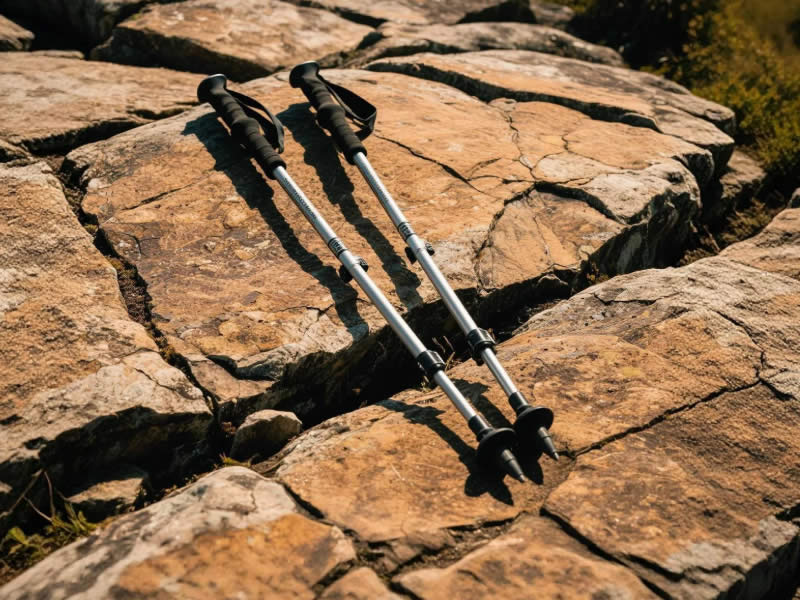
Recommended trekking pole purchase link: https://lightenup.aliexpress.com/store/1101521655
Understanding folding (Z‑pole) construction
Folding trekking poles (often called Z‑poles) use an internal cord (Kevlar or Dyneema) to snap the sections together. They are designed for lightweight travel, trail running, and moderate terrain. Most folding poles are made of carbon fiber to save weight. While carbon is stiff and light, it is also brittle. When lateral force is applied – such as when a pole gets wedged between two pieces of shale – carbon can shatter without warning. The folding mechanism itself also introduces potential weak points: the cord can fray, the plastic hubs can crack, and the locking buttons can fail when clogged with fine shale dust.
Why fractured shale is a pole killer
- Sharp edges: Shale fragments are like knives. They can cut into carbon shafts or scratch aluminum, creating stress risers that lead to breakage.
- Unstable footing: You often need to jam your pole into cracks or against rock edges for balance. This applies high lateral (sideways) stress – the worst kind for folding poles.
- Abrasive dust: Fine shale powder gets into locking buttons and cord mechanisms, causing premature wear.
- High impact: Descending through shale fields involves repeated hard planting. Folding poles absorb less shock than telescopic poles and are more likely to break.
When folding poles might work (limited cases)
- High‑end, reinforced carbon models: Some premium folding poles (e.g., Black Diamond Distance Carbon Z with reinforced tips) can handle moderate shale if used carefully. But they are expensive (R$600–900) and still risk breakage.
- Aluminum folding poles: A few brands make folding poles from aluminum (e.g., Decathlon Forclaz Compact Trek 500). They are heavier but more durable than carbon. However, the folding mechanism remains a weak point.
- Short sections: If the shale field is only a few hundred meters and you treat your poles gently, they might survive. But for multi‑hour traverses, avoid them.
The superior alternative: telescopic aluminum flick‑lock poles
For fractured shale, the safest choice is a telescopic (telescoping) pole made of 7075 aluminum with external flick locks. Why?
- Aluminum bends, doesn’t break: If you jam an aluminum pole between rocks, it may bend – but you can often straighten it in the field. Carbon would snap.
- Flick locks handle dust: External levers are easy to clean; twist locks and internal cord systems are vulnerable to dust.
- More robust sections: Telescopic poles have thicker walls and are designed to absorb lateral loads better than folding poles.
- Replaceable tips and lower sections: If a tip wears out or a bottom section bends, you can replace it – not possible on most folding poles.
Recommended models for Espinhaço shale
| Model | Type | Price (BRL) | Why it works |
|---|---|---|---|
| Decathlon Forclaz Trek 500 | Aluminum telescopic, flick locks | 199 | Durable, affordable, replaceable tips |
| Black Diamond Trail Ergo Cork | Aluminum telescopic, premium | 450+ | Excellent lateral strength, comfy grip |
| Cascade Mountain Tech aluminum (flick lock) | Aluminum telescopic | 250–350 | Good budget alternative |
Technique for hiking on fractured shale
- Shorten poles by 5–10 cm – Gives you better control and reduces leverage on the shaft.
- Plant in soil, not rock edges – Look for patches of dirt or moss between the shale plates. The carbide tip will grip better.
- Use both poles symmetrically – Distribute your weight to avoid torquing one pole sideways.
- Inspect frequently – Check for scratches, dents, or loose locks after every shale section.
Maintenance after shale hikes
Shale dust is abrasive and can corrode locks. Rinse poles with fresh water, dry thoroughly, and lubricate flick lock cams with silicone spray. Inspect carbide tips – they will wear faster. Replace as needed.
Final verdict
For the fractured shale of the Espinhaço Range, folding trekking poles (especially carbon) are not strong enough for most hikers. The risk of snapping a pole on a remote ridge is too high. Stick with aluminum telescopic flick‑lock poles – they are heavier but far more reliable. Your safety and peace of mind are worth the extra grams. Enjoy the unique beauty of the Espinhaço, but equip yourself wisely for its sharp, unstable ground.




