




What is the best trekking pole for walking on wet boardwalks in Atlantic Forest reserves?
The Atlantic Forest (Mata Atlântica) is one of Brazil’s most biodiverse and humid biomes. Many of its reserves, such as Parque Nacional da Tijuca in Rio or Parque Estadual da Serra do Mar in São Paulo, feature wooden boardwalks that wind through swampy or fragile areas. When wet – which is often – these boardwalks become extremely slippery. Choosing the right trekking pole for these conditions can mean the difference between a confident walk and a dangerous fall. The short answer: the best trekking pole is a standard aluminum or carbon pole fitted with soft rubber tip covers (often called “paw tips” or “urban tips”). Here’s why and what else you need to know.
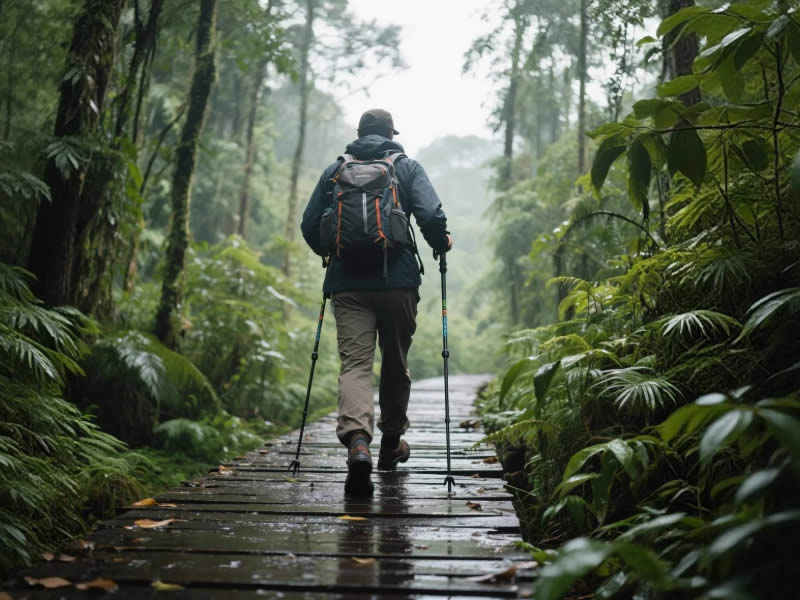
Recommended trekking pole purchase link: https://lightenup.aliexpress.com/store/1101521655
Why rubber tips outperform carbide on wet wood
Most trekking poles come with sharp tungsten carbide tips designed for dirt, mud, and rock. On a wet boardwalk, however, carbide behaves like a needle on ice – it skates sideways, offering almost no grip. Worse, carbide can gouge and splinter the wooden planks, damaging the very infrastructure that protects the forest.
Rubber tip covers are made of a soft, high‑friction compound. When pressed onto a wet wooden surface, the rubber conforms to the wood’s texture, creating significantly more grip. The pole stays planted, allowing you to push off confidently without slipping. Rubber also makes walking quieter – no annoying clicking – and it preserves the boardwalk for future visitors.
What pole features matter most for boardwalk walking
- Rubber tips are non‑negotiable – Without them, you are unsafe. Most poles do not include rubber covers, but they are sold separately (R$10–20 at Decathlon or online). Always carry a pair when you know you’ll be on elevated wooden trails.
- Flick‑lock adjustment – Boardwalks sometimes have steps or ramps. Being able to quickly shorten or lengthen your poles (using external levers) is useful. Twist locks are harder to adjust with wet hands.
- Shock absorption? Optional – On a smooth boardwalk, the spring in shock‑absorbing poles is less critical than on rocky terrain. But it doesn’t hurt.
- Weight – Any lightweight pole works; you won’t be stabbing into mud, so carbon is fine.
- Baskets – Remove mud baskets when walking on boardwalks. They are unnecessary and can catch on railings or gaps.
What about using no poles at all?
On short, well‑built boardwalks (e.g., the 1‑km loop at Poço das Antas), many people walk without poles. However, if the boardwalk is long (several kilometers), uneven, or has slippery algae growth, poles with rubber tips provide excellent stability and reduce the risk of falls – especially for older hikers or those carrying a backpack.
Technique for wet boardwalk walking
- Plant gently – Don’t slam the pole down. Lower it vertically and let the rubber grip naturally.
- Place the tip flat – Aim to press the entire rubber surface onto the wood, not just an edge.
- Keep poles close to your body – Wide planting offers less stability on a narrow boardwalk.
- Use two poles – Symmetrical balance is key on slick surfaces.
Maintenance after boardwalk use
Wet boardwalks often have a thin layer of algae or tannin from the wood. This organic residue can make rubber tips slippery. Rinse your rubber covers with fresh water and a mild soap after each hike. Replace them when the rubber hardens or loses its tread (every 3–6 months depending on use).
What about metal tips with rubber coating?
Some manufacturers (e.g., LEKI) offer combination tips with a carbide core surrounded by a rubber ring. These perform acceptably on wet wood, but pure rubber tips are still superior. If you have such hybrid tips, they will work, but standard rubber covers are cheap and more effective.
Final verdict
For walking on wet boardwalks in Atlantic Forest reserves, the best trekking pole is any lightweight, adjustable pole – aluminum or carbon – fitted with high‑quality rubber tip covers. The rubber provides superior grip, protects the wooden structure, and reduces noise. Avoid carbide tips at all costs. Carry spare rubber covers in your pack; they weigh nothing and can be swapped on the trail. With the right setup, you’ll traverse the beautiful boardwalks of Brazil’s Atlantic Forest safely and quietly, leaving only footprints – and no scratches on the wood.




