




What trekking pole material handles temperature swings from cold night to hot day best?
In Brazil’s high mountain regions – such as the Serra da Mantiqueira, Itatiaia, and Pico da Bandeira – hikers often face dramatic temperature swings. A typical winter day can start with sub‑freezing dawn (‑2°C to 3°C), then warm up to 20‑25°C by midday, and drop again at night. These rapid and repeated temperature changes stress trekking poles. The question is: which material – aluminium or carbon fibre – handles these swings best without compromising safety or longevity? The answer is aluminium. Here’s why.
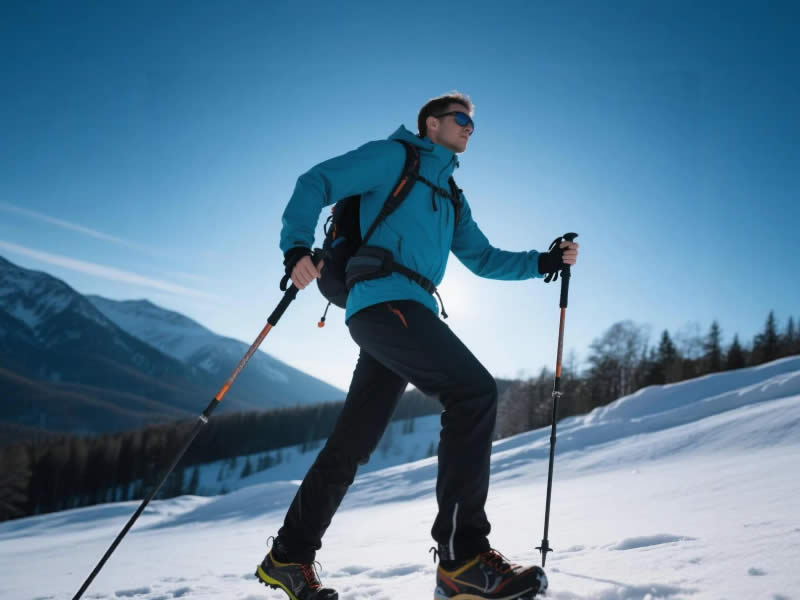
Recommended trekking pole purchase link: https://lightenup.aliexpress.com/store/1101521655
Understanding the materials
- Aluminium (typically 7075 alloy): A homogeneous metal. It expands and contracts uniformly with temperature changes. Its coefficient of thermal expansion (CTE) is about 23 µm/m·K.
- Carbon fibre composite: Made of carbon fibres embedded in an epoxy resin matrix. The fibres have a negative CTE (they contract when heated) while the resin expands. This mismatch creates internal stresses. The overall CTE is roughly 0‑2 µm/m·K along the fibre direction, but varies with layup.
Why carbon fibre is more vulnerable to temperature swings
- Resin fatigue: The epoxy resin that holds the carbon fibres together can degrade under repeated thermal cycling. Each expansion and contraction causes micro‑cracks in the resin. Over time (months or years of regular use in environments with large daily swings), these micro‑cracks can propagate, leading to reduced stiffness and eventual failure.
- Delamination risk: When the resin expands faster than the fibres, the interface can weaken. This is especially problematic at the joints and tips where the pole experiences stress concentrations. In extreme cases, the pole can delaminate – the layers separate – causing a sudden snap.
- Loss of impact resistance: Cold temperatures make the resin brittle, and then a warm day softens it. This cycling can accelerate the deterioration of impact strength. A carbon pole that might have survived a rock strike after many cycles becomes more likely to crack.
Why aluminium handles swings effortlessly
- Isotropic expansion: Aluminium expands and contracts uniformly in all directions. No internal stresses develop from temperature changes alone.
- No resin to fatigue: Aluminium is a single‑phase metal. It does not suffer from resin ageing or micro‑cracking.
- Proven durability: Aluminium trekking poles have been used for decades in all climates, from desert heat to alpine cold, without any temperature‑related failure. The only concern is corrosion, easily managed by rinsing after salty or acidic soil exposure.
Practical performance in Brazilian conditions
In places like Itatiaia National Park, temperatures at 2,500 m can swing from -2°C at 6 am to 22°C by 2 pm. Carbon poles used regularly in such conditions may develop a “creaky” sound after a few seasons – a sign of resin micro‑cracking. Aluminium poles, even after many years, remain silent and structurally sound. Brazilian mountaineers often report that their carbon poles eventually fail at the joints or just above the tip after repeated thermal cycling, whereas aluminium poles simply bend (not break) when overloaded.
But isn’t carbon stronger per weight?
Yes, carbon has a higher specific stiffness and strength than aluminium. For a given weight, carbon can be stronger. However, strength is not the issue – the issue is reliability under repeated thermal stress and impacts. Carbon’s vulnerability to fatigue from temperature swings is often overlooked. In a stable, moderate climate, carbon excels. In the Brazilian highlands with their wild daily swings, aluminium’s robustness wins.
What about steel?
Steel is even more stable thermally (CTE ~12 µm/m·K), but it is heavy and rusts easily. Not recommended.
Conclusion for Brazilian winter hikers
- Choose aluminium if you hike frequently in high mountains with large day‑night temperature differences (e.g., Serra da Mantiqueira, Itatiaia, Pico da Bandeira). The durability and tolerance to thermal cycling far outweigh the small weight penalty.
- Carbon is acceptable for occasional use or if you store your poles in a climate‑controlled environment. But for repeated, harsh thermal swings, carbon will not last as long.
Recommended models for temperature extremes
- Decathlon Forclaz Trek 500 (aluminium, flick locks, cork grip) – handles swings perfectly.
- Black Diamond Trail Ergo Cork (aluminium) – premium option.
Final advice
If you already own carbon poles, minimise temperature shock by not leaving them outside overnight – keep them in your tent. Avoid exposing them to direct, rapid heating (e.g., placing them next to a campfire). For new buyers in Brazil’s winter hiking regions, aluminium is the most reliable material for handling temperature swings from cold nights to hot days. It may be a few grams heavier, but it will outlast carbon by years in these demanding conditions.




