




Are aluminium trekking poles colder to hold than carbon in winter?
If you’ve ever gripped a metal pole on a freezing morning in Brazil’s highlands – say, on Pedra do Baú at dawn or on the icy trails of Agulhas Negras – you may have noticed that some poles feel painfully cold, while others are merely cool. The question of whether aluminium trekking poles are colder to hold than carbon in winter is common. The short answer is yes, aluminium feels colder to the touch than carbon under the same winter conditions, but the difference is largely due to thermal conductivity and the effectiveness of your gloves and grip material. Here’s the science and practical advice.
Recommended trekking pole purchase link: https://lightenup.aliexpress.com/store/1101521655
Why aluminium feels colder
Thermal conductivity measures how quickly a material transfers heat. Aluminium has a very high thermal conductivity – about 205 W/m·K (watts per metre per kelvin). Carbon fibre composites, by contrast, have low thermal conductivity – typically 5‑10 W/m·K (depending on the resin and fibre orientation). That means aluminium will draw heat away from your hand much faster than carbon. On a cold morning, when you grasp an aluminium pole shaft (or even the grip, if it’s a thin rubber grip over metal), your hand loses heat rapidly, making the pole feel icy. Carbon, being a poor conductor, does not suck heat away as quickly, so it feels less cold.
But the grip matters more than the shaft material
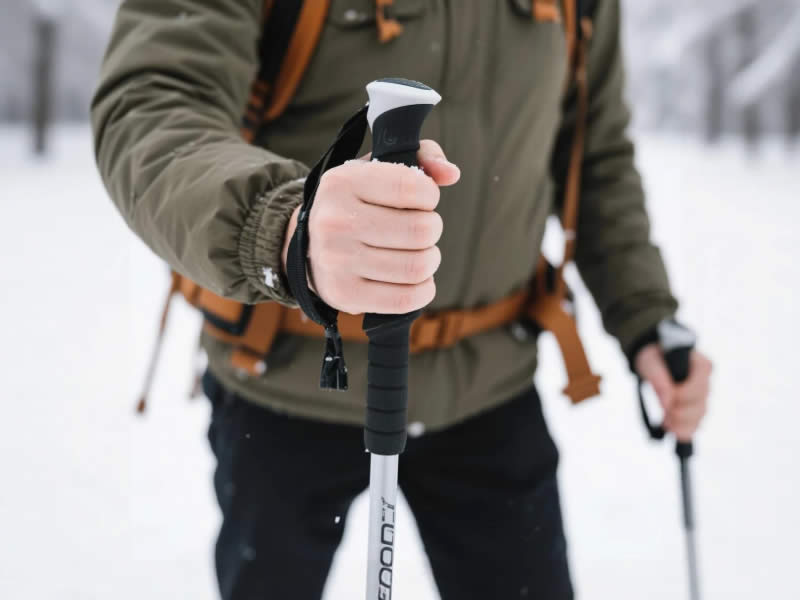
The actual part of the pole you hold is the grip, not the bare shaft. Grips are made of cork, foam, rubber, or a combination. Cork and foam are excellent insulators – they have very low thermal conductivity. Rubber is a moderate insulator. If your pole has a thick cork or foam grip, the material of the shaft (aluminium vs. carbon) has almost no effect on how cold your hand feels. The cold cannot penetrate the grip efficiently.
However, many poles have grips that are partially exposed to the shaft, or you may occasionally hold the shaft itself when choking up for a steep ascent. In those cases, aluminium will feel colder.
Real‑world testing
Take two poles – one aluminium, one carbon – with identical cork grips. Leave them outside overnight at 0°C. In the morning, hold each grip with bare hands. You will likely notice the aluminium pole’s grip feels slightly cooler, but the difference is subtle – within a few degrees. Now hold the exposed shaft just below the grip: the aluminium shaft will be painfully cold, while the carbon shaft will feel only cool. Most hikers, however, keep their hands on the grip, not the shaft.
What about rubber grips?
Rubber grips transmit temperature more readily than cork or foam. On an aluminium pole with a thin rubber grip, the cold can seep through more noticeably. On a carbon pole with the same rubber grip, the cold feeling is less. If you often hike in winter with rubber‑gripped poles, switching to cork or foam will make a bigger difference than changing the shaft material.
Practical solutions to keep hands warm, regardless of pole material
- Wear gloves – The most obvious solution. A thin liner glove completely eliminates the sensation of cold metal. For very cold mornings, use a windproof or insulated glove.
- Choose cork grips – Cork is an excellent insulator and stays grippy when cold. Foam is also good.
- Add grip tape – You can wrap the upper shaft with a few layers of insulating tape (e.g., tennis racket grip tape) to create a warm zone if you often hold the shaft.
- Keep poles warm – Store poles inside your tent at night, not outside. Body heat and the tent insulation keep them above freezing. A pole that starts at 10°C will feel much warmer than one at 0°C.
- Warm your hands before gripping – Rub your hands together or put them in your armpits for a few seconds before starting. The first few minutes are the coldest.
Does it matter for most Brazilian winter hikes?
Brazilian winter mornings, even at high altitudes, rarely drop below -5°C for extended periods. In such conditions, the difference in perceived cold between aluminium and carbon is minor. Far more important is wearing appropriate gloves and using insulated grips. Many experienced Brazilian mountaineers use aluminium poles (which are cheaper and more durable) and simply wear thin fleece gloves. They don’t find the poles too cold.
Final verdict
Yes, aluminium trekking poles are technically colder to hold than carbon in winter due to higher thermal conductivity. However, in practice, the difference is negligible when you are wearing gloves and using cork or foam grips. The grip material and your hand covering are far more influential on comfort than the shaft material. If you are buying new poles and winter comfort is a priority, invest in cork grips and a good pair of liner gloves. Choose aluminium for durability and value, or carbon for lighter weight – but don’t base your decision on coldness alone. Stay warm and enjoy the trails.




