




How to fix a trekking pole section that no longer locks due to sand inside?
Few things are more frustrating on a trail than a trekking pole that refuses to lock. You twist or flick the lever, but the section slides down under your weight. In Brazil, where muddy, sandy trails are common – from the Amazon basin to coastal dunes – sand and fine grit are the main culprits. The good news is that in most cases, you can fix a sand‑clogged locking mechanism on the trail or at home with simple tools. Here’s how.
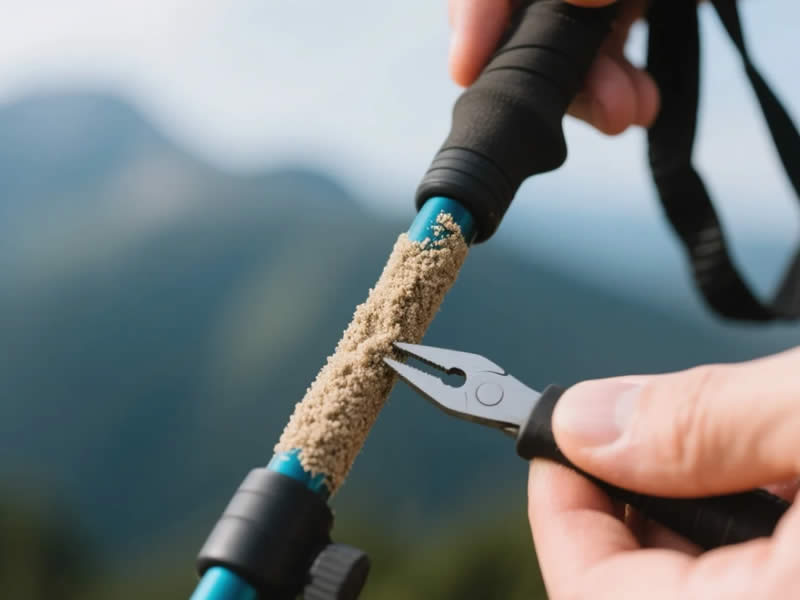
Recommended trekking pole purchase link: https://lightenup.aliexpress.com/store/1101521655
Identify your locking system
Before you start, know what type of lock your pole uses:
- Twist lock – two sections connect by rotating one inside the other; an internal plastic expander tightens against the inner wall.
- Flick lock (external lever) – a lever that tightens a cam against the shaft.
Both can be jammed by sand and grit, but the repair methods differ.
Fixing a twist lock jammed with sand
- Disassemble the pole – Fully extend the pole, then unscrew the jammed section completely. You will see a plastic expander (often white or black) on the end of the inner shaft.
- Rinse with fresh water – Hold the expander under running water. Use a soft brush (old toothbrush) to scrub the threads of the expander and the inside of the outer tube. Sand often hides in the thread grooves.
- Inspect for damage – If the plastic expander’s threads are worn or flattened, replace it (spare expanders available at Decathlon or online).
- Dry thoroughly – Wipe all parts with a cloth. Let them air dry for 10–15 minutes. Any leftover moisture will cause the lock to slip.
- Lubricate lightly – Apply a tiny amount of silicone spray or silicone grease to the expander threads. Do not use oil‑based lubricants (they attract more sand).
- Reassemble – Insert the inner shaft, push to the desired length, and twist to lock. Test by pressing down on the pole.
Fixing a flick lock (external lever) with sand inside
- Open the lever – Flip the lever to the unlocked position.
- Remove the lock (if possible) – Some flick locks (e.g., Black Diamond FlickLock, LEKI SpeedLock) can be disassembled by unscrewing a small bolt. Use a hex key or screwdriver. If you cannot remove it, proceed to cleaning in place.
- Flush with water – Use a water bottle or a stream to jet water into the lever mechanism. Move the lever back and forth while rinsing. Sand will wash out.
- Use a toothpick or compressed air – For stubborn grit, a toothpick or a can of compressed air (if available) can dislodge particles from the cam and pivot points.
- Dry and lubricate – Wipe dry with a cloth, then apply a drop of silicone spray to the cam and lever pivot. Work the lever several times.
- Reassemble – If you removed the lock, screw the bolt back (do not overtighten). Test the lock on the pole.
On‑the‑trail emergency fix
If a section won’t lock and you are miles from your car:
- For twist locks: Unscrew the section, use a wet cloth or your shirt to wipe the expander and inner tube as clean as possible. Then wrap a thin strip of duct tape or a piece of cloth around the expander to increase friction. Reassemble – this will get you off the mountain.
- For flick locks: Rinse the lever mechanism with a few drops of water from your bottle. Tap the lever against a rock to dislodge sand. If still loose, wrap a rubber band or a piece of inner tube around the shaft just below the lock to prevent it from sliding down.
Preventing sand ingress
- Use baskets – Even small baskets keep the tip from plunging too deep and reduce the amount of sand thrown up.
- Rinse after sandy hikes – Before collapsing your poles, rinse them with fresh water (at the trailhead or at home).
- Store with sections extended – Leaving poles collapsed with sand inside will grind the threads every time you adjust.
When to replace parts
If after cleaning the lock still slips:
- Twist lock: Replace the plastic expander (R$15‑30 at Decathlon).
- Flick lock: Replace the entire lock mechanism (R$30‑60) or the lower section if the shaft is scratched.
Final advice
Sand inside a trekking pole lock is not a death sentence. In most cases, a thorough cleaning with fresh water and a toothbrush will restore full function. Always carry a small brush (an old toothbrush) and a tiny vial of silicone spray in your repair kit. With these simple steps, you’ll keep your poles locking firmly on Brazil’s sandy trails – from the dunes of Jericoacoara to the red mud of the Pantanal.




