




Can trekking poles improve walking posture for sedentary office workers in Brazil?
Sedentary office work has become the norm across Brazil, from São Paulo’s high‑rise districts to Rio’s corporate hubs. Hours of sitting—often with forward head tilt and rounded shoulders—lead to postural imbalances, lower back pain, and weakened glutes. Walking is a natural remedy, but many office workers walk without addressing their poor posture. This raises an important question: Can trekking poles improve walking posture for sedentary office workers in Brazil?
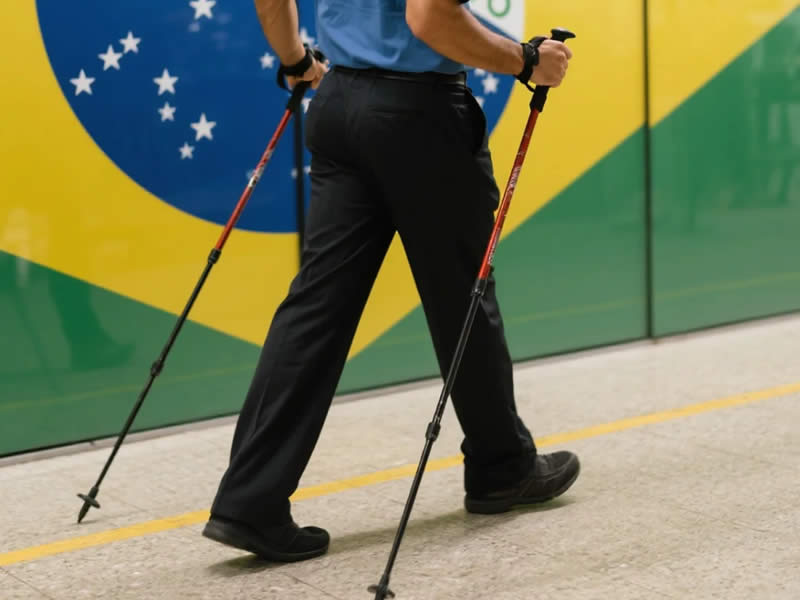
The short answer is yes. Trekking poles are not just for mountain trails. When used correctly on flat urban paths, beaches or park trails, they actively encourage an upright spine and a neutral pelvis. Here is how:
1. They realign the upper body
Holding two poles naturally opens the chest and retracts the shoulder blades. This counteracts the “computer hunch” common after eight hours at a desk. With each step, the poles force you to maintain a tall, engaged posture, reducing the forward head position.
2. They engage the core and posterior chain
Proper pole planting requires coordinated arm and torso movements. This activates the deep abdominal muscles and glutes—muscles that “fall asleep” during prolonged sitting. A stronger core directly translates to better walking posture.
3. They provide real‑time postural feedback
Unlike hands‑free walking, poles create a tactile reminder. If you slouch, the pole angle shifts, and you feel the imbalance. Over time, this biofeedback rewires neuromuscular habits.
Why does this matter specifically in Brazil?
Brazilian office workers often face long commutes and hot climates, leading to fatigue and slumped walking. Trekking poles reduce perceived exertion by distributing effort to the upper body, so you stay upright even when tired. Moreover, Brazil’s abundant green spaces—Ibirapuera Park, Parque das Dunas, or Copacabana’s waterfront—offer perfect low‑impact environments to practice.
What does the evidence say?
Studies in biomechanics show that Nordic walking (walking with poles) increases trunk muscle activation by 30–50% compared to regular walking. Participants report less neck and shoulder tension, and improved standing posture after just four weeks. While most research focuses on older adults or rehabilitation, the benefits are equally valid for sedentary workers of any age.
Practical tips for Brazilian office workers
- Start with two 15‑minute walks per day, using telescopic poles set at a height that keeps your elbows at 90°.
- Walk on flat terrain first (parks, cycle paths) before trying light slopes.
- Pair with desk posture reminders (e.g., chin tucks, seated rows) for faster results.
In conclusion, trekking poles are a simple, affordable tool to break the sedentary posture cycle. For Brazil’s office workers, they turn an ordinary lunch‑time walk into a posture‑correcting exercise. Add a pair to your daily routine—your spine will thank you.




