




Can I use my Leki trekking poles as a substitute for a tent pole for my MSR tent?
Ultralight backpackers often ask: can trekking poles replace heavy tent poles? If you own a Leki pole and an MSR tent, the answer is yes, but only with the right MSR model. Not every MSR tent is designed for trekking‑pole support. Let’s explore compatibility, setup tips, and what to avoid.
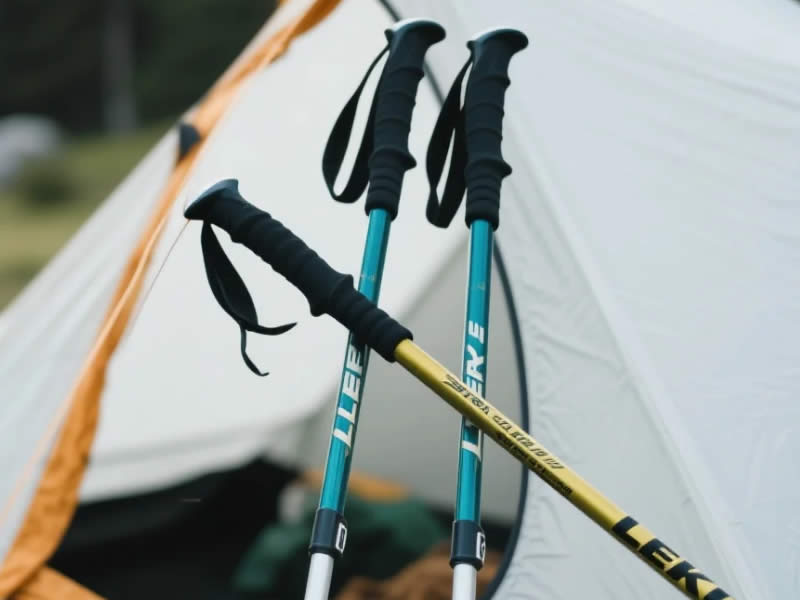
Which MSR tents work with trekking poles?
MSR offers several trekking‑pole‑compatible shelters:
- MSR Freelite series – uses a single trekking pole at the front vestibule.
- MSR Thru‑Hiker series (e.g., Thru‑Hiker 1 or 2) – fully supported by two trekking poles.
- MSR Mesh House (accessory) – designed to pair with a tarp and trekking poles.
However, classic dome tents like the MSR Hubba Hubba NX or Elixir have complex curved pole hubs. Trekking poles cannot replace those. The tent relies on flexible, pre‑bent poles for its geodesic shape. Using a straight Leki pole would collapse the structure.
Why Leki trekking poles are good candidates
Leki poles are known for:
- Secure locking mechanisms (SpeedLock or Super Lock) – hold height without slipping.
- Adjustable length – most Leki models extend from 110 cm to 140 cm, covering typical tent peak heights (115–125 cm for many shelters).
- Removable carbide tips – some Leki poles have interchangeable tips; remove sharp tips to avoid puncturing the tent fabric.
How to correctly substitute a tent pole
- Check your tent manual – Look for “trekking pole compatible” or “alternative pitch.”
- Set the correct height – For MSR Freelite, the front pole height is 120 cm. Extend your Leki pole to exactly that length.
- Protect the tent – Cover the top of the Leki handle with a rubber cap or a piece of closed‑cell foam to prevent abrasion.
- Use the grommet or pocket – MSR compatible tents have a reinforced webbing pocket or eyelet for the pole tip. Insert the tip (not the handle) into that pocket.
- Angle the pole slightly – For stability, tilt the pole slightly toward the inside of the tent, not perfectly vertical.
Risks and limitations
- No fly tension – Without the correct length and angle, the rainfly may sag, leading to condensation or rain pooling.
- Wind performance – A single Leki pole is less rigid than MSR’s dedicated aluminum or DAC poles. In high winds (common in Brazilian mountains), the tent may deform.
- Warranty void – Using a trekking pole in a non‑designed tent could damage the fabric or zippers. MSR will not cover that.
What about using two poles as a ridge?
For pyramid or a‑frame tarps, two Leki poles tied together can form a ridge. But MSR does not make such tents (other than the Thru‑Hiker, which uses poles at each end separately).
The bottom line
- YES if you own an MSR Freelite, Thru‑Hiker, or Mesh House.
- NO for Hubba Hubba, Elixir, Access, or any dome‑style MSR tent.
Before leaving for a Brazilian trail (e.g., Chapada dos Veadeiros or Serra Fina), practice pitching at home. Bring your original tent pole as backup. When compatible, swapping to Leki poles saves 300–500 grams – a worthy upgrade for any ultralight enthusiast.




