




Are folding trekking poles strong enough to support a tarp shelter in windy Chapada?
Chapada Diamantina and Chapada dos Veadeiros—two of Brazil’s most stunning national parks—are famous for sweeping vistas, dramatic canyons, and… fierce winds. When backpacking there with a lightweight tarp shelter, many hikers wonder: can folding (collapsible, Z‑fold) trekking poles handle the gusts? The short answer is yes, but only if you choose quality poles and pitch intelligently. Let’s break down the facts.
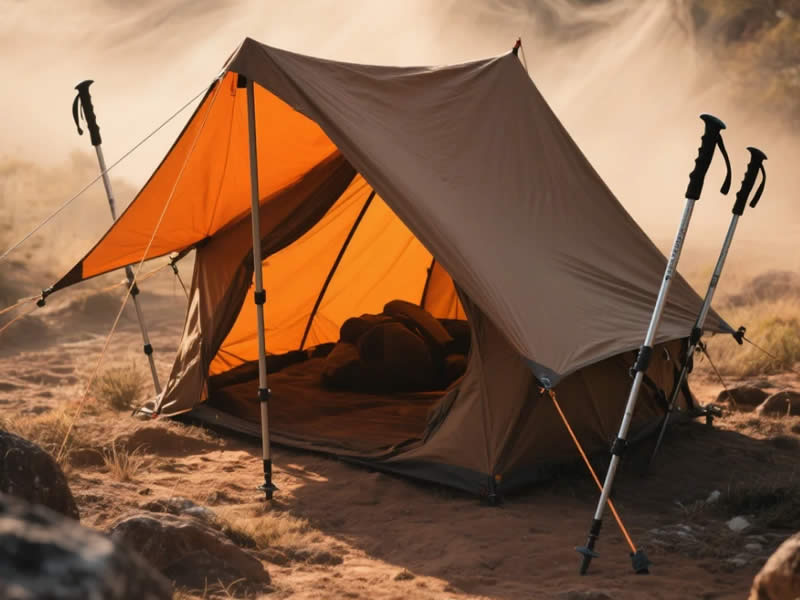
Understanding folding pole construction
Folding trekking poles (e.g., Black Diamond Distance Z, Leki Micro Vario, or Naturehike foldable carbon) consist of several segments connected by an internal cord and locked by a button or lever mechanism when fully extended. They are not as laterally stiff as telescoping (twist or speed‑lock) poles, but modern materials—carbon fiber and high‑grade aluminum—make them surprisingly robust.
The primary concern in wind is bending moment at the joints. A strong gust hitting the side of a tarp transfers force to the pole. If the pole flexes too much, the shelter can collapse or the pole can snap at a joint.
When folding poles work well (and when they don’t)
- Good for: Flat or slightly uneven terrain, moderate winds (up to 30-40 km/h), and tarp setups that use multiple guylines to distribute load. Chapada’s frequent afternoon winds (20–35 km/h) are within safe limits for quality poles.
- Risky for: Exposed ridgeline campsites with gusts exceeding 50 km/h (common during summer storms), or large flat tarps without a steep pitch. Under those conditions, even rigid telescoping poles can fail; folding poles will likely fold (literally) at the joints.
How to make folding poles strong enough for Chapada’s wind
- Use the right tarp pitch – A low A‑frame or pyramid (mid) pitch presents less surface area to wind than a high, flat tarp. Keep the peak height low (e.g., 110–120 cm instead of 130 cm) to reduce leverage on the pole.
- Add guylines at every possible point – Minimum: two side guylines perpendicular to the wind direction. Better: four guylines (corners) plus two side lines. The more guylines, the more the load is shared, reducing peak force on the pole.
- Angle the pole into the wind – Instead of a perfectly vertical pole, tilt it slightly toward the prevailing wind. This aligns the pole with the compressive force rather than against a bending force.
- Reinforce the pole tip – In soft Chapada soil (common after rain), the pole tip can sink, shortening effective height and reducing tension. Place a small stone or a piece of hard wood under the tip to prevent sinking.
- Test before you trust – At home, set up your tarp with folding poles and push firmly on the sides. If the poles buckle or the locking buttons disengage, they are not suitable. Quality poles from Black Diamond, Leki, or Komperdell will hold.
What do Chapada locals say?
Experienced guides in Lençóis (gateway to Chapada Diamantina) often use folding carbon poles for their own fastpacking setups. Their rule: “If you can shake the pole and hear the lock click, don’t use it. If it’s solid, guy it down and sleep well.” They avoid cheap no‑name folding poles from online marketplaces—those are not windworthy.
Final verdict
Folding trekking poles are strong enough for most windy conditions in Chapada, provided you:
- Buy reputable brands (Black Diamond, Leki, Komperdell, or Decathlon’s Forclaz high‑end folding models)
- Pitch low and guy out thoroughly
- Avoid exposed ridges during storm forecasts
For extreme wind or multi‑day exposed camping, telescoping poles (e.g., Leki Makalu, Black Diamond Trail Back) offer more peace of mind. But for 95% of Chapada hikers, quality folding poles will keep your tarp standing tall. Just don’t forget the extra guylines.




