




Do I need trekking poles for the Três Picos crossing in Rio state?
The Três Picos crossing in Rio de Janeiro state is one of Brazil’s most challenging and rewarding multi‑day treks. Located in the Serra dos Órgãos region, it features steep ascents, exposed ridges, loose scree, muddy jungle sections, and river crossings. If you’re planning this adventure, a common question arises: Do I need trekking poles for the Três Picos crossing in Rio state?
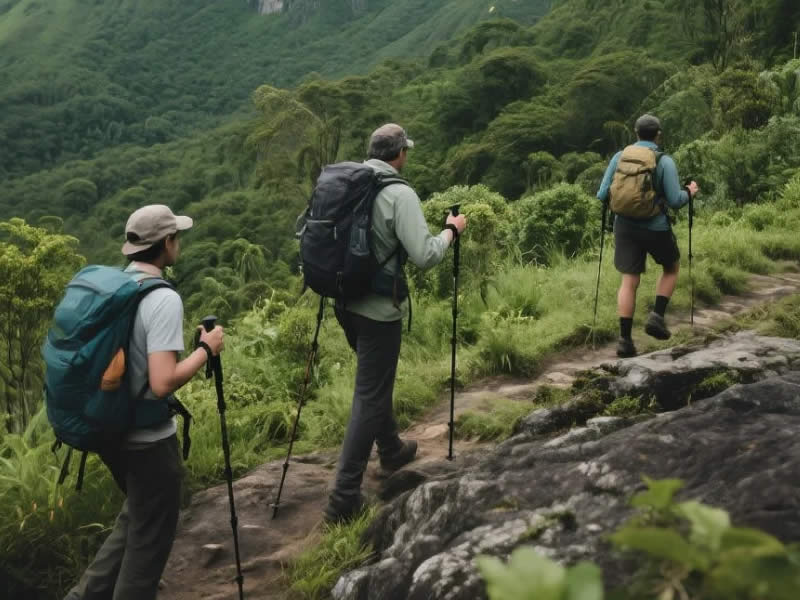
The short answer: Not strictly mandatory, but highly recommended for most hikers. Let’s break down why poles can be a game‑changer on this specific trek, and when you might skip them.
Why Três Picos demands extra stability
- Steep gradients – The climb to Pico Maior (the highest of the three peaks) involves sections with 30‑40% slopes. Descending these without poles places tremendous stress on your knees and quads.
- Loose rocks and scree – Several passages (e.g., the approach to Pico Menor) are covered in small, unstable stones. Poles provide two additional points of contact, preventing slips and ankle twists.
- Mud and roots – The lower Atlantic Forest sections can be slick after rain. Poles help you probe muddy puddles and maintain balance on slippery roots.
- River crossings – The crossing has multiple streams, especially between the peaks. Poles act as feelers to test depth and provide three‑point stability on wet rocks.
The benefits of using poles on Três Picos
- Knee protection – Each step downhill with a loaded backpack sends 3‑5 times your body weight through your knees. Poles transfer up to 20% of that load to your arms, reducing fatigue and pain.
- Energy efficiency – On steep climbs, poles let you engage your upper body, spreading effort and preserving leg muscles for the long haul.
- Balance on exposed ridges – The final sections near the peaks have narrow, wind‑exposed paths. A sudden gust or misstep can be catastrophic. Poles act as an insurance policy.
- Clearing cobwebs and vegetation – In overgrown sections, poles push aside branches and spider webs (including potentially dangerous spiders common in the region).
When you might skip poles
- You are an experienced trail runner aiming for a fast, unsupported crossing (poles add weight and slow your rhythm).
- You have strong knees and excellent balance, and your pack is very light (under 8 kg).
- You prefer to use your hands for scrambling on class 3‑4 rock sections (though most of Três Picos is hiking, not climbing).
What to look for in poles for Três Picos
- Aluminium (7075) – Carbon poles can shatter on the abundant quartzite rocks. Aluminium bends but survives.
- Lever locks – Not twist locks, which slip in mud.
- Carbide tips – For grip on wet rock and hard ground.
- Adjustable length – Shorten for steep uphills, lengthen for downhills.
Local guide wisdom
Guides from the nearby town of Guapimirim almost always use poles on the crossing. One veteran told me: “I’ve seen too many twisted ankles and knee blowouts. The poles weigh 500 grams but save weeks of recovery. Bring them.”
Final verdict
For 95% of hikers attempting the Três Picos crossing, trekking poles are not mandatory but strongly recommended. They reduce injury risk, protect your joints, and make the steep, technical terrain more enjoyable. If you own a pair, pack them. If you don’t, consider renting or buying budget aluminium poles (e.g., Decathlon Forclaz) before the trip. Your knees will thank you when you reach the third summit.




