




What trekking poles survive the sharp rocks of the Pedra do Sino trail?
Pedra do Sino, the highest peak in Rio de Janeiro’s Serra dos Órgãos National Park, is a legendary hike. Its summit stands at 2,275 meters, and the trail is famous for relentless sharp quartzite rocks—often called pedras que cortam (stones that cut). Many hikers return with broken trekking poles. So, what poles actually survive this brutal terrain?
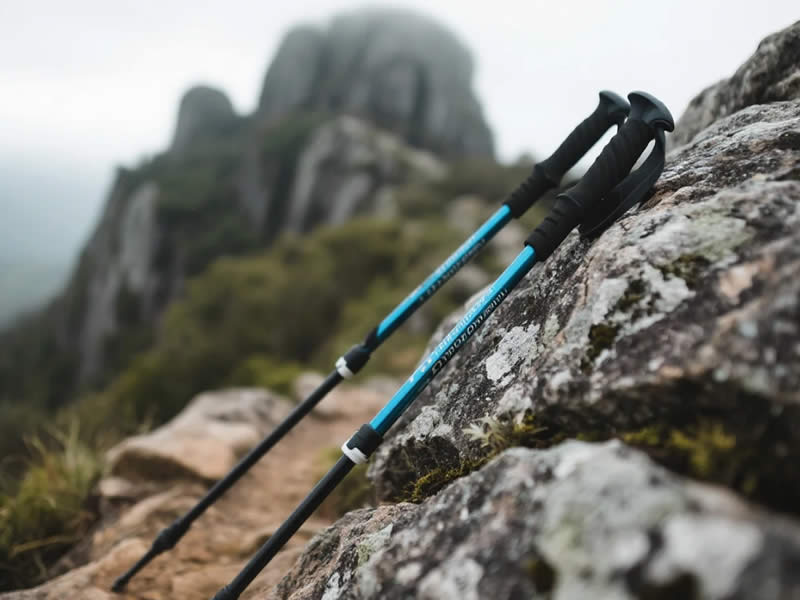
The short answer: 7075 aluminum poles with steel‑reinforced tips and robust lever locks. Carbon fiber poles will fail. Let’s dive into the why and which models pass the test.
Why carbon fiber dies on Pedra do Sino
Quartzite is harder than most steel. A single scratch or nick on a carbon fiber shaft creates a stress riser. Under the load of a steep climb or a planted descent, that tiny crack propagates. Within hours, the pole splinters or snaps completely. Guides at the park’s entrance often warn hikers: “Leave your carbon poles in the car. They won’t come back.”
Why aluminum survives
High‑grade aluminum (7075 alloy) bends but does not shatter. If you accidentally jam a pole between two sharp rocks, the shaft may dent or bow slightly, but it will still support your weight. You can even straighten a bent aluminum pole on a flat rock. For this trail, ductility beats brittleness.
Key features that increase survival
- Lever locks – Not twist locks. Grit from the trail gets into twist‑lock mechanisms, causing slippage or seizure. Lever locks (e.g., Black Diamond FlickLock, Leki SpeedLock) can be cleaned in seconds with a stick or a water rinse.
- Steel lower sections – Some poles (like the Leki Makalu) have a steel bottom segment. Steel is softer than quartzite but far more resistant to abrasion. The tip ferrule won’t wear down as quickly.
- Replaceable carbide tips – The trail eats tips. Choose poles with user‑replaceable tips (e.g., Black Diamond’s FlexTip). Bring a spare set.
- No plastic joint collars – Cheap poles use plastic at the joint interfaces; these crack on impact. Look for all‑metal locking collars.
Top poles that survive Pedra do Sino
- Black Diamond Trail Back – 7075 aluminum, FlickLock, carbide FlexTips. Thousands of hikers have used these on the roughest sections of the Appalachian Trail and Brazil’s own trilhas.
- Leki Makalu (aluminum version) – The classic. SpeedLock Plus, steel lower section, cork grip. Heavier than ultralight poles, but nearly indestructible. A favorite among Brazilian mountain guides.
- Komperdell Titanium Alu Powerlock – 7075 aluminum, Powerlock lever system, titanium carbide tip. Sold at some specialized outdoor shops in Rio and São Paulo.
What about folding (Z) poles?
Folding poles (e.g., Black Diamond Distance Z) are convenient but not recommended for this trail. The internal cord can snap when the pole is torqued between rocks. The locking buttons jam with grit. Stick with telescoping adjustables.
Pre‑trip checks and on‑trail care
- Before leaving, tighten all lever locks. Apply a drop of lubricant to moving parts.
- During the hike, avoid planting directly into rock cracks—the pole can get wedged and bend when you pull it out.
- After the hike, rinse poles with fresh water to remove abrasive quartzite dust.
Final verdict
For Pedra do Sino, do not bring carbon fiber, twist‑lock, or folding poles. Instead, choose 7075 aluminum poles with lever locks and steel‑reinforced tips. The Black Diamond Trail Back or Leki Makalu will survive the sharp rocks—and so will your knees. Invest in durability, and you’ll return from this iconic Brazilian peak with gear intact and a smile on your face.




