




Can I use regular trekking poles for the beach trail to Lopes Mendes?
Lopes Mendes, on Ilha Grande (Rio de Janeiro state), is consistently ranked among Brazil’s most beautiful beaches. The trail to reach it—starting from the village of Abraão or from the dock at Palmas—is a classic coastal hike. It winds through Atlantic Forest, crosses wooden bridges, scrambles over small rock outcrops, and finishes with a soft sand stretch. Many visitors who already own trekking poles ask: Can I use regular trekking poles for the beach trail to Lopes Mendes?
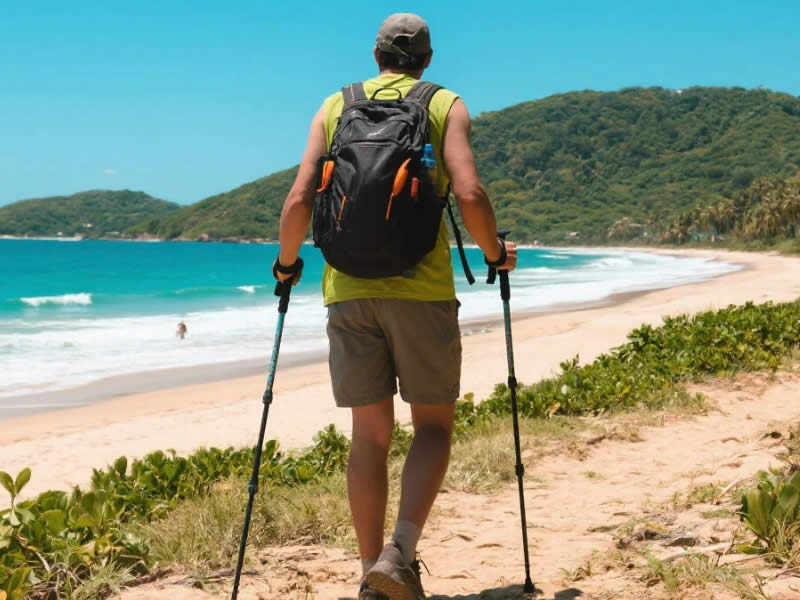
The simple answer is yes – standard trekking poles will work just fine. However, the trail has a few peculiarities that you should prepare for. Let’s walk through the conditions, tips for success, and minor adjustments that make regular poles perform even better.
Understanding the Lopes Mendes trail
The most common route is from Abraão to Lopes Mendes via the Praia do Pouso and Praia da Crena path. Total distance one way is about 5.5–6 km, with moderate elevation gain (around 150–200 m over several short hills). Key terrain features:
- Dense forest floor – Compacted dirt, tree roots, occasional mud.
- Rocky sections – Granite boulders and small scrambles (nothing technical).
- Wooden walkways and bridges – Slippery when wet.
- Final sand – About 200–300 meters of soft, dry sand before reaching the beach.
Regular trekking poles (adjustable aluminium or carbon, with standard carbide tips) handle all of these surfaces without major issues.
What “regular trekking poles” typically have
Most off‑the‑shelf poles include:
- Carbide or steel tip (sharp)
- Rubber tip protector (removable)
- Small round trekking basket (about 4 cm diameter)
- Adjustable length (usually 110–135 cm)
- Cork, foam, or rubber grip
These are perfectly adequate for the Lopes Mendes trail.
Potential challenges and simple fixes
- Sand sinking – On the final stretch of soft, dry sand, a standard carbide tip can sink deep, making each step feel like punching a hole. The fix: add sand baskets. These are larger, flared baskets (often sold separately) that distribute the pole’s weight, preventing deep sinking. If you don’t have sand baskets, simply remove the small basket (or don’t use one) – the pole will sink a bit, but it’s still usable. Alternatively, use the rubber tip cover on sand; it provides a flat surface that won’t penetrate as deeply.
- Saltwater and sand corrosion – After reaching Lopes Mendes, you might walk along the beach or dip your poles in the sea. Saltwater is corrosive to metal locks and internal springs. Always rinse your poles with fresh water after the hike. Open the locks, extend them fully, and hose them down. This prevents the joints from seizing.
- Rubber tips on rocky sections – The rubber tip protectors are great for pavement or wooden walkways, but they become dangerously slippery on wet rock or loose gravel. Remove rubber tips before entering the forest/rock sections. Use only the bare carbide tip for grip.
Do you need special beach poles?
Some brands sell “beach poles” with wider sand baskets and sealed joints. For Lopes Mendes, these are overkill. The sandy part is short, and the majority of the trail is forest. Regular poles with removable baskets are more versatile.
Tips from local hikers
- Adjust length for the final sand – Shorten your poles by 2–3 cm on soft sand. A shorter pole keeps your hands lower, making the sink less noticeable.
- Stow poles during the sandy beach walk – Once you reach the flat, hard sand near the waterline, poles are unnecessary. Collapse them and attach to your pack.
- Use one pole – Many hikers find that a single pole is plenty for this trail, leaving one hand free for water bottles or camera.
What to avoid
- Leaving poles extended in the sun – Heat can cause the expansion of metal and carbon, making sections difficult to collapse.
- Planting heavily on wooden walkways – The tips can leave small dents; use rubber covers on these sections if you want to be eco‑friendly.
- Twist‑lock poles after sand exposure – Fine sand gets into twist threads, making them slip. If you have twist locks, clean them thoroughly after the hike.
Final verdict
Yes, regular trekking poles work perfectly for the beach trail to Lopes Mendes. No special “beach poles” are required. Just remove rubber tips before hitting the rocky forest, consider adding sand baskets for the final soft stretch, and rinse your poles with fresh water after the hike. With these small precautions, your everyday poles will make the trail more stable, protect your knees on the short descents, and help you arrive at one of Brazil’s most stunning beaches feeling fresh. So pack them, adjust them, and enjoy the walk – Lopes Mendes awaits.




