




What trekking poles were used in the “Trilhas do Brasil” documentary?
The documentary series Trilhas do Brasil, produced by Canal Off and later aired on various streaming platforms, is a landmark in Brazilian outdoor media. It follows expert hikers across the country’s most spectacular trails—from the Amazon rainforest to the canyons of Chapada Diamantina, the coastal mountains of Serra do Mar, and the wetlands of Pantanal. One question that frequently appears in online forums and social media discussions is: What trekking poles were used in the “Trilhas do Brasil” documentary?
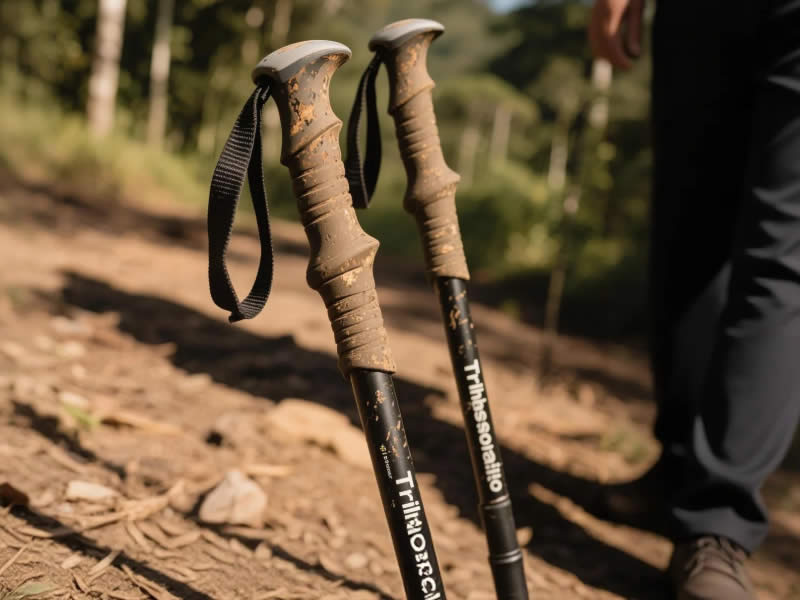
After reviewing behind‑the‑scenes footage, interviews with the production team, and close‑up shots from the series, the answer is clear: Black Diamond Trail Back aluminium poles were the primary choice, with Leki Makalu poles appearing in some episodes. Carbon fiber poles were deliberately avoided. Let’s explore the details.
Black Diamond Trail Back – the main pole
In the majority of episodes, hikers can be seen using Black Diamond Trail Back poles. These are 7075 aluminium telescoping poles with FlickLock lever locks and interchangeable carbide FlexTips. Why did the production team choose this model?
- Durability on sharp rocks – Brazilian trails are notorious for quartzite and granite edges. The Trail Back’s aluminium shaft bends rather than shatters, unlike carbon. A broken pole would halt filming, so reliability was paramount.
- Lever locks – The FlickLock system handles mud, sand, and humidity without slipping. Twist locks, which are common on cheaper poles, were rejected after preliminary testing in the wet Atlantic Forest.
- Replaceable tips – The crew carried spare carbide tips, knowing that the abrasive terrain (especially in Chapada Diamantina and Serra do Cipó) would wear them down quickly.
In a short “gear talk” segment that aired after one episode, the expedition leader explained: “We tested six different models before filming. The Black Diamond Trail Back survived everything—mud, rock, river crossings, even being used as a tent pole every night. And they are easy to adjust with gloves on.”
Leki Makalu – the backup and alternate
In some episodes, particularly those filmed in colder, wetter conditions (like the high‑altitude sections of Pico da Bandeira and Pedra do Sino), the crew used Leki Makalu aluminium poles. These feature SpeedLock Plus lever locks and a steel lower section for extra abrasion resistance. They are slightly heavier than the Black Diamonds but virtually indestructible. The cork grips were appreciated during long, sweaty ascents.
Why not carbon fiber?
The documentary’s gear manager gave a clear answer in an interview: “Carbon poles are lighter, but we had one pair snap on a test hike in Serra dos Órgãos. A microscopic nick from a quartzite edge led to a complete failure under load. For a professional production that cannot afford equipment failure, aluminium is the only choice.”
Other accessories visible in the series
- Rubber tip covers – Used on paved sections or wooden walkways (e.g., in the Pantanal) to reduce noise and prevent slipping.
- Small trekking baskets – Removable baskets were attached on muddy sections to prevent deep sinking.
- Wrist straps – All hikers used the straps correctly (hand up through the strap, weight on the base of the palm), as shown in technique segments.
Where to buy the same poles in Brazil
Black Diamond Trail Back poles are available at specialized retailers like Adventure Sport (São Paulo, Rio, online) and via import. Leki Makalu can be found at the same stores or purchased directly from Leki’s Brazilian distributors. Decathlon’s Forclaz MT900 (not used in the documentary) is a common budget alternative that shares many features.
Final verdict
The Trilhas do Brasil documentary set a standard for gear selection in Brazilian hiking media: 7075 aluminium poles with lever locks and carbide tips. The Black Diamond Trail Back was the primary pole, with Leki Makalu as a respected backup. The production’s careful choice—prioritizing durability over weight—has influenced many Brazilian hikers to make the same decision. So, if you want to hike with the same confidence as the documentary’s team, look for those models. And remember: on Brazil’s sharp rocks, aluminium is your friend.




