




What replacement parts should I carry for a multi‑week Brazil trek?
A multi‑week trek in Brazil—whether it's the Travessia da Chapada Diamantina, the Transcarioca, or an Amazon expedition—puts your trekking poles through extreme conditions. Quartzite rocks, relentless mud, high humidity, and daily folding/collapsing cycles will wear down components faster than you'd expect. Carrying the right replacement parts can mean the difference between a functioning pole and a useless stick. Here's a comprehensive checklist tailored for Brazilian long‑distance trekkers.
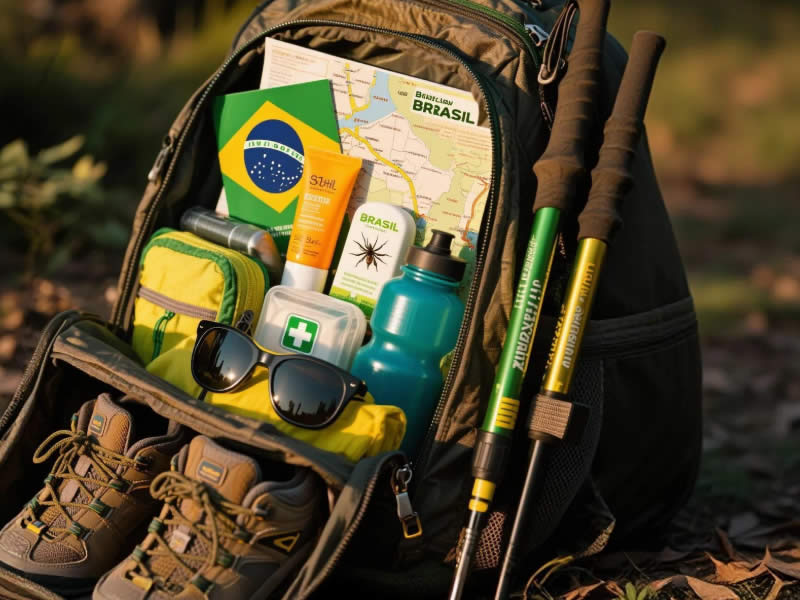
The essential replacement parts (must‑haves)
- Carbide tips (2 pairs, 4 tips)The most commonly worn component. On abrasive quartzite or granite, a tip can round off in 200‑300 km. Bring at least two pairs: one press‑fit (for most poles) and, if your pole uses threaded tips, a matching set. For Decathlon Forclaz poles, the generic press‑fit tips are cheap and available; for Leki/Black Diamond, buy genuine spares. Weight: ~40 g for four tips.
- Lever lock repair kitLever locks (cam locks) are reliable, but screws can loosen, springs can weaken, and plastic cams can crack. Carry:A small hex key (2 mm, 2.5 mm, 3 mm) to tighten screws.Two spare lever lock assemblies (the entire cam mechanism). For Decathlon Forclaz, these are sold individually at Decathlon. For Leki/Black Diamond, Adventure Sport stocks them.A few spare screws (they are tiny and easily lost).Weight: ~30‑50 g for the complete lock set.
- Shock cord (for folding / Z‑poles)If you use folding poles, carry 2‑3 metres of 3‑4 mm elastic bungee cord and a few aluminium crimps. The cord can snap after heavy use or in humid conditions. You can replace it on the trail with a small pair of pliers (or even by hand with practice). Weight: ~20 g.
- Rubber tip protectors (2 pairs)While not for trail use, these are essential for protecting your tips during air travel and for walking on paved or wooden surfaces (like boardwalks). They also serve as a temporary anti‑slip on smooth rock if your carbide tips wear out. Weight: negligible.
Recommended extras (good to have)
- Spare baskets (2 pairs)Small baskets crack or fall off, especially when bushwhacking through dense vegetation. Carry a pair of universal 10‑12 mm baskets. For muddy sections, also bring a pair of larger mud baskets (optional). Weight: ~30 g.
- Wrist straps (1 pair)Straps fray, especially when they rub against rocks or your backpack's shoulder straps. A spare pair is lightweight (20 g) and easy to swap. Many are compatible across brands (check the attachment clip).
- Duct tape (a small roll, 1‑2 metres)This is your emergency repair tool: wrap it around a cracked shaft, secure a loose basket, or even splint a broken pole. Weight: 20 g.
- Needle and thread (or heavy‑duty fishing line)For sewing a torn wrist strap or a backpack attachment. Weight: 5 g.
- Silicone spray (small travel bottle)Lubricates locks and inner shaft sections to prevent seizing after mud or saltwater exposure. Available in hardware stores; decant into a 30‑ml dropper bottle. Weight: 40 g.
Optional but situation‑dependent
- Lower shaft section (for telescoping poles)If you use a pole that allows section replacement (e.g., Leki, Black Diamond, or Decathlon Forclaz), carry a spare lower shaft. This is only for very remote treks where a bent or cracked section would end your trip. Weight: ~80 g, so consider your pack space.
- Spare pole (collapsible emergency pole)Some hikers carry a lightweight backup pole (like a single folding pole) as a "just in case." This adds 200‑300 g but can be a lifesaver.
How to store and access your repair kit
Use a small, waterproof pouch (e.g., an Aloksak bag or a small dry bag) to keep all parts dry and organised. Place it in an easy‑to‑reach pocket of your backpack—not buried at the bottom. For tips and locks, keep them in a separate, small plastic bag so they don't scatter.
Where to buy in Brazil before your trek
- Decathlon: For Forclaz tips, locks, baskets, straps, and shock cord. They are the most accessible and affordable.
- Adventure Sport: For genuine Leki, Black Diamond, and Komperdell spares. Higher quality, but more expensive.
- Mercado Livre / Shopee: Generic tips, baskets, and straps. Check seller ratings and material (insist on "tungsten carbide" for tips).
- Hardware stores: For hex keys, silicone spray, and duct tape.
Weight and cost summary
- Essential parts (tips, lock repair, shock cord): ~150 g, R$100‑200.
- Recommended extras (baskets, straps, tape, lube): ~100 g, R$50‑100.
- Full kit (including optional shaft): ~250‑300 g, R$200‑350.
Maintenance schedule during the trek
- Daily: Wipe poles clean, inspect tips and locks.
- Every 2‑3 days: Tighten lever lock screws if needed.
- After mud or saltwater: Rinse with fresh water, dry, and lightly lubricate locks.
Final checklist for a multi‑week Brazil trek
- Carbide tips (2 pairs)
- Lever lock assemblies (2) + hex key
- Shock cord + crimps (for folding poles)
- Rubber tip protectors (2 pairs)
- Spare baskets (2 pairs)
- Wrist straps (1 pair)
- Duct tape (small roll)
- Needle + thread
- Silicone spray (30 ml)
- Optional: spare lower shaft or emergency pole
With this kit, you can handle 90% of trekking pole failures on the trail, allowing you to focus on the stunning landscapes of Brazil rather than worrying about broken gear. Pack it, test your repairs at home, and trek confidently.




