




Are trekking poles useful on the Cotswold Way?
The short answer is yes, but not essential. The Cotswold Way is a 102‑mile (164 km) national trail that runs from Chipping Campden to Bath, following the edge of the Cotswold escarpment through rolling hills, beech woodlands, and picturesque villages. It is one of England's gentler long‑distance walks—well‑graded, mostly firm underfoot, and without the extreme elevation changes of the Pennine Way or the West Highland Way. However, trekking poles can still enhance comfort, protect your knees, and improve stability on certain sections. This guide explores when poles are useful and when you might skip them.
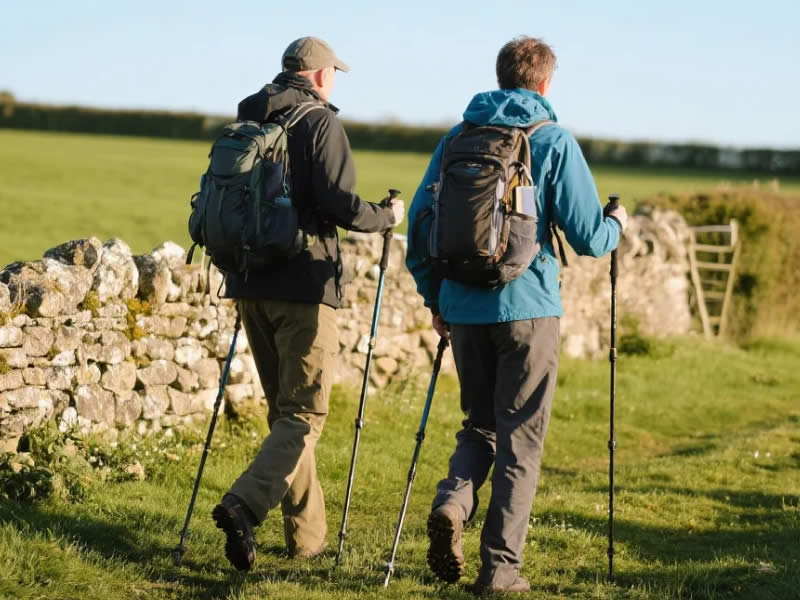
Understanding the Cotswold Way terrain
The trail is predominantly a ridgeline walk with constant, moderate ups and downs. While individual climbs are not steep, the cumulative ascent is significant—around 3,300 metres over the full route. The path is mostly grassy or compacted earth, with occasional limestone and flint sections. After rain, the chalky or clay soils can become slippery, and some descents (notably into valleys like the Avon Gorge) can be steep and uneven.
When trekking poles are most useful
- Knee protection on long descents – Although the hills are not mountainous, the repeated descents can strain your knees, especially if you are carrying a multi‑day pack. Poles offload 20–30% of your body weight to your arms, reducing impact on your joints.
- Balance on slippery sections – After wet weather, the path can become greasy. Poles provide two extra points of contact, helping you stay upright on muddy slopes or flinty paths.
- Efficiency on rolling terrain – On the undulating sections, poles can help maintain a rhythm, using your upper body to propel you forward and saving your leg muscles for the climbs.
- Stream crossings and uneven ground – The trail crosses several small streams and has sections with exposed tree roots or loose stones. Poles give you extra stability.
When you might not need them
- Light pack and strong knees – If you are walking with a daypack and have no knee issues, the Cotswold Way is perfectly manageable without poles. Many fit walkers complete the trail without them.
- Shorter daily distances – If you are walking 8–10 miles a day, the cumulative impact is less significant than on a 15‑mile day.
- Hands‑free preference – Some walkers simply prefer the freedom of walking without poles, especially when taking photos or navigating stiles.
What type of poles to consider
If you decide to bring poles, opt for lightweight, durable options that suit the terrain:
- Aluminium (not carbon) – The Cotswold Way's limestone and flint can nick carbon shafts. Aluminium is more forgiving.
- Lever locks – Twist locks can slip when chalk dust or mud gets into them. Lever locks (cam locks) are more reliable.
- Replaceable carbide tips – The chalky terrain will wear down tips over time.
- Small baskets – Useful for preventing the pole from sinking into soft ground after rain.
- Cork grips – Comfortable in warm weather and grippy when wet.
Recommended models:
- Decathlon Forclaz MT900 (£55) – best value.
- Leki Makalu or Black Diamond Trail Back – premium options.
Practical tips for the Cotswold Way
- Use a single pole – Some walkers prefer one pole, leaving one hand free for a water bottle, map, or camera.
- Adjust length – Shorten poles by 5 cm for uphills, lengthen by 5 cm for downhills.
- Remove baskets on rocky or flinty sections to avoid catching.
- Carry spare tips – If you are walking the entire 102 miles, a spare pair may be useful.
Alternatives to trekking poles
- Walking stick – A single walking stick (like a traditional shepherd's crook) is a charming alternative and common on the Cotswold Way. Lighter and simpler, but offers less support.
- Hire before you walk – Some outdoor shops in Chipping Campden or Bath offer pole rental for the trail.
- Try without – Start without poles and pick up a sturdy stick along the way if you feel the need.
Weather considerations
The Cotswold Way is exposed for long sections. In windy conditions, poles add stability. In hot weather, they can become an extra burden—though lightweight aluminium models are easy to strap to your pack when not in use.
Final verdict
Trekking poles are useful but not essential on the Cotswold Way. For most fit walkers with light packs, the trail is forgiving enough to manage without. However, if you have knee issues, carry a heavy pack, or walk in wet conditions, poles will significantly enhance comfort and safety. They are a personal choice—and there is no wrong answer. If you are unsure, try a day hike with a borrowed pair to see if the rhythm suits you. For many, the Cotswold Way is the perfect trail to experiment with poles: not so demanding that you must have them, but gentle enough to appreciate the extra support they offer. Ultimately, the trail is about enjoying the rolling hills and charming villages—poles are just a tool to help you do that.




