




Do I need poles for the Offa's Dyke Path?
The short answer is: not strictly, but highly recommended for most walkers. The Offa's Dyke Path is a 177-mile (285 km) National Trail that follows the ancient earthwork along the Welsh-English border. With over 7,000 metres of ascent and descent—more than climbing Mount Everest from sea level—it is one of Britain's most challenging long-distance trails. The terrain is varied, the weather unpredictable, and the cumulative strain on your knees significant. Trekking poles will make the journey safer, more comfortable, and more enjoyable for the vast majority of walkers.
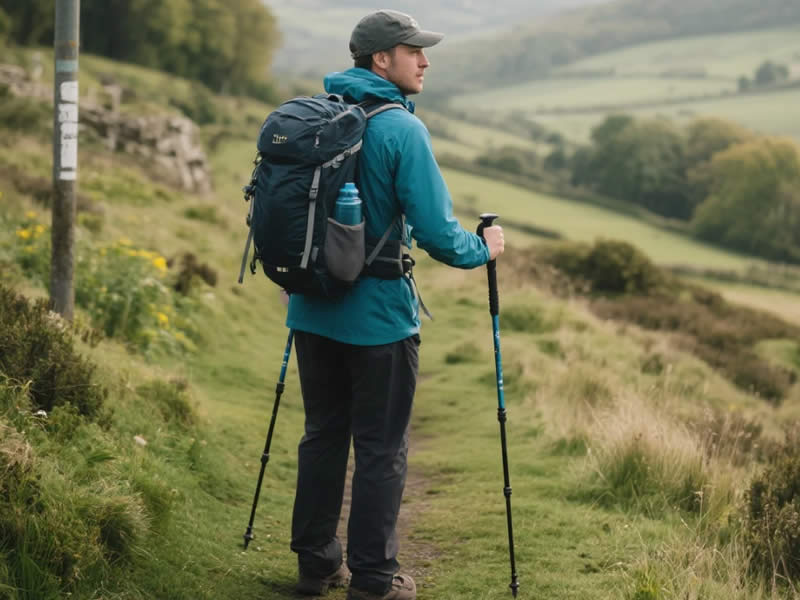
Understanding the Offa's Dyke Path terrain
The trail is not a single type of walking. It traverses:
- Steep, muddy descents – Particularly in the Clwydian Range and the Shropshire Hills, where paths can become treacherous after rain.
- Open moorland – Exposed to wind and rain, with uneven, boggy ground.
- Woodland tracks – Rooty, slippery, and often steep.
- Farmland paths – Grassy but can be muddy, with numerous stiles and gates.
- Long, steady climbs – Such as the ascent of Hatterrall Hill, which will test your stamina.
The cumulative elevation change is relentless. Even if individual climbs are not alpine in scale, the constant up-and-down over 10–15 miles a day for 12–16 days will fatigue your legs and stress your joints.
Why trekking poles are highly recommended
- Knee protection on descents – The Offa's Dyke Path has numerous long, steep descents. Without poles, each step down creates an impact force of 3–5 times your body weight on your knees. Poles can offload 20–30% of that force, reducing joint strain and the risk of injury over a multi-day trek.
- Stability on slippery sections – After rain, the trail's many muddy and grassy slopes become greasy. Poles provide two extra points of contact, preventing slips and falls. This is especially valuable on the steep descents into valleys like the Wye Valley.
- Efficiency on long climbs – On ascents, poles help you maintain a steady rhythm, using your upper body to assist your legs. This reduces overall fatigue and helps you keep a consistent pace.
- Balance on uneven ground – The trail has sections with exposed roots, loose stones, and rocky outcrops. Poles give you a tactile sense of the ground ahead, allowing you to place your feet more confidently.
- Stream crossings – The route crosses numerous small streams. Poles help you test depth and maintain balance on wet, uneven rocks.
When you might not need poles
- Very fit walkers with strong knees – If you are a regular hillwalker with excellent balance and no joint issues, and you are carrying a light pack (under 8 kg), you may complete the trail without poles.
- Short daily distances – If you are walking 8–10 miles a day, the cumulative strain is less significant.
- Personal preference – Some walkers simply dislike the feel of poles or find them cumbersome. The Offa's Dyke Path's terrain does not require poles for safety (unlike more technical routes), so you can choose to go without.
What type of poles to choose for the Offa's Dyke Path
If you decide to use poles—and I recommend you do—choose a pair that is durable, reliable, and comfortable for long days:
- Aluminium over carbon – The rocky sections and potential for side impacts make aluminium (especially 7075 alloy) a safer choice. Carbon can splinter on impact.
- Lever locks – Twist locks are notorious for slipping in wet and muddy conditions. Lever (cam) locks (e.g., Leki SpeedLock, Black Diamond FlickLock, Decathlon's cam system) are more secure and field-adjustable.
- Replaceable carbide tips – The abrasive gritstone on the trail will wear down tips. Poles with replaceable tips are more economical. Carry a spare pair.
- Cork grips – In wet, cold conditions, cork grips remain comfortable and grippy, reducing hand fatigue.
- Small mud baskets – Useful for preventing the pole from sinking into soft ground on moorland sections. Remove them on rocky stretches to avoid catching.
Top recommendations
- Decathlon Forclaz MT900 (£55) – The best value pole for the Offa's Dyke Path. It offers 7075 aluminium, reliable lever locks, cork grips, and replaceable tips. It is lightweight (250 g per pole) and proven on long-distance trails.
- Leki Makalu (£90–100) – A premium choice with SpeedLock Plus, 7075 aluminium, a steel lower section for extra abrasion resistance, and cork grips. Virtually indestructible.
- Black Diamond Trail Back (£75–85) – Similar to the Makalu but with Black Diamond's FlickLock system. Lighter and with an ergonomic grip.
Practical tips for the Offa's Dyke Path
- Carry spare tips – The abrasive terrain will wear down tips noticeably over 177 miles. A spare pair (around £10–15) is a lightweight addition to your repair kit.
- Adjust pole length – Shorten by 5–10 cm for uphill sections; lengthen by 5–10 cm for downhills. This simple adjustment improves efficiency and comfort.
- Use rubber tips on road sections – The path includes some road walking. Rubber protectors save your carbide tips and reduce noise.
- Clean and dry poles daily – Mud and moisture can corrode locks and shafts. Rinse with fresh water and dry thoroughly to prevent seizing.
- Mud baskets on moorland – Fit mud baskets for the boggy sections; remove them on rocky or coastal stretches.
Where to buy before your walk
- Decathlon UK – Forclaz MT900 (best value, online and in-store).
- Go Outdoors – Price-match and discount card can make Leki and Black Diamond more affordable.
- Cotswold Outdoor – Expert advice and in-store testing.
- SportPursuit – Flash sales on premium brands (if timed right).
Final verdict
For the Offa's Dyke Path, trekking poles are highly recommended for most walkers, though not mandatory. They protect your knees on the relentless descents, provide stability on muddy and uneven terrain, and reduce overall fatigue over the 12–16 days of walking. If you have knee issues, carry a heavy pack, or are not a regular hillwalker, poles will significantly enhance your safety and comfort. The best value choice is the Decathlon Forclaz MT900, with premium options like the Leki Makalu or Black Diamond Trail Back for those who walk frequently. Avoid carbon and twist locks. With the right poles, you will tackle the steep ascents and descents with greater confidence and less strain, allowing you to fully enjoy the stunning landscapes and ancient history of this iconic trail. Happy walking.




