




Are folding trekking poles good for the Lake District's rocky fells?
The short answer is generally no – folding (Z‑pole) trekking poles are not recommended for the Lake District's rocky fells. While they are lightweight, packable, and convenient for travel, their design makes them vulnerable to the sharp slate, quartzite, and gritty scree that characterise the Lake District's terrain. For the safety and reliability you need on fells like Scafell Pike, Helvellyn, or Great Gable, you are better off with telescoping aluminium poles with lever locks. This article explains why, and when folding poles might still be acceptable.
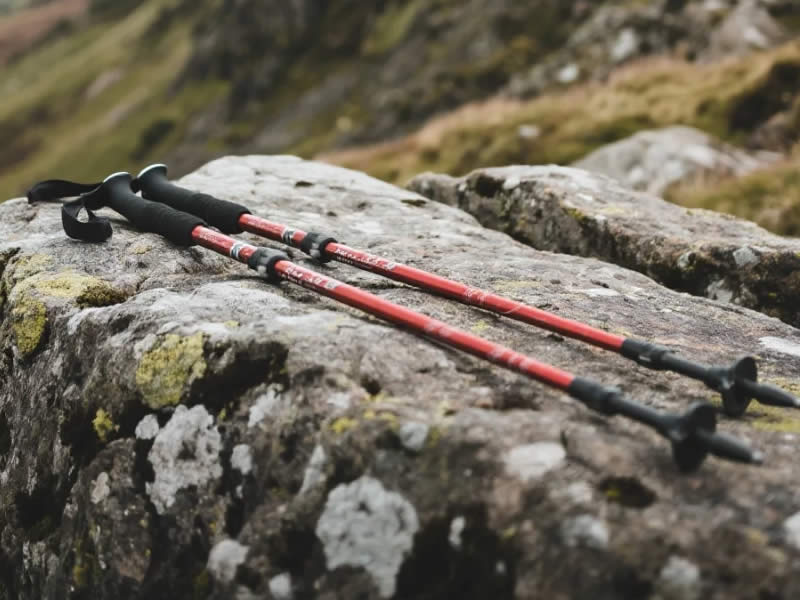
Understanding the Lake District's terrain
The Lake District's fells are formed from volcanic rock, slate, and quartzite – materials that are notoriously sharp and abrasive. The paths are often loose scree, rocky steps, and exposed ridges. Key challenges for poles:
- Abrasive grit – The fine, sharp particles can jam locking buttons and wear down internal mechanisms.
- Side impacts – When you stumble or plant a pole between rocks, lateral forces can bend or snap the thin‑walled sections of folding poles.
- Wet and muddy conditions – Water and grit combine to clog push‑button joints, making them difficult to extend or collapse.
- High winds – Exposed ridges demand secure, reliable pole locks. Folding poles' push‑button joints are less secure than lever locks under lateral stress.
Why folding poles are vulnerable
Folding trekking poles (e.g., Black Diamond Distance Z, Leki Micro Vario) consist of three or four sections connected by an internal shock cord and locked by a push‑button mechanism. They are designed for ultralight hiking and trail running on softer, less abrasive terrain. Their weaknesses on rocky fells include:
- Thin‑walled sections – To save weight, the tubing is thinner than telescoping poles. A side impact on a sharp rock can dent or snap a section.
- Push‑button joints – These can become clogged with grit, preventing the pole from locking securely or collapsing. A jammed joint on a remote fell can leave you with a useless pole.
- No field repairability – If a push‑button breaks or a section bends, you cannot easily repair it on the trail. Telescoping poles with lever locks can often be fixed with a hex key or even by straightening a bent section.
- Internal shock cord – The elastic cord can snap, leaving the sections disconnected. Repairing it on the trail is fiddly and requires spare cord and crimps.
When folding poles might be acceptable
Folding poles can work on the Lake District's fells under specific conditions:
- You are a confident, experienced walker who places poles carefully and avoids side impacts.
- You are on gentler trails (e.g., lower slopes, valley paths) rather than the exposed ridges.
- You are doing a single day's walk and can carry a spare lower section or an emergency pole.
- You accept the risk of potential failure and are prepared to walk out with one pole or use a stick.
For the majority of Lake District walkers, however, the risk is not worth the weight saving.
What to choose instead: telescoping aluminium poles
For the Lake District's rocky fells, the best choice is a pair of telescoping aluminium poles with lever locks. Why?
- 7075 aluminium – Bends under stress rather than snapping. You can often straighten a bent section with your hands or against a rock.
- Lever locks – Secure, field‑adjustable, and easy to clean if grit gets into them. No push‑buttons to jam.
- Replaceable carbide tips – You can swap worn tips after a day on abrasive rock.
- Repairability – If a lever lock loosens, a hex key tightens it. If a section bends, you can often straighten it. If a tip breaks, you can replace it.
Top recommendations for the Lake District
- Decathlon Forclaz MT900 (£55) – Best value. 7075 aluminium, lever locks, cork grips, replaceable tips. Weight: ~250 g per pole. Durable and proven on UK fells.
- Leki Makalu (£90–100) – Premium choice. SpeedLock Plus, steel lower section for extra abrasion resistance. Virtually indestructible.
- Black Diamond Trail Back (£75–85) – Similar to Makalu but with FlickLock system. Lighter and ergonomic.
Practical tips for using poles on the Lake District's fells
- Carry spare tips – The abrasive rock will wear them down quickly. Change them when the carbide becomes blunt.
- Clean locks after each day – Grit can damage lever mechanisms. Rinse with fresh water and dry thoroughly.
- Use mud baskets – On boggy sections, baskets prevent deep sinking. Remove them on rocky ground to avoid catching.
- Adjust length – Shorten poles for steep ascents (e.g., the climb to Helvellyn); lengthen for long descents (e.g., Scafell Pike's scree slopes).
- Carry a hex key – A small 2.5 or 3 mm hex key allows you to tighten lever locks if they loosen.
What about carbon poles?
Carbon poles are even more fragile than folding poles on the Lake District's rocks. A single side impact can splinter them. They are not recommended for the fells. If you already own carbon poles, reserve them for softer trails and consider a dedicated pair of aluminium poles for the Lakes.
Final verdict
Folding trekking poles are not recommended for the Lake District's rocky fells due to their vulnerability to side impacts, grit‑clogged joints, and lack of field repairability. For safety and reliability, choose telescoping aluminium poles with lever locks – they are more durable, repairable, and better suited to the demanding terrain. The Decathlon Forclaz MT900 offers excellent value, while Leki Makalu and Black Diamond Trail Back are premium choices. Save your folding poles for gentler trails and pack a pair of robust aluminium poles for your Lake District adventures. Your knees and your safety will thank you.




