




Are trekking poles necessary for the Norfolk Coast Path?
The short answer is no – trekking poles are not necessary for the Norfolk Coast Path. Unlike the mountainous trails of Snowdonia or the rocky fells of the Lake District, the Norfolk Coast Path is predominantly flat, with gentle gradients, firm footpaths, and only occasional soft sand sections. For most walkers, poles are entirely optional and can be left behind to save weight. However, there are a few scenarios where they might still be useful. This article explores the trail's terrain, when poles help, and when they are overkill.
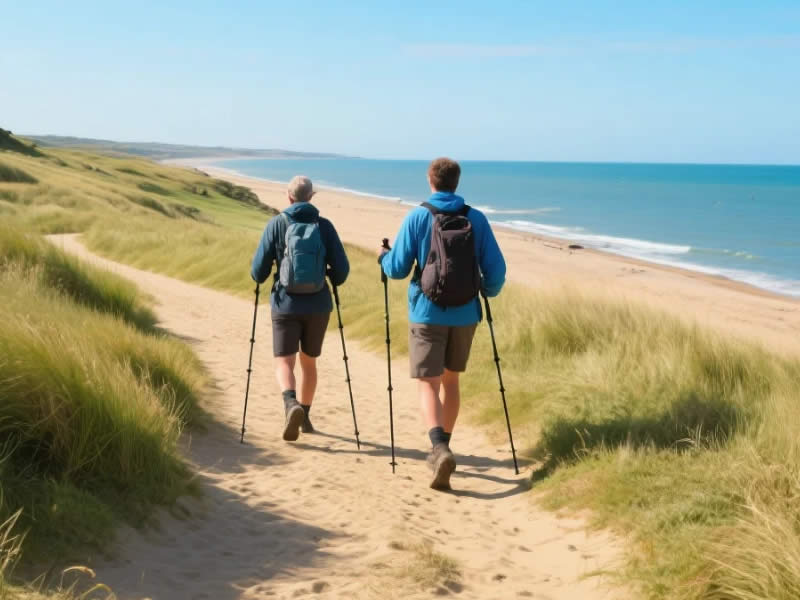
Understanding the Norfolk Coast Path terrain
The Norfolk Coast Path is a 47‑mile (76 km) walk between Hunstanton and Cromer, along the north Norfolk coast. It is part of the longer Norfolk Coast Path National Trail, which also includes a section from Cromer to Great Yarmouth. The terrain is characterised by:
- Flat, grassy paths – Much of the trail follows the top of low cliffs or behind dunes, with very little elevation change. Total ascent over the entire route is around 600 metres—less than a day's walking in the Pennines.
- Sandy sections – Some stretches, especially around Holkham and Wells‑next‑the‑Sea, involve walking on soft sand, which can be tiring.
- Firm coastal paths – The trail is mostly well‑maintained, with good footing.
- Muddy patches – After rain, some sections can become slightly muddy, but not to the extent of Peak District bogs.
- Road and village sections – The path passes through several towns and villages, with paved sections.
When trekking poles are not needed
For the vast majority of walkers on the Norfolk Coast Path, poles are an unnecessary burden. Here is why:
- Minimal knee strain – The lack of steep descents means your knees are not subjected to the high‑impact forces that poles help mitigate on hillier trails.
- Good footing – The path is mostly firm, reducing the need for extra balance support.
- Short daily distances – Most walkers complete the trail in 4–5 days with moderate daily mileages, so fatigue is less of a factor than on longer, hillier trails.
- Flat terrain – You will not benefit from the uphill assist that poles provide on steep ascents.
- Light pack – Many walkers on this trail use luggage transfer services, meaning they carry a daypack rather than a heavy overnight load.
When trekking poles might still be useful
While not necessary, poles can be helpful in specific situations:
- Soft sand sections – Walking on soft sand around Holkham Beach and Wells can be tiring. Poles can provide extra stability and help maintain a steady rhythm. However, standard carbide tips will sink in sand; you would need sand baskets (wide, flat baskets) to be effective. Most hikers simply walk without poles on these sections.
- Muddy patches – After prolonged rain, some sections can become slippery. Poles offer extra stability, but the mud is generally shallow and easily avoided.
- Knee issues – If you have pre‑existing knee or hip problems, even the gentle undulations of the Norfolk coast may benefit from the shock absorption poles provide.
- Walking rhythm – Some walkers prefer the rhythm of pole‑assisted walking and find it helps maintain a steady pace, even on flat ground.
- Wild camping – If you are carrying a full camping load (tent, sleeping bag, stove), the extra weight may make poles more beneficial for reducing leg fatigue.
What type of poles to choose (if you bring them)
If you decide to bring poles for the Norfolk Coast Path, choose lightweight, simple models:
- Aluminium or carbon – Both are acceptable on flat terrain. Carbon's fragility is less of a concern because you are not on rocky ground.
- Lever locks or twist locks – Both work on flat, dry terrain. Lever locks are still more reliable, but twist locks are less likely to fail here.
- Sand baskets – If you plan to walk on soft sand, bring sand baskets (wide, flat disks) to prevent the pole from sinking. Standard mud baskets are insufficient.
- Lightweight – Since you don't need heavy‑duty poles, choose the lightest pair that fits your budget. Folding poles (e.g., Black Diamond Distance Z) are ideal for packability.
- Cork or foam grips – Both are comfortable; cork handles rain better.
Top recommendations for the Norfolk Coast Path
- Decathlon Forclaz MT900 (£55) – Lightweight aluminium, lever locks, cork grips, replaceable tips. A great all‑rounder, though more pole than you need.
- Black Diamond Distance Z (folding aluminium, £120–140) – Extremely packable, lightweight, and perfect for stowing when not needed. Overkill for the Norfolk Coast but excellent if you already own them.
- Decathlon Forclaz MT100 (£25) – Budget aluminium with twist locks. Adequate for flat, dry terrain and easily replaceable. Fine for this trail.
- Any lightweight carbon pole – If you already own carbon poles, they are safe on this trail because side impacts are rare.
Practical tips for the Norfolk Coast Path
- Leave poles behind if you are fit and carry a daypack – The trail is gentle enough that you will not miss them.
- If using poles on sand, fit sand baskets – Without them, your poles will sink uselessly.
- Stow poles on beach sections – When walking on firm, flat sand near the waterline, you can collapse and carry poles on your pack.
- Use rubber tips on road sections – The trail has some paved walking; rubber tips save your carbide tips.
- Rinse after the walk – Sand and salt can corrode locks. Rinse with fresh water.
Final verdict
For the Norfolk Coast Path, trekking poles are not necessary for the majority of walkers. The terrain is flat, the footing is generally firm, and the distances are manageable. If you have joint issues or are carrying a heavy pack, they may offer comfort, but they are far from essential. For soft sand sections, sand baskets can help, but most walkers simply manage without. If you already own lightweight folding poles, you may enjoy the rhythm they provide, but buying a pair specifically for this trail is not recommended. Save the weight, enjoy the wide skies and coastal views, and leave your poles at home—unless you have a specific need. Happy walking along the beautiful Norfolk coast.




