




Are trekking poles helpful for the Great Glen Way?
The short answer is helpful but not essential. The Great Glen Way is a 79‑mile (127 km) long‑distance trail that runs from Fort William to Inverness, following the dramatic geological fault line that splits the Scottish Highlands. Unlike the mountainous terrain of the Cairngorms or the rocky fells of the Lake District, the Great Glen Way is predominantly flat, following canal towpaths, forest tracks, loch‑side trails, and occasional road sections. There are no significant climbs, and the total ascent over the entire route is modest (around 600‑700 metres). For most walkers, trekking poles are a comfort aid rather than a necessity. This article explores when poles are useful, when they are not, and what to choose if you bring them.
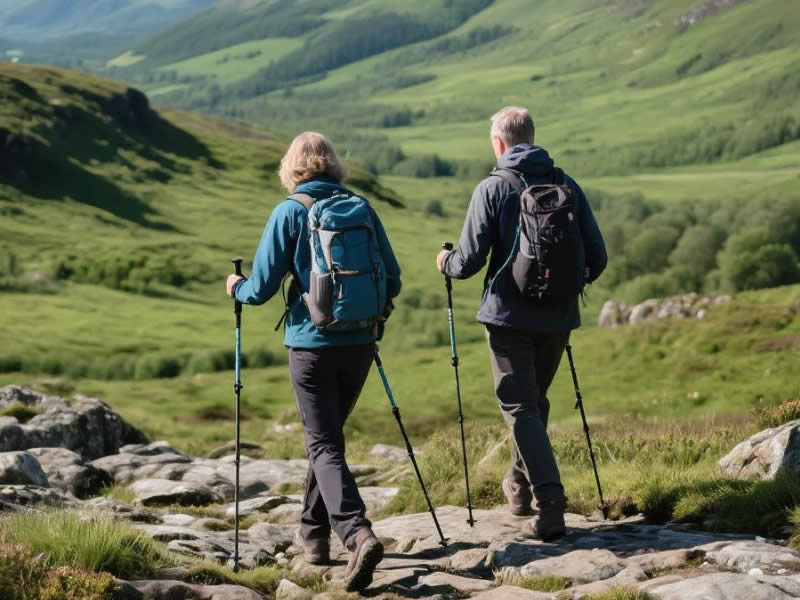
Understanding the Great Glen Way terrain
The Great Glen Way is a varied but forgiving trail:
- Canal towpaths – The Caledonian Canal sections are flat, paved or compacted gravel, with excellent footing.
- Forest tracks – Many sections (e.g., through the forests of Loch Lochy and Loch Oich) follow wide, well‑maintained gravel roads.
- Loch‑side paths – Some stretches are narrow, uneven, or rooty, especially around Loch Ness.
- Road sections – The route includes some quiet roads, particularly near Inverness.
- Muddy patches – After rain, certain sections can become slippery, but mud is generally shallow and manageable.
The trail's total ascent is around 600–700 metres over 79 miles—less than you would encounter on a single day in the Lake District. The gradients are gentle, and there are no steep descents that would heavily impact your knees.
When trekking poles are helpful
While not essential, poles can enhance your experience in several scenarios:
- Knee protection on long days – Although the descents are not steep, the cumulative effect of walking 10–15 miles a day for 5–7 days can still stress your knees, especially if you are carrying a backpack. Poles offload impact and reduce fatigue on the longer stretches.
- Stability on muddy or slippery sections – The forest tracks and loch‑side paths can become muddy and greasy after rain. Poles provide two extra points of contact, helping you stay upright on wet roots and soft ground.
- Rhythm and efficiency – On the long, flat towpaths, poles can help maintain a steady walking rhythm, engaging your upper body and reducing leg fatigue. Some walkers find this makes the flat sections feel less monotonous.
- Balance on uneven ground – Sections near Loch Ness have exposed tree roots and uneven stones. Poles help you navigate these with confidence.
- Stream crossings – The route crosses several small streams and drainage channels; poles help test depth and maintain balance.
- Weight distribution – If you are carrying a full camping load (tent, sleeping bag, stove), poles transfer some of the load to your upper body, reducing strain on your legs.
When poles are not needed
For many walkers, the Great Glen Way is easily manageable without poles:
- Light pack – If you are using luggage transfer services and carrying only a daypack, the extra support is less critical.
- Firm, dry conditions – On dry summer days, the towpaths and forest tracks are firm and non‑slippery.
- Fit walkers with strong knees – If you are a regular walker with no joint issues, the gentle gradients are unlikely to cause problems.
- Short daily distances – If you are walking 8–10 miles a day, fatigue is less of a factor.
What type of poles to choose for the Great Glen Way
If you decide to bring poles, opt for lightweight, comfortable models:
- Aluminium or carbon – The terrain is not rocky, so carbon poles are safe from side impacts. Carbon offers a lighter weight, reducing arm fatigue on the long, flat sections. Aluminium is more affordable and durable.
- Lever locks or twist locks – Both work on this trail; twist locks are less likely to fail on flat terrain. However, lever locks are still more reliable in wet conditions.
- Replaceable carbide tips – The canal paths and roads are abrasive, so tips will wear. Replaceable tips are more economical.
- Cork or foam grips – Both are comfortable; cork handles rain better and remains tacky when wet.
- Mud baskets – Useful for muddy sections; remove them on gravel or road sections.
- Sand baskets – Not needed, as there are no sandy sections.
Top recommendations for the Great Glen Way
- Decathlon Forclaz MT900 (£55) – Best value, lightweight aluminium, lever locks, cork grips, replaceable tips. Accepts mud baskets. Proven on UK trails.
- Leki Micro Vario Carbon (£130–150) – Premium folding carbon poles with lever locks. Extremely lightweight and packable. Overkill for this trail but excellent if you want the best.
- Black Diamond Distance Z (aluminium, £120–140) – Lightweight folding poles with push‑button joints. Easy to stow when not needed. Suitable for this trail.
- Decathlon Forclaz MT100 (£25) – Budget aluminium with twist locks. Adequate for flat, dry terrain. Tips are non‑replaceable, but for a one‑off walk, they are fine.
Practical tips for the Great Glen Way
- Adjust pole length – On flat sections, set your poles so your elbows are at 90° when the tip touches the ground (typically 120–125 cm for a 175‑cm walker). For the gentle ups and downs, minor adjustments are sufficient.
- Use rubber tips on road sections – The route has some road walking; rubber protectors save your carbide tips and reduce noise.
- Stow poles on towpaths – On the flat, paved towpaths, you may find poles unnecessary. Collapse and strap them to your pack.
- Clean after each day – Mud, dust, and road grit can accumulate in locks. Rinse with fresh water and dry thoroughly.
- Carry spare tips – If you are walking the full route, a spare pair (around £10) is a lightweight addition to your pack.
Where to buy before your walk
- Decathlon UK – Forclaz MT900 (best value; also stocks mud baskets and spare tips).
- Go Outdoors – Price‑match and discount card can make Leki and Black Diamond more affordable.
- Cotswold Outdoor – Expert advice and in‑store testing.
- SportPursuit – Flash sales on premium brands.
Final verdict
For the Great Glen Way, trekking poles are helpful but not essential. They offer knee protection on long days, stability on muddy sections, and a steady rhythm on flat towpaths. For most walkers, however, the gentle terrain and well‑maintained paths mean you can complete the trail without them. If you have joint issues, carry a heavy pack, or walk in wet weather, poles are a worthwhile investment. The best value choice is the Decathlon Forclaz MT900, while lightweight carbon or folding poles are a luxury upgrade. Ultimately, the decision is personal—many walkers enjoy the rhythm poles provide, while others prefer the freedom of walking hands‑free. Whatever you choose, the Great Glen Way is a stunning and accessible trail, and a pair of poles will only enhance your comfort if you feel you need them. Happy walking.




