




Best poles for the Southern Upland Way in Scotland?
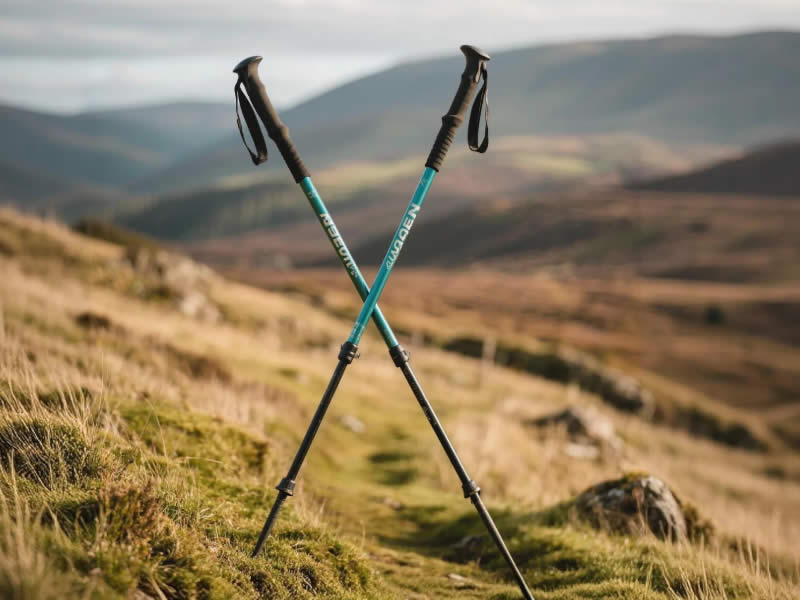
The Southern Upland Way is Scotland's longest official National Trail, stretching 212 miles (341 km) from Portpatrick on the west coast to Cockburnspath on the east coast. It traverses some of the most remote and challenging terrain in the UK—rolling moorlands, deep peat bogs, steep granite climbs, and long, exposed ridges. This is not a trail for casual walkers; it demands serious preparation and durable equipment. The best trekking poles for the Southern Upland Way are heavy‑duty aluminium models with lever locks, replaceable carbide tips, cork grips, and—crucially—mud baskets for the relentless peat bogs. The Decathlon Forclaz MT900 offers the best value at £55, while premium walkers and guides often choose the Leki Makalu or Black Diamond Trail Back. Folding poles are not recommended for this terrain. Here is a comprehensive guide to choosing the right poles for Scotland's toughest long‑distance trail.
Understanding the Southern Upland Way terrain
The Southern Upland Way is notorious for its remoteness and challenging terrain. Key features include:
- Deep peat bogs – The moorland sections, particularly in the central and western parts, are criss‑crossed with soft, deep peat. Without mud baskets, your poles will sink up to the handle, offering little support.
- Granite and quartzite climbs – Sections like the ascent of Corserine and the Merrick involve scrambling over abrasive rock that wears down carbide tips rapidly.
- Long, exposed ridges – The trail follows high, open ridges with strong winds, requiring secure, reliable pole locks.
- Muddy forest tracks – The lower sections can be slippery and claggy after rain.
- Stream crossings – The route crosses numerous streams, where poles help test depth and maintain balance on wet stones.
- Road sections – Some stretches of tarmac are hard on carbide tips; rubber protectors are useful.
Essential features for the Southern Upland Way
- Aluminium over carbon – Carbon poles are brittle and can splinter on the granite and quartzite of the Southern Uplands. Aluminium (especially 7075 alloy) bends but does not break, making it safer for this demanding terrain.
- Lever locks – Twist locks are notorious for slipping in wet, boggy conditions. Lever (cam) locks (Leki SpeedLock, Black Diamond FlickLock, Decathlon's cam system) are more secure and can be tightened on the trail with a hex key.
- Mud baskets – This is non‑negotiable for the peat bogs. Without them, your poles will become ineffective. Choose baskets with a wide surface area (around 7–8 cm diameter) to prevent sinking.
- Replaceable carbide tips – The abrasive rock will wear down tips significantly over 212 miles. Poles with replaceable tips are more economical. Carry at least one spare pair.
- Cork grips – In wet, cold conditions, cork grips become tacky and provide superior grip. They also insulate against cold, reducing hand fatigue.
- Steel lower section – Some poles (like the Leki Makalu) have a steel ferrule above the tip. This resists abrasion from the granite, extending the pole's lifespan.
- Repairability – On a remote trail, a broken pole can be a serious issue. Choose poles with easily replaceable parts (tips, locks, baskets) and carry a hex key.
Top recommendations for the Southern Upland Way
- Decathlon Forclaz MT900 (£55) – The best value pole for this trail. Features: 7075 aluminium, reliable lever locks, cork grips, replaceable carbide tips. Weight: ~250 g per pole. Accepts Decathlon's own mud baskets (£5–10), which are essential for the bogs. Lightweight, durable, and proven on UK long‑distance trails. A solid choice for most walkers.
- Leki Makalu (£90–100) – The preferred pole of many long‑distance walkers and guides. Features: SpeedLock Plus (the most secure lever lock), 7075 aluminium, a steel lower section for extra abrasion resistance, cork grips. Slightly heavier at 270 g per pole but virtually indestructible. A lifetime investment if you walk regularly. Leki's mud baskets fit perfectly.
- Black Diamond Trail Back (£75–85) – Similar to the Makalu but with Black Diamond's FlickLock system. Lighter (240 g per pole) and with a more ergonomic grip. Excellent if you prefer FlickLock over SpeedLock. Available at Cotswold and Go Outdoors.
- Folding poles – not recommended – Folding poles (e.g., Black Diamond Distance Z) are lightweight and packable, but their push‑button joints can jam with peat and grit. They are also more fragile than telescoping poles. On a 212‑mile trail with unpredictable weather, the risk of failure is too high. Stick with telescoping aluminium.
Why carbon poles are a risk
Carbon poles are lighter, but the Southern Upland Way's granite and quartzite are unforgiving. A single side impact on a rock can splinter a carbon shaft. The weight saving of ~100 g per pole is not worth the potential for breakage on a remote, exposed ridge. Stick with aluminium.
Mud baskets – a non‑negotiable for the bogs
The peat bogs on the Southern Upland Way are deep and extensive. Standard small trekking baskets (around 4–5 cm) will sink too deeply, offering little support. You need mud baskets—wider (7–8 cm) and with a more open design to prevent clogging. Fit them before setting off on the moorland sections. Remove them on rocky or road sections to avoid catching.
Spare parts and maintenance for a 212‑mile trek
- Carbide tips: Carry at least two spare pairs. The abrasive grit and granite will wear down tips significantly over 212 miles. Change them when the carbide becomes blunt.
- Hex key: A small 2.5 or 3 mm hex key allows you to tighten lever locks if they loosen over time.
- Mud baskets: Carry a spare pair of baskets—they can crack on rocky ground.
- Silicone spray: A tiny drop on the lock cams keeps them smooth and prevents corrosion.
- Duct tape: For emergency splinting of a bent shaft.
- Clean after each day: Peat and grit can damage locks. Rinse poles with fresh water and dry thoroughly. Open the lever locks to allow mud to fall out.
Practical tips for the Southern Upland Way
- Adjust pole length – Shorten by 5–10 cm for the steep ascents (e.g., the climb up Corserine); lengthen by 5–10 cm for the long descents.
- Use rubber tips on road sections – The trail has some road walking (especially near the start and end). Rubber protectors save your carbide tips from wear and reduce noise.
- Secure wrist straps – In wet, windy conditions, a loose strap can let a pole slip from your hand. Adjust straps to fit comfortably but securely.
- Wear gloves – The Scottish weather is often cold and wet. Lightweight gloves improve grip on cork handles and keep your hands warm.
- Plan for emergencies – On a remote trail, a broken pole can be a problem. Carry a spare pole or a repair kit with a spare lower section (if your pole model allows it).
Where to buy before your walk
- Decathlon UK – Forclaz MT900 (best value; also stocks mud baskets, spare tips, and repair parts).
- Go Outdoors – Price‑match and discount card can make Leki and Black Diamond more affordable.
- Cotswold Outdoor – Expert advice and in‑store testing.
- SportPursuit – Flash sales on premium brands.
Final verdict
For the Southern Upland Way, the Decathlon Forclaz MT900 is the best value choice, offering all the essential features – aluminium, lever locks, cork grips, replaceable tips – and compatibility with mud baskets. If you walk regularly and want the best build quality, invest in the Leki Makalu or Black Diamond Trail Back. Avoid carbon and folding poles. Remember to fit mud baskets, carry spare tips, and maintain your poles daily. With the right poles, you will navigate the peat bogs, granite climbs, and exposed ridges with confidence, protecting your knees and keeping your hands comfortable in the challenging Scottish weather. Happy walking on the Southern Upland Way.




