




Which poles are durable for the rugged terrain of the Dartmoor?
Dartmoor National Park is a landscape of wild, open moorland, granite tors, deep peat bogs, and fast-flowing streams. Its rugged terrain is notorious for challenging walkers with abrasive rock, unpredictable weather, and remote conditions. Choosing the right trekking poles for Dartmoor is not just a matter of comfort—it is a safety consideration. The best poles for Dartmoor's rugged terrain are heavy-duty aluminium models with lever locks, steel lower sections, replaceable carbide tips, and the ability to fit mud baskets. The Leki Makalu is the most durable choice, favoured by local guides and experienced moorland walkers. The Black Diamond Trail Back is a close alternative. Here is a comprehensive guide to choosing poles that will survive the granite tors and peat bogs of Dartmoor.
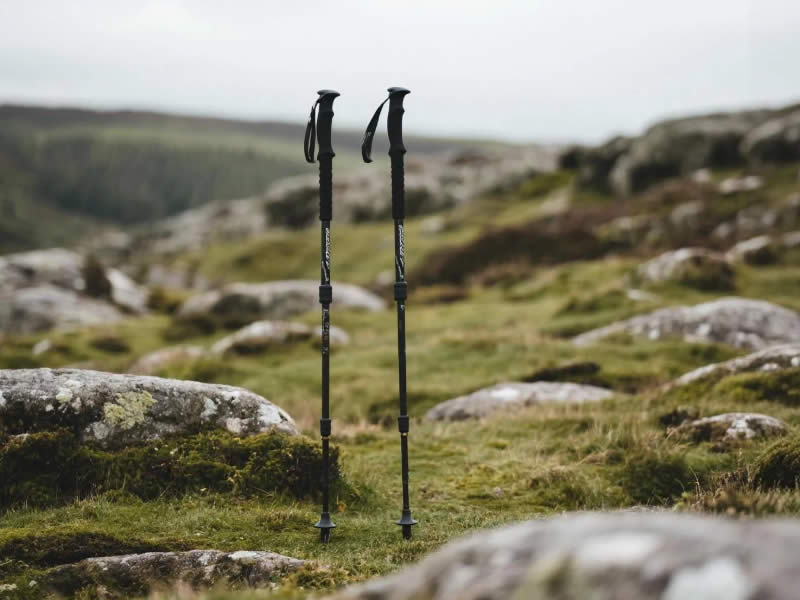
Understanding Dartmoor's rugged terrain
Dartmoor's landscape is varied and unforgiving on equipment. Key challenges for trekking poles include:
- Granite tors and outcrops – The tors are made of hard, abrasive granite that quickly wears down carbide tips and can scratch or chip aluminium shafts.
- Peat bogs and claggy mud – The moorland is criss-crossed with deep, sticky peat. Without proper mud baskets, poles will sink up to the handle, making them ineffective and difficult to retrieve.
- Rocky stream crossings – The moor has numerous streams and rivers. Poles need to be planted securely on wet, slippery stones.
- Exposed ridges – The open moorland is exposed to strong winds, requiring secure, reliable locks that do not loosen under lateral stress.
- Wet, changeable weather – Rain, mist, and damp conditions can cause twist locks to slip and corrosion to set in. Poles must be resistant to moisture.
- Remote conditions – Many parts of Dartmoor are far from roads or rescue points. A broken pole can be a serious problem, so durability and repairability are critical.
Essential features for Dartmoor's rugged terrain
- 7075 aluminium shaft – Carbon poles are brittle and can splinter on granite. Aluminium (especially 7075 alloy) bends but does not break, making it safer for this terrain. It can often be straightened in the field if bent.
- Steel lower section – The section above the tip is subjected to the most abrasion. Poles like the Leki Makalu have a steel ferrule that resists wear from granite, significantly extending the pole's lifespan.
- Lever locks, not twist locks – Twist locks are notorious for slipping when wet and muddy. Lever (cam) locks (Leki SpeedLock, Black Diamond FlickLock) are more secure and can be tightened on the trail with a hex key.
- Replaceable carbide tips – The abrasive granite will wear down tips within a few days of use. Poles with replaceable tips are more economical. Carry at least one spare pair for a multi-day walk.
- Mud baskets – This is non-negotiable for Dartmoor's bogs. Choose wide (7–8 cm) mud baskets to prevent sinking. Standard small trekking baskets are insufficient.
- Cork grips – In wet, cold conditions, cork grips become tacky and provide superior grip compared to foam or rubber. They also insulate against cold, reducing hand fatigue.
- Repairability – On a remote moor, a broken pole can be a serious issue. Choose poles with easily replaceable parts (tips, locks, baskets) and carry a hex key and spare tips.
Top recommendations for Dartmoor
- Leki Makalu (£90–100) – The undisputed choice for Dartmoor guides and experienced moorland walkers. Features: SpeedLock Plus (the most secure lever lock), 7075 aluminium, a steel lower section that resists abrasion on granite, cork grips, and replaceable tips. Weight: ~270 g per pole. Virtually indestructible and field-repairable. A lifetime investment.
- Black Diamond Trail Back (£75–85) – A close alternative with similar features: 7075 aluminium, FlickLock system (also reliable), cork grips, and replaceable tips. Slightly lighter (240 g per pole) and with a more ergonomic grip. Lacks the steel lower section, so it may show abrasion more quickly on granite, but still durable.
- Decathlon Forclaz MT900 (£55) – The best value choice for Dartmoor. Features: 7075 aluminium, reliable lever locks, cork grips, replaceable tips. Weight: ~250 g per pole. Accepts Decathlon's own mud baskets (£5–10). It is lighter and lacks the steel lower section, so it is better suited to summer use or less extreme conditions. However, it is still a durable option for most walkers.
- Folding poles – not recommended – Folding poles (e.g., Black Diamond Distance Z) are lightweight and packable, but their push-button joints can jam with peat and grit. They are also more fragile than telescoping poles. On Dartmoor's rugged terrain, the risk of failure is too high. Stick with telescoping aluminium.
Why carbon poles are a risk
Carbon poles are lighter, but Dartmoor's granite is unforgiving. A single side impact on a rock can splinter a carbon shaft. The weight saving of ~100 g per pole is not worth the potential for breakage on a remote moor. Guides and experienced walkers on Dartmoor almost exclusively use aluminium.
Mud baskets – essential for the bogs
Dartmoor's peat bogs are deep and extensive. Standard small trekking baskets (around 4–5 cm) will sink too deeply, offering little support. You need mud baskets—wider (7–8 cm) and with a more open design to prevent clogging. Fit them before setting off on the moorland sections. Remove them on rocky or road sections to avoid catching on stones.
Spare parts and maintenance for Dartmoor
- Carbide tips: Carry at least two spare pairs. The granite will wear down tips significantly over a few days. Change them when the carbide becomes blunt.
- Hex key: A small 2.5 or 3 mm hex key allows you to tighten lever locks if they loosen over time.
- Mud baskets: Carry a spare pair—they can crack on rocky ground.
- Silicone spray: A tiny drop on the lock cams keeps them smooth and prevents corrosion from moisture.
- Duct tape: For emergency splinting of a bent shaft.
- Clean after each day: Peat and grit can damage locks. Rinse poles with fresh water and dry thoroughly. Open the lever locks to allow mud to fall out.
Practical tips for Dartmoor
- Adjust pole length – Shorten by 5–10 cm for the steep ascents (e.g., up to the tors); lengthen by 5–10 cm for the long descents.
- Use rubber tips on road sections – Dartmoor has some road walking; rubber protectors save your carbide tips and reduce noise.
- Secure wrist straps – In wet, windy conditions, a loose strap can let a pole slip from your hand. Adjust straps to fit comfortably but securely.
- Wear gloves – The Dartmoor weather is often cold and wet. Lightweight gloves improve grip on cork handles and keep your hands warm.
- Plan for emergencies – Carry a repair kit and know how to use it. A broken pole on the moor can be a significant inconvenience.
Where to buy in the UK
- Cotswold Outdoor – Stocks Leki Makalu and Black Diamond Trail Back; offers expert advice.
- Go Outdoors – Price-match and discount card can make these poles more affordable.
- Decathlon UK – Forclaz MT900 (best value; also stocks mud baskets and spare tips).
- SportPursuit – Flash sales on premium brands.
Final verdict
For Dartmoor's rugged terrain, the Leki Makalu is the most durable choice, with its steel lower section and bombproof construction. The Black Diamond Trail Back is a close alternative. The Decathlon Forclaz MT900 offers excellent value for summer use. Avoid carbon, twist locks, and folding poles. Remember to fit mud baskets, carry spare tips, and maintain your poles daily. With the right poles, you will navigate the granite tors, peat bogs, and rocky streams with confidence, protecting your knees and keeping your hands comfortable in the unpredictable Dartmoor weather. Happy walking on the moor.




