




What is the best locking mechanism for wet and muddy conditions?
For wet and muddy conditions, lever locks (cam locks) are the best locking mechanism. They use a mechanical cam that clamps the pole sections together, unaffected by moisture or grit. You can tighten or loosen them on the trail with a hex key, making them field‑adjustable. By contrast, twist locks rely on friction between expanding internal parts – when mud and water get in, they slip. Top performers include Leki's SpeedLock Plus, Black Diamond's FlickLock, and Decathlon's cam lock system. Avoid twist locks entirely for muddy UK trails – they are unreliable and can be dangerous on steep descents. This article explains why lever locks excel in wet conditions, how they compare to other systems, and what to look for when choosing a pole for muddy, rainy terrain.
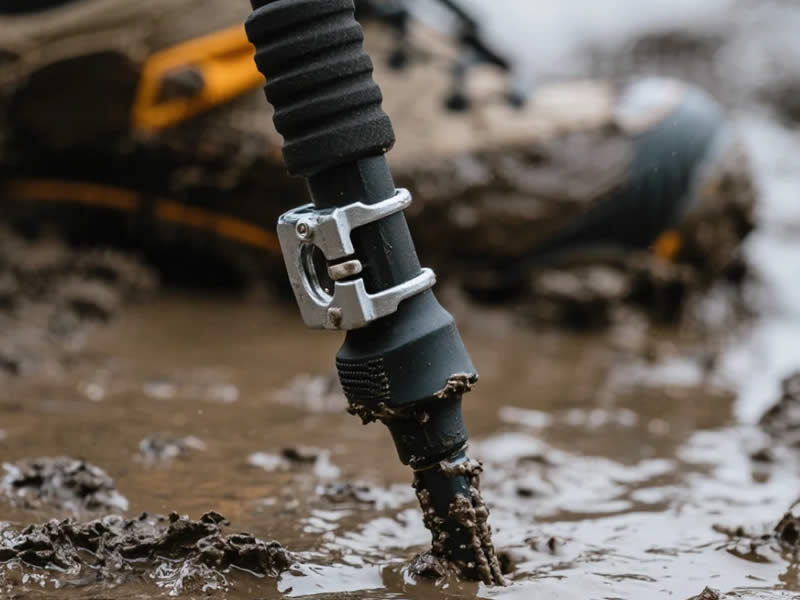
1. Why wet conditions challenge locking mechanisms
Mud, grit, and water are the enemies of friction‑based locking systems. When you plant your pole in wet mud, water and fine particles are forced into the mechanism. Over a day's walking, this can:
- Reduce friction – Water acts as a lubricant, reducing the grip between sections.
- Abrade internal components – Grit wears down the expanding parts, causing permanent damage.
- Seize the mechanism – Dried mud can jam twist locks, making them impossible to adjust.
2. Lever locks – the reliable choice
Lever locks (also called cam locks) consist of a metal clamp that tightens around the outer shaft. When you close the lever, it compresses the clamp, locking the sections together with a mechanical grip – independent of friction.
Advantages in wet conditions:
- Mechanical grip – The lock is not affected by water or mud. It holds firmly regardless of moisture.
- Field‑adjustable – If the lock loosens over time (which can happen), you can tighten it with a hex key (2.5 or 3 mm). This takes seconds.
- Easy to clean – Mud and grit can be washed out of the mechanism. The cam is exposed, so you can rinse it easily.
- Works with gloves – Lever locks are large enough to operate with cold, wet, or gloved hands.
Best lever‑lock systems:
- Leki SpeedLock Plus – The gold standard. Secure, smooth, and durable. Used on Leki Makalu, Micro Vario, and many other Leki models.
- Black Diamond FlickLock – Simple, robust, and reliable. Found on Black Diamond Trail Back, Alpine Carbon Cork, and others.
- Decathlon cam lock – A budget‑friendly lever lock on the Forclaz MT900 and MT500. Reliable for the price, though not as refined as SpeedLock or FlickLock.
3. Twist locks – the unreliable option
Twist locks use an expanding internal mechanism (usually a threaded split cylinder). When you twist the lower section, it pushes the internal parts apart, creating friction against the inner wall.
Problems in wet conditions:
- Water reduces friction – The lubricating effect of water makes the lock more likely to slip.
- Grit jams the threads – Mud and sand can get into the threads, making the lock stick or preventing it from tightening fully.
- Difficult to adjust with gloves – The twisting motion requires fine motor control, which is hard with wet or cold hands.
- Hard to clean – Mud gets inside the mechanism and is difficult to flush out.
Verdict: Twist locks are not recommended for frequent use in muddy, wet UK conditions. They can fail suddenly on a steep descent, leading to a fall.
4. Push‑button locking (on folding poles)
Some folding poles (e.g., Black Diamond Distance Z) use a push‑button mechanism. While they are convenient and lightweight, they are not immune to wet conditions:
- Grit can jam the button – Mud and sand can get inside the button assembly, preventing it from locking or releasing.
- Difficult to clean – The button is small and internal, making it hard to flush out dirt.
- Can freeze in winter – Water can enter the button and freeze, locking the pole in an extended position.
Verdict: Push‑button poles are fine for dry, well‑maintained trails, but not recommended for wet, muddy UK conditions.
5. How to maintain lever locks in muddy conditions
- Rinse after every muddy walk – Use fresh water to flush mud out of the cam and clamp. Open and close the lever a few times while rinsing.
- Tighten occasionally – Lever locks can loosen with use. Use a 2.5 mm or 3 mm hex key to tighten the screw on the lever. Do not over‑tighten – the lever should close with a firm click but not be hard to operate.
- Lubricate sparingly – A tiny drop of silicone spray on the cam pivot can keep it smooth. Avoid oil, which attracts grit.
- Check the clamp – Inspect the clamp for cracks or damage. Replace if worn.
6. What to look for when buying poles for wet conditions
- Lever locks – Non‑negotiable for muddy, rainy trails.
- 7075 aluminium – Stronger and more durable than 6061.
- Replaceable carbide tips – Mud and grit wear down tips quickly; being able to replace them extends the pole's life.
- Cork grips – Cork becomes tacky when wet, providing a secure hold. Foam grips can become slippery.
- Mud baskets – Essential for preventing the pole from sinking into soft ground.
7. Final verdict
For wet and muddy conditions, lever locks (cam locks) are the best locking mechanism – they are mechanically secure, field‑adjustable, and easy to clean. Avoid twist locks and push‑button folding poles in muddy UK conditions. Choose a pole with a reliable lever lock system – Leki SpeedLock Plus, Black Diamond FlickLock, or Decathlon cam locks are all good options. Combine with 7075 aluminium, cork grips, and mud baskets for a pole that will serve you safely through the muddiest of British trails.




