




Do carbon trekking poles snap easily on rocky British trails?
Yes – carbon trekking poles can snap on rocky British trails if subjected to side impacts. Carbon fibre is exceptionally strong under vertical load (compression) but inherently brittle under lateral forces – a knock against a sharp rock, a jam between boulders, or a twist while the tip is caught can cause the shaft to splinter. Aluminium, by contrast, bends but rarely breaks, and can often be straightened in the field. On rugged UK terrain such as the Lake District fells, Snowdonia, or Dartmoor, 7075 aluminium poles are the safer, more durable choice. Reserve carbon poles for well‑maintained trails like the South Downs or the Thames Path. This article explains the material science behind carbon's vulnerability, when it is safe to use, and how to protect your poles.
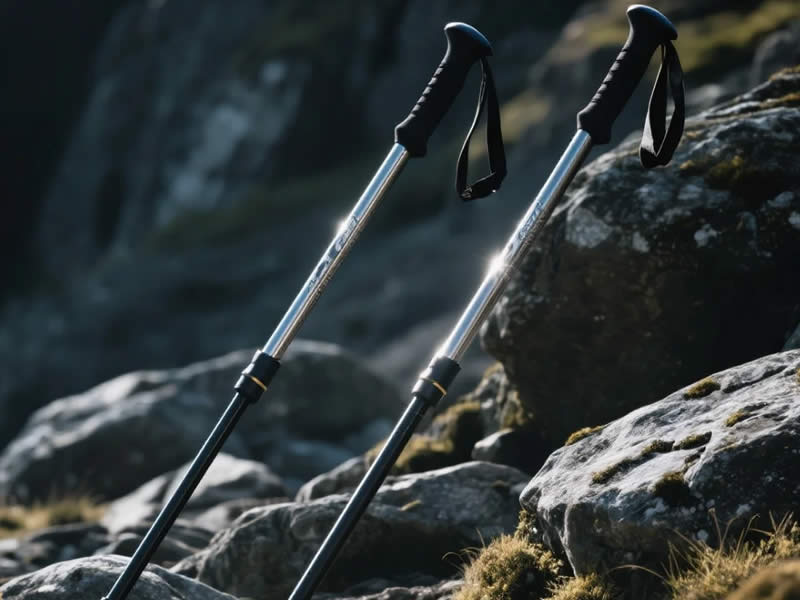
1. The material difference – carbon vs. aluminium
- Carbon fibre is a composite material: carbon fibres embedded in a resin matrix. It has excellent strength along the axis (compression and tension) but poor resistance to impact or side forces. The resin is brittle; when a sharp impact occurs, the fibres delaminate and the shaft fractures. This failure is catastrophic – the pole is no longer usable.
- Aluminium is a ductile metal. When subjected to a side impact, it deforms plastically – it bends. A bent aluminium pole can often be straightened in the field (by rolling it on a flat rock) and will remain functional, though weakened.
2. Why rocky British trails are high‑risk for carbon
British trails are notorious for loose rock, sharp slate, and uneven ground. Specific risks for carbon poles include:
- Side impacts – When you plant a pole at an angle or stumble, the pole can be knocked sideways against a rock. Carbon is particularly vulnerable to this.
- Jamming – If the tip gets wedged between rocks and you twist the pole to free it, the lateral force can exceed the carbon's strength.
- Falls – If you fall onto your pole, the side load can snap it instantly.
- Abrasive grit – Over time, fine grit can scratch the carbon surface, creating stress points that weaken the shaft.
3. Real‑world experience from UK walkers
- Carbon supporters – Walkers who stick to well‑maintained trails (e.g., South Downs Way, Thames Path, Norfolk Coast Path) rarely have issues. Carbon poles last for years on these surfaces.
- Carbon critics – Walkers who frequent the Lake District, Snowdonia, or the Scottish Highlands often have stories of carbon poles splintering. "One knock on a rock and they were done" is a common comment on UK hiking forums.
- Guides' preference – Mountain guides in the UK almost universally use aluminium poles (e.g., Leki Makalu) for their durability and repairability.
4. When carbon is a safe choice
- Well‑maintained trails – If you walk on gravel paths, forest tracks, or coastal promenades, the risk of side impacts is low.
- You are careful – If you avoid planting between rocks and always place your poles on open ground, carbon can last.
- You are an ultralight walker – The weight saving (100–150 g per pole) is significant for long‑distance walkers on gentle terrain.
5. How to reduce the risk with carbon poles
- Avoid planting between rocks – Always plant on open, flat ground where possible.
- Don't twist – If the tip gets stuck, pull the pole straight out – do not twist it.
- Inspect regularly – Look for scratches or chips on the shaft. If you find any, the pole is weakened and should be replaced.
- Use rubber tips on rocky sections – Rubber tips protect the carbide tip but do not prevent side impacts.
- Carry a spare – On remote multi‑day treks, consider carrying a spare lower section or an emergency pole.
6. Aluminium – the safer choice for rocky terrain
- Bends but does not break – A knock against a rock will dent or bend an aluminium pole, but it will usually remain functional.
- Field‑repairable – A bent section can often be straightened with your hands or by rolling it on a flat rock.
- Replaceable sections – For many aluminium poles (e.g., Leki Makalu, Decathlon Forclaz MT900), you can buy replacement lower sections.
- Steel lower section – Some aluminium poles (Makalu) have a steel ferrule above the tip, which resists abrasion and protects the shaft.
7. Carbon vs. aluminium – a quick comparison for rocky trails
| Feature | Carbon | Aluminium |
|---|---|---|
| Side impact resistance | Poor – can splinter | Good – bends but rarely breaks |
| Repairability | Not repairable | Often repairable in the field |
| Weight | Lighter (~200–250 g per pole) | Heavier (~250–280 g per pole) |
| Vibration damping | Excellent | Moderate |
| Cost | £150–180 | £50–100 |
| Best for | Well‑maintained trails | Rugged, rocky terrain |
8. Final verdict
Yes – carbon trekking poles can snap easily on rocky British trails if subjected to side impacts. Carbon is a brittle material that does not handle lateral forces well, and the sharp, uneven rocks of UK mountains pose a significant risk. For walkers who frequent the Lake District, Snowdonia, Dartmoor, or the Scottish Highlands, 7075 aluminium poles with lever locks are a safer, more durable choice. Aluminium bends but rarely breaks, and can often be straightened in the field. Reserve carbon poles for well‑maintained trails, or if you are careful and willing to accept the risk. If you do use carbon on rocky terrain, carry a repair kit or a spare pole. Your safety and confidence on the hills are worth the extra weight of aluminium.




