




What is the best handle shape for natural hand position?
The best handle shape for a natural hand position is a slightly angled/ergonomic grip with a subtle 15° bend—this aligns your wrist and forearm, reducing strain and making the push more efficient. A straight grip works but requires more wrist flexion. For walking, choose a straight or subtly angled grip (not sharply bent) to allow easy choke‑up on ascents. A contoured palm rest (matching the base of your palm) also improves comfort. Test by holding the pole with your arm relaxed—your hand should fall naturally onto the grip. The article below explains the biomechanics, compares grip types, and helps you choose the right shape for your walking style.
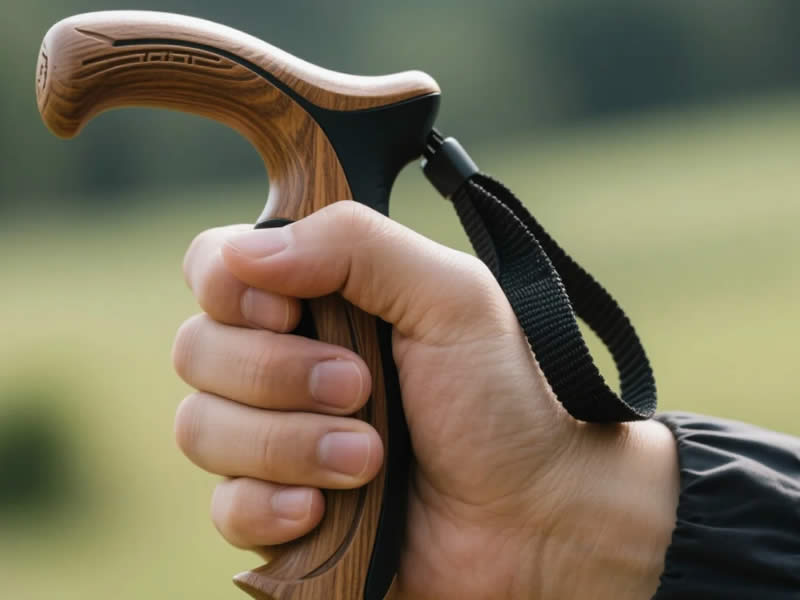
1. The biomechanics of a natural hand position
When walking, your hand should be in a relaxed, neutral position—similar to a handshake. In this position, your wrist is slightly extended (about 15°), your fingers are gently curled, and your forearm muscles are relaxed. A well-designed handle supports this natural alignment, reducing the need to twist your wrist or grip tightly.
2. Straight grips (traditional)
Most standard trekking poles have a straight grip—a simple, cylindrical shape made of cork, foam, or rubber. They are functional and allow you to choke up (grip lower) on ascents. However, a straight grip requires your wrist to be slightly bent to hold the pole at the correct angle. Over a long day, this can cause fatigue in your forearm and wrist.
- Pros: Simple, allows easy choke‑up, widely available.
- Cons: Requires wrist flexion, less natural hand position.
3. Angled/ergonomic grips (e.g., Pacerpole)
These grips have a fixed 15° to 30° angle, designed to keep your wrist straight and your arm in a natural swing. They are often used in Nordic walking and by walkers who want a more efficient, upright posture. The angled shape mimics the natural angle of your hand when walking without poles.
- Pros: Reduces wrist strain, promotes upright posture, more efficient push.
- Cons: Not suitable for steep ascents/descents (difficult to choke up), less versatile.
4. Contoured palm rest
Some grips have a contoured shape that fits the base of your palm. This spreads the load across your hand, reducing pressure points and preventing blisters. It also helps with weight transfer—the strap bears the load, not your grip.
5. What is the "best" shape?
- For hillwalking (ascents/descents) – A straight grip with a contoured palm rest is best. It allows you to choke up on steep climbs and grip higher on descents without straining your wrist. The contoured shape improves comfort.
- For flat terrain / Nordic walking – An angled grip is better, as it promotes a natural handshake position and reduces wrist fatigue.
- For mixed terrain – A straight grip with a subtle ergonomic tilt offers the best compromise. Some poles (e.g., Leki Makalu) have a slightly angled upper section that provides some ergonomic benefit while still allowing choke‑up.
6. The role of the strap
A correctly adjusted strap is as important as the grip shape. The strap should sit across the base of your palm, transferring the load directly to your skeletal structure. This allows you to relax your grip, reducing hand fatigue.
7. Testing the grip
When choosing a pole, hold it with your arm relaxed at your side. Your hand should naturally fall onto the grip without twisting your wrist. The grip should feel comfortable in your palm, and your fingers should curl around it naturally.
8. Final verdict
The best handle shape for a natural hand position depends on your terrain. For hillwalking, a straight grip with a contoured palm rest is the most versatile, allowing you to choke up on ascents and grip higher on descents. For flat terrain, an angled grip offers a more natural, relaxed position. The ideal compromise is a straight grip with a subtle ergonomic tilt (like the Leki Makalu)—it gives you versatility on hills while reducing wrist strain on flatter sections. Always test the grip before buying—your comfort and walking efficiency depend on it.




