




Are there left and right specific trekking poles for better ergonomics?
The short answer is no – most trekking poles are symmetrical and not left/right specific. You can use either pole in either hand without any functional difference. However, a small number of premium ergonomic poles, such as the Pacerpole, do feature hand‑specific angled grips designed to align with your natural wrist position. These asymmetrical grips are intended to reduce wrist strain and improve power transfer for walkers who suffer from hand or wrist discomfort. For the vast majority of UK walkers, symmetrical poles are perfectly adequate and far more practical. This article explains the difference, the benefits of hand‑specific designs, and whether they are worth considering.
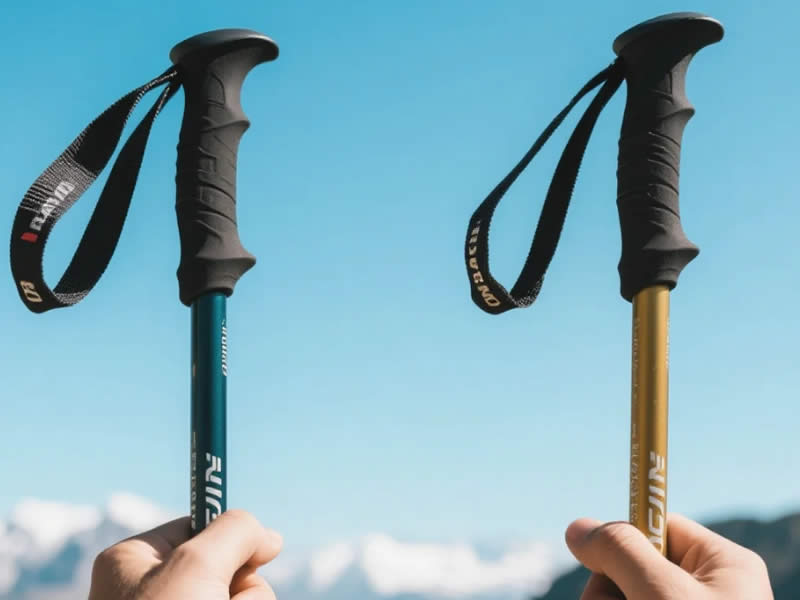
1. The standard: symmetrical trekking poles
Approximately 99% of trekking poles on the market – including the Leki Makalu, Black Diamond Trail Back, Decathlon Forclaz MT900, and most budget poles – have symmetrical grips. The grip is a straight cylinder (or slightly contoured) that is identical on both sides. You can pick up either pole and use it in your left or right hand without any adjustment. This design offers several practical advantages:
- Interchangeability – If one pole breaks or gets damaged, you can swap the remaining one to your dominant hand without losing ergonomics.
- Simplicity – No need to check which pole is which; they are identical.
- Choke‑up versatility – Symmetrical grips allow you to choke up (grip lower) on ascents easily with either hand.
2. The exception: hand‑specific ergonomic grips
A few brands (most notably Pacerpole) offer left‑ and right‑specific grips. These grips are angled or twisted to match the natural handshake position of your wrist when you plant the pole. A left‑handed pole has a slight twist for the left hand; a right‑handed pole for the right hand. The idea is to keep your wrist straight, reducing strain on the tendons and improving the efficiency of your push.
- Benefits – Reduced wrist fatigue, better power transfer from arm to pole, and a more upright, natural posture.
- Drawbacks – You cannot swap hands (if your right wrist gets tired, you cannot switch poles without awkwardly twisting your wrist). They are also more expensive and harder to find in UK stores.
3. The strap factor – a common confusion
Some walkers confuse hand‑specific straps with hand‑specific grips. Leki's trigger strap system, for example, has a left‑handed and right‑handed strap assembly (the clip is angled differently), but the grip itself is symmetrical. The strap enhances ergonomics by transferring load, but it does not make the pole hand‑specific in the same way as a Pacerpole grip. If you buy Leki poles with trigger straps, you must ensure you fit the correct strap to the correct pole, but you can still use either pole in either hand (the strap just won't clip as naturally).
4. Pros and cons of hand‑specific grips
| Pros | Cons |
|---|---|
| Reduces wrist and forearm strain | Cannot swap hands if one pole breaks |
| Encourages a more natural arm swing | More expensive than standard poles |
| Can be more comfortable for long days | Limited UK availability (mainly online) |
| Effective for walkers with wrist issues | Learning curve – feels different initially |
5. Are they worth it for UK walkers?
- If you have wrist or hand issues (e.g., carpal tunnel syndrome, arthritis) – Yes, they are worth trying. The ergonomic design can reduce pain and make walking more comfortable.
- If you are a regular long‑distance walker – They may improve efficiency and reduce fatigue, but the benefit is marginal for most walkers.
- If you are a casual walker – Not worth the extra cost. Symmetrical poles are perfectly adequate.
- If you share poles – Symmetrical poles are better because they fit anyone.
6. How to choose
- Check the product description – Look for "left/right specific" or "hand‑specific" grips. If it is not explicitly stated, the pole is symmetrical.
- Try before you buy – If possible, test a hand‑specific pole in a shop. The angle may feel unusual at first.
- Consider the strap – A well‑adjusted strap on a symmetrical pole can provide much of the ergonomic benefit without the cost of a hand‑specific grip.
7. Final verdict
Most trekking poles are not left/right specific – they are symmetrical and work perfectly well in either hand. However, a few premium ergonomic poles (like Pacerpole) do offer hand‑specific angled grips that can reduce wrist strain and improve comfort, particularly for walkers with wrist issues. For the vast majority of UK hillwalkers, symmetrical poles are the practical, versatile, and cost‑effective choice. If you have specific wrist discomfort, try a hand‑specific model, but be aware of the trade‑off in flexibility. Otherwise, stick with the standard symmetrical design – it works for 99% of walkers.




