




Do magnetic locking systems exist on trekking poles and are they reliable?
Magnetic locking systems do not exist as a mainstream feature on trekking poles – I am not aware of any reputable brand (Leki, Black Diamond, Komperdell, Decathlon, Fizan) using a magnet as the primary locking mechanism. A few novelty or Kickstarter concepts have appeared, but they are unproven, not widely available, and have not been tested in real‑world UK conditions (mud, grit, wet, heavy loads). For safety on steep terrain, you need a positive mechanical lock – lever/cam locks or twist locks that physically clamp or expand to hold the pole sections together. A magnetic catch could be accidentally dislodged by a knock or load, potentially causing a collapse at a critical moment. They are not reliable for load‑bearing use. Stick with proven lever‑lock systems (Leki SpeedLock, Black Diamond FlickLock, Decathlon cam locks). This article explains why mechanical locks are essential and why magnetic systems are not a viable alternative.
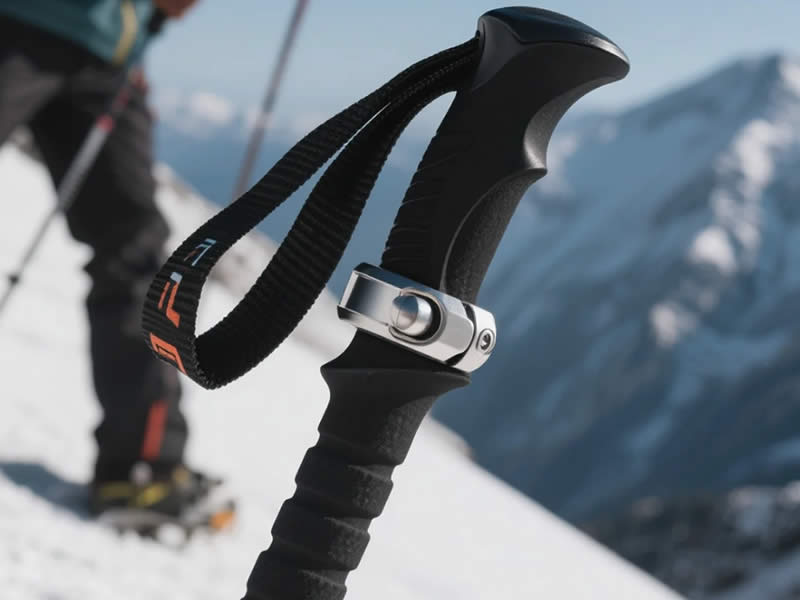
1. The importance of a reliable locking mechanism
A trekking pole's locking system is its most critical safety feature. It must hold the pole at a fixed length under dynamic loads – when you plant the pole on a descent, push off on an ascent, or brace against a rock. A sudden collapse can cause a fall, potentially leading to injury.
- Vertical load – Your body weight (plus pack) pressing down through the pole.
- Lateral load – Sideways forces when planting at an angle.
- Shock loads – Sudden impacts when you stumble or plant heavily.
- Vibration – Constant vibration from walking can loosen poorly designed locks.
2. Proven locking systems – mechanical clamps and friction
The two mainstream locking systems are:
- Lever locks (cam locks) – A mechanical clamp that tightens around the outer shaft. Examples: Leki SpeedLock Plus, Black Diamond FlickLock, Decathlon cam locks. They are secure, field‑adjustable with a hex key, and work in all conditions (wet, muddy, cold). They are the standard for serious walking.
- Twist locks – An internal expander that presses against the inner wall. Examples: basic budget poles. They rely on friction and are prone to slipping in wet or gritty conditions. Less reliable than lever locks.
3. Why magnetic locks are not viable
A magnetic locking system would use a magnet to hold the pole sections together. This concept has appeared in a few Kickstarter projects and novelty designs, but it has never been adopted by a reputable brand. The reasons are clear:
a. Insufficient holding force – A magnet strong enough to hold the pole sections under load would need to be extremely powerful (rare‑earth magnet). Even then, the holding force would be far less than a mechanical clamp. A sudden impact or twist could overcome the magnetic force.
b. Accidental disengagement – A knock against a rock or a side load could cause the magnetic joint to separate. On a steep descent, this would be catastrophic.
c. Grit and mud ingress – Magnets attract ferrous particles (rust dust, grit). Over time, the magnetic surfaces could become coated with debris, reducing holding force and potentially jamming the mechanism.
d. No adjustability – A magnetic system would likely be fixed‑length or offer limited adjustability. You could not fine‑tune the height for different terrain.
e. Weight – Powerful magnets are heavy. A magnetic locking system would likely add weight, defeating the purpose of a lightweight pole.
4. What about magnetic clips or quick‑release systems?
Some poles (e.g., Leki's trigger strap system) use magnets in the strap clip – but that is for the wrist strap, not the pole locking mechanism. The pole itself is still secured by a mechanical lock. Similarly, some folding poles use a magnet to hold the sections together when collapsed (for storage), but the actual locking mechanism is a push‑button or lever lock.
5. Have any magnetic poles reached the market?
A few small brands and Kickstarter projects have proposed magnetic trekking poles, but none have gained traction. They are not stocked by major UK retailers (Decathlon, Cotswold, Go Outdoors, Amazon UK). If you see a magnetic pole online, it is almost certainly a novelty item, not a serious piece of walking equipment.
6. What to look for instead
- Lever locks – Leki SpeedLock Plus, Black Diamond FlickLock, Decathlon cam locks.
- 7075 aluminium – Strong, durable, and field‑repairable.
- Replaceable carbide tips – Extend the life of your poles.
- Reputable brand – Leki, Black Diamond, Decathlon, Komperdell, Fizan.
7. Final verdict
Magnetic locking systems do not exist on mainstream, reputable trekking poles – and they are not reliable for load‑bearing use. A magnetic catch could be accidentally dislodged, causing the pole to collapse under load. For safety on steep terrain, you need a positive mechanical lock – lever or twist. Stick with proven lever‑lock systems (Leki SpeedLock, Black Diamond FlickLock, Decathlon cam locks), which are secure, field‑adjustable, and trusted by walkers worldwide. If you see a magnetic pole, treat it as a novelty – not as a replacement for a reliable mechanical lock.




