




Can trekking poles be used to test water depth before crossing?
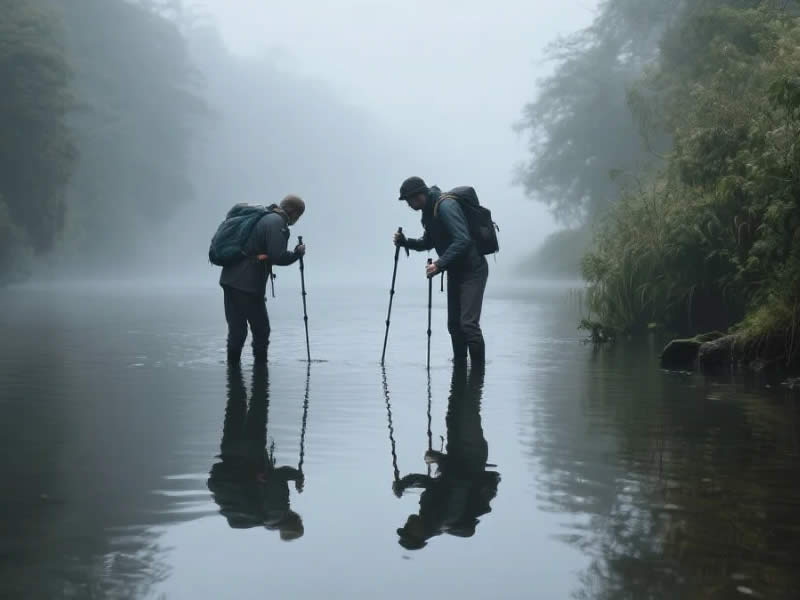
Yes – trekking poles are excellent for testing water depth before crossing a stream or river. Fully extend one pole and plant it firmly into the streambed ahead of you. If the pole sinks more than knee‑deep (approximately 50–60 cm for an average adult), you should reconsider the crossing – fast‑flowing water at that depth can be dangerous and may sweep you off your feet. You can also use the pole to feel the bottom: soft mud, loose rocks, or a shifting bed are warning signs. Use two poles for balance and always face upstream, keeping your weight centred. Move slowly, and never rely solely on the pole – it is a tool for assessment, not a guarantee of safety. This article explains the technique, the risks, and the practical considerations for using trekking poles as depth gauges in river crossings.
1. Why depth assessment is critical
Before you step into any river or stream, you need to know three things:
- Depth – How deep is the water? If it exceeds mid‑thigh, the current can push you over.
- Bottom condition – Is the bed firm (rock, gravel) or soft (mud, silt)? A soft bottom can cause you to sink and lose stability.
- Current – Is the water moving fast? The force of the current increases with depth and speed. Fast water at knee depth can be as dangerous as deeper, slower water.
2. How to use your pole as a depth gauge
a. Fully extend one pole – Lengthen the pole to its maximum (or near‑maximum) length. This gives you maximum reach.
b. Plant the tip firmly – Push the pole tip straight down into the streambed, directly ahead of you. Do not jab; plant it deliberately.
c. Read the depth – The water level on the pole shaft tells you the depth. If the water reaches above your knee, the crossing becomes more hazardous.
d. Feel the bottom – As you plant, feel the resistance. A firm stop indicates solid ground (gravel, rock). A soft, sinking feel suggests mud or loose silt.
e. Move the pole along – Probe at several points across the intended crossing line. Depth and bottom can vary within a few feet.
3. The "knee‑deep" rule
A widely accepted guideline in the UK and elsewhere is that you should avoid crossing water that is above knee‑deep (roughly 50–60 cm) unless you are very confident and the current is slow. At knee depth, the force of the water can lift your feet and knock you off balance. If the water reaches mid‑thigh or higher, the risk of being swept away increases significantly.
4. What the pole cannot tell you
- Current speed – A pole only measures depth, not the force of the water. Fast‑flowing water at knee depth can be dangerous.
- Hidden rocks – The pole tip may not detect a large, unstable rock that could shift under your weight.
- Sudden drop‑offs – The riverbed can drop off sharply; the pole may not detect this until you step into the hole.
5. Best practice for stream crossings with poles
- Use two poles – For balance, keep both poles planted upstream (facing the current). The water pressure pushes the tips into the bed, improving grip.
- Keep three points of contact – Move one foot, then the other, then one pole, then the other. Always have three points of contact with the streambed.
- Face upstream – Always cross facing the direction from which the water is coming. This reduces the surface area of your body against the current and allows you to lean into the flow.
- Unclip the waist belt – If you are carrying a backpack, unclip the waist belt before crossing. If you fall, you can slip out of the pack more easily.
- Cross at the widest, shallowest point – Look for where the water is slow and wide, rather than narrow and fast.
6. When to turn back
- Water above mid‑thigh – If the water reaches above your mid‑thigh, find another crossing.
- Fast current – If the water is moving fast and the surface is turbulent, the crossing is dangerous.
- Hidden bed – If you cannot see the streambed, you cannot assess depth and stability.
- Solo and uncertain – If you are alone and unsure, do not attempt the crossing. Find an alternative route or turn back.
7. Practical tips for UK streams
- After heavy rain – Streams in the Lake District, Snowdonia, and the Scottish Highlands can rise rapidly. Water levels that were safe in the morning can be dangerous in the afternoon.
- Use the pole as a probe – Test the ground in front of you before each step.
- Wear appropriate footwear – Approach the crossing with shoes on; the streambed can be sharp or rocky. If the water is shallow, you may be able to cross with your boots on.
- Carry spare tips – The abrasive streambed can wear down carbide tips. Check after the crossing.
8. Final verdict
Yes – trekking poles are a valuable tool for testing water depth before crossing. Use one pole as a depth gauge, plant it deliberately, and assess the bottom condition. If the water is above knee‑deep, reconsider the crossing or find a safer point. Use two poles for balance, face upstream, and maintain three points of contact. A pole is a tool for assessment, not a guarantee of safety—use it wisely, and always prioritise your safety over completing the crossing. With the right technique, you can make safe, informed decisions when crossing streams.




